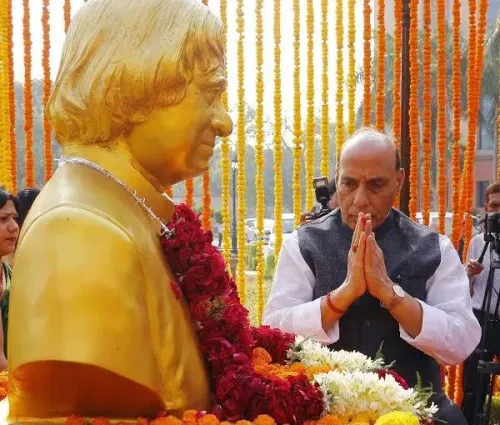
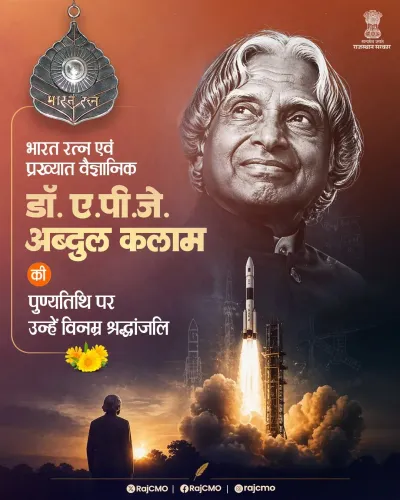
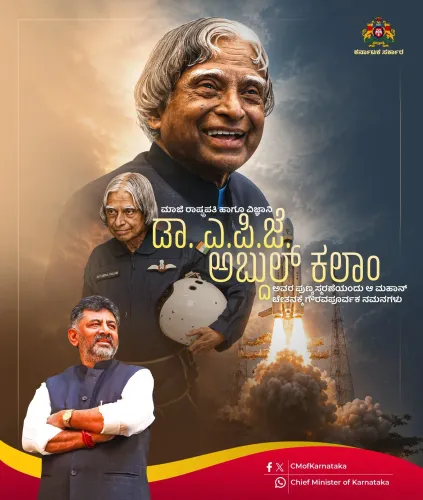
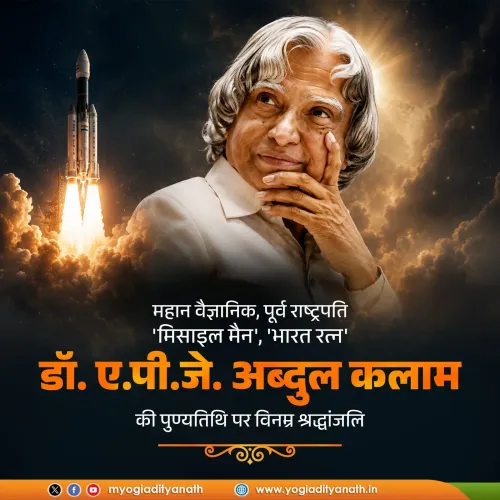
CM Rekha Gupta pays tribute to Dr. Kalam on death anniversary
Synopsis
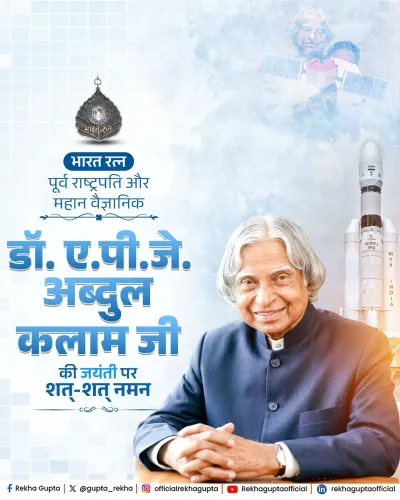
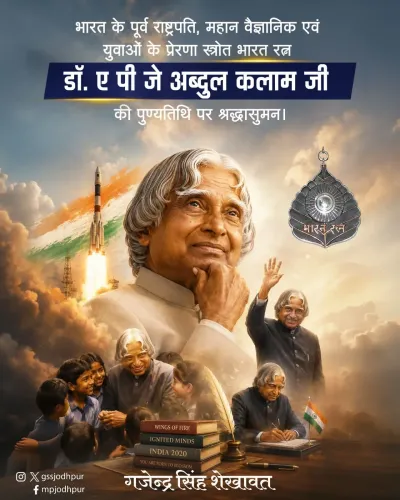
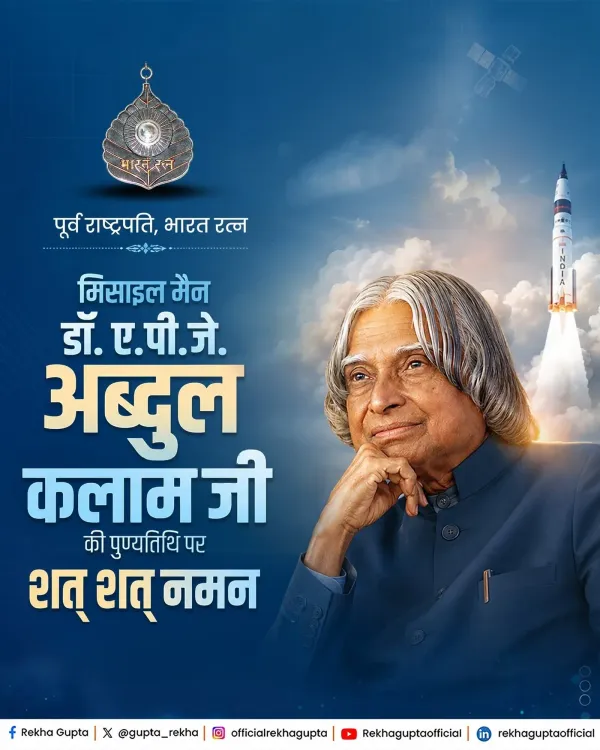
Delhi Chief Minister Rekha Gupta on 27 July 2026 paid homage to former President and Bharat Ratna awardee Dr. A.P.J. Abdul Kalam on his death anniversary, citing his indigenous missile technology, scientific vision, and enduring inspiration to India's youth.
Key Takeaways
Delhi CM Rekha Gupta posted a tribute to Dr.
Abdul Kalam on his death anniversary, 27 July 2026 .
Kalam passed away on 27 July 2015 while delivering a lecture at IIM Shillong , aged 83.
He served as India's 11th President from 2002 to 2007 and was awarded the Bharat Ratna in 1997 .
At DRDO , Kalam led development of indigenous missiles including Agni and Prithvi .
CM Gupta's tribute highlighted his 'foresight, indigenous missile technology, and spirit of innovation' as giving India a new global identity.
Annual tributes to Kalam consistently link his legacy to India's goals of technological self-reliance and youth empowerment.
Delhi Chief Minister Rekha Gupta on Monday, 27 July 2026 paid tribute to former President and Bharat Ratna awardee Dr. A.P.J. Abdul Kalam on his death anniversary, honouring his legacy of scientific vision, indigenous missile technology, and his lifelong commitment to inspiring India's youth.
Context
Dr. A.P.J. Abdul Kalam passed away on 27 July 2015 while delivering a lecture at the Indian Institute of Management, Shillong. He was 83 years old. Every year on this date, political leaders, scientists, and citizens across India observe his death anniversary with tributes and remembrances.
In her post, CM Gupta wrote — translated from Hindi — that Kalam's 'foresight, indigenous missile technology, and spirit of innovation gave India a new identity on the global stage,' and that 'his simple life, elevated thought, and constant effort to inspire the youth will forever motivate citizens toward national service.'
Policy Backdrop
Dr. Kalam served as India's 11th President from 2002 to 2007, but his most consequential contributions came decades earlier as a scientist at the Defence Research and Development Organisation (DRDO), where he led the development of indigenous missiles including Agni and Prithvi under the Integrated Guided Missile Development Programme.
He was conferred the Bharat Ratna — India's highest civilian honour — in 1997, in recognition of his transformative work in defence and space technology. His vision of a self-reliant India in strategic technologies remains a touchstone for policymakers across the political spectrum.
Annual commemorations of Dr. Kalam routinely surface in the context of defence indigenisation debates and science education policy, with leaders citing his example when advocating for greater investment in homegrown research and development.
Stakeholders and Impact
India's vast community of defence scientists and researchers at institutions such as DRDO and ISRO regard Dr. Kalam as a foundational figure whose work established the credibility of indigenous strategic programmes. His emphasis on youth empowerment and scientific temper has influenced generations of students and educators.
For political leaders, paying tribute to Dr. Kalam carries bipartisan resonance — he is widely revered beyond party lines as a symbol of merit, simplicity, and national service. CM Gupta's tribute, framed around themes of swadeshi missile takneek (indigenous missile technology) and navachar (innovation), aligns with the broader national discourse on technological self-reliance.
What's Next
Tributes on Dr. Kalam's death anniversary often precede or coincide with institutional events at schools, universities, and scientific bodies across the country, where his life and work are discussed as a model for young Indians. Parliamentary and policy forums may invoke his legacy in upcoming discussions on the defence budget and science education initiatives.
As India continues to expand its indigenous defence manufacturing footprint, Dr. Kalam's vision of a technologically sovereign nation is likely to remain a recurring reference point for leaders at every level of governance.
Point of View
' the Delhi CM connects a ceremonial homage to a live policy conversation around defence indigenisation. The tribute also signals an effort to claim cross-generational appeal, as Kalam's image transcends party affiliation and resonates strongly with urban youth — a key demographic in Delhi's electoral arithmetic. Such commemorations, while routine, serve as low-cost, high-visibility moments for leaders to associate themselves with consensus national icons.
NationPress
25 Oct 2026
Frequently Asked Questions
When did Dr. APJ Abdul Kalam pass away?
Dr. A.P.J. Abdul Kalam passed away on 27 July 2015 while delivering a lecture at the Indian Institute of Management, Shillong . He was 83 years old.
Why is Dr. Kalam called the Missile Man of India?
Dr. Kalam earned the title 'Missile Man of India' for leading the development of indigenous ballistic missiles — including Agni and Prithvi — at DRDO under the Integrated Guided Missile Development Programme during the 1980s and 1990s.
What is the Bharat Ratna and when did Dr. Kalam receive it?
The Bharat Ratna is India's highest civilian honour. Dr. A.P.J. Abdul Kalam was conferred the award in 1997 in recognition of his outstanding contributions to defence and space technology.
When did Dr. Kalam serve as President of India?
Dr. A.P.J. Abdul Kalam served as the 11th President of India from 2002 to 2007 , and was widely known for promoting scientific temper and engaging directly with students and youth across the country.
Why did Delhi CM Rekha Gupta pay tribute to Dr. Kalam?
Delhi Chief Minister Rekha Gupta posted a tribute on 27 July 2026 to mark the death anniversary of Dr. A.P.J. Abdul Kalam , honouring his contributions to indigenous missile technology, scientific innovation, and his inspiration to India's youth.