CM Shivakumar: Buddhist University on Karnataka Cabinet Agenda
Synopsis
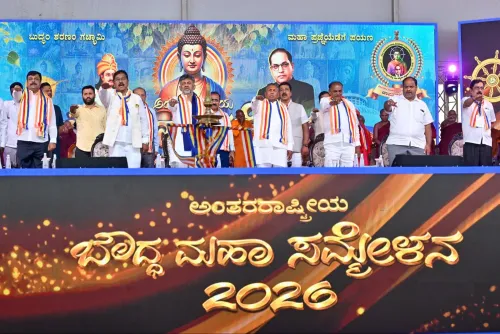
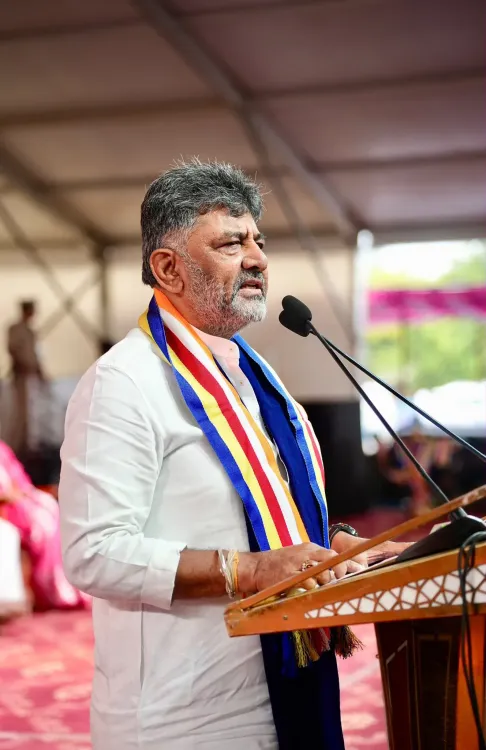
CM D.K. Shivakumar addressed the International Buddhist Mahasammelan in Chamarajanagar, announcing a Cabinet discussion on a Buddhist University in Karnataka and naming Bengaluru South as the next conference host, while invoking Buddha, Basava and Ambedkar as guiding pillars of governance.
Key Takeaways
Buddhist University proposal to be discussed and decided in the Karnataka Cabinet , per CM Shivakumar's announcement.
Next International Buddhist Conference to be held in Bengaluru South district ; Belagavi also being considered on the suggestion of minister Satish Jarkiholi .
CM said holding two Buddhist conferences per year is acceptable.
Shivakumar invoked Buddha, Basava and Ambedkar as the three governing principles of the Karnataka government's social and policy agenda.
Reservation described not merely as opportunity but as a structural pathway for historically excluded communities.
CM recalled a personal visit to Gaya, Bihar — site of Buddha's enlightenment — the previous year, underlining his personal commitment to Buddhist values.
A society that asks for knowledge, not caste — that was the moral frame Chief Minister D.K. Shivakumar set at the International Buddhist Mahasammelan in Chamarajanagar on Sunday, 25 October 2026, delivering one of his most philosophically expansive addresses yet and announcing concrete institutional steps to back it up.
Buddhist University proposal heads to Cabinet
The headline announcement: the Karnataka government will take up the establishment of a Buddhist University in the state Cabinet for discussion and a formal decision. Shivakumar offered no timeline — the research confirms none is yet on record — but framing it as a Cabinet agenda item signals the proposal has cleared the idea stage and entered the machinery of governance. The university would serve as an institutional anchor for Buddhist scholarship and, by extension, the state's long-standing commitment to the triad of Buddha, Basava and Ambedkar.Bengaluru South and Belagavi in frame for next conference
Beyond the university, the Chief Minister said the next International Buddhist Conference will be hosted in Bengaluru South district. He also left the door open for Belagavi — citing the suggestion of Cabinet minister Satish Jarkiholi — and said holding two conferences a year is not objectionable. The move to rotate venues signals an intent to embed Buddhist dialogue as a recurring fixture on Karnataka's cultural calendar, not a one-off.The 'three flames' argument for India's future
The speech's philosophical core was built around what Shivakumar called three flames: 'ಬುದ್ಧ, ಬಸವ ಮತ್ತು ಅಂಬೇಡ್ಕರ್' ('Buddha, Basava and Ambedkar'). Buddha, he said, is the symbol of knowledge; B.R. Ambedkar is the symbol of social justice. Together with the 12th-century Karnataka reformer Basava, these three represent the only path by which India can truly progress. 'Only if these three flames burn bright can India shine,' he declared. Ambedkar's 1956 conversion to Buddhism — which the Chief Minister described as an event that captured the world's attention — was held up as both a spiritual and political act: the Constitution as a living root, as essential to human life as roots are to a tree.Reservation reframed, Prajaaseve at the doorstep
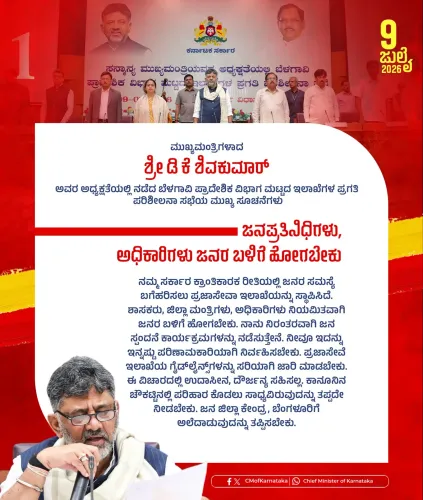
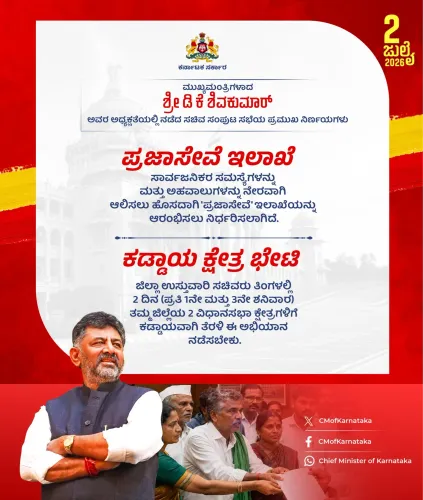
Shivakumar used the occasion to restate his government's position on reservation, framing it not as mere opportunity but as a structural mechanism to bring forward those historically excluded from opportunity. 'Reservation is not just an opportunity — it is a system that creates a path for those who have been kept away from opportunities,' he said. On governance, he invoked Buddha directly: authority exists to serve the people, not any one person. He pointed to the Prajaaseve (public service) department as the government's delivery vehicle — taking services to citizens' doorsteps rather than making citizens chase government offices.A pilgrimage recalled, a principle restated
Closing on a personal note, the Chief Minister recalled visiting Gaya, Bihar — the sacred ground of Buddha's enlightenment — the previous year. 'Wherever compassion resides in the heart, Buddha's thought lives there,' he said. 'I believe not in caste but only in policy.' The Cabinet decision on the Buddhist University is now the most tangible next step. Whether that debate produces a funded institution or a deferred resolution will say much about how far the rhetoric travels into brick and mortar.Point of View
Basava and Ambedkar into a composite identity framework — but the Buddhist University announcement gives this edition unusual policy traction. Placing it on the Cabinet agenda, however loosely, is a move that will be watched by Dalit-Buddhist constituencies and OBC groups ahead of the next electoral cycle. The rotating-conference model also signals a bid to institutionalise Buddhist diplomacy at the state level, echoing New Delhi's own soft-power investment in Buddhist circuit tourism. The key test will be whether the university proposal survives Budget scrutiny or becomes another aspirational announcement folded into the noise of governance.
NationPress
25 Oct 2026
Frequently Asked Questions
What did CM DK Shivakumar announce at the Buddhist Mahasammelan in Chamarajanagar?
Chief Minister D.K. Shivakumar announced that a Buddhist University will be discussed and decided in the Karnataka Cabinet, and that the next International Buddhist Conference will be held in Bengaluru South district.
Where will the next International Buddhist Conference in Karnataka be held?
The next conference will be hosted in Bengaluru South district. Minister Satish Jarkiholi also suggested holding one in Belagavi, and the Chief Minister said two conferences a year are acceptable.
What is Karnataka's Buddhist University proposal?
It is a government proposal to establish a dedicated Buddhist University in Karnataka. As of the Chamarajanagar conference, it has been flagged for Cabinet discussion; no final decision or timeline has been confirmed.
Why does DK Shivakumar invoke Buddha, Basava and Ambedkar together?
Shivakumar frames these three figures as complementary pillars — Buddha for knowledge, Ambedkar for social justice, and Basava for egalitarian social reform — arguing that India can progress only when all three traditions are honoured together.
What did Shivakumar say about reservation and social justice?
He described reservation not merely as an opportunity but as a structural system designed to create pathways for communities historically denied access, framing social justice and equality as the bedrock of societal progress.