CM Rekha Gupta attacks Rahul Gandhi over Congress worker culture

Synopsis
Delhi Chief Minister Rekha Gupta fires at Rahul Gandhi, accusing Congress of reducing party workers to crowd-fillers while power remains a 'family estate' — framing it as proof of contempt for ordinary people.
Key Takeaways
Delhi CM Rekha Gupta posted a Hindi attack on Rahul Gandhi on October 12, 2026 .
She accused Congress of treating workers as disposable — useful for rallies, then elbowed aside when they get too close to leadership.
The phrase 'shahzade ke raaste se hat jao' ('step aside from the prince's path') targets Rahul Gandhi's dynastic image directly.
She coined the charge 'Congress ki shahi sanskriti' — 'Congress's royal culture' — and called power a 'jagir of one family.' The post uses the hashtag #SmashTheHypocrisyRaGa , part of a sustained BJP campaign vocabulary against Gandhi.
CM Gupta frames the internal culture question as a test of fitness: a leader who disrespects workers cannot respect the nation.
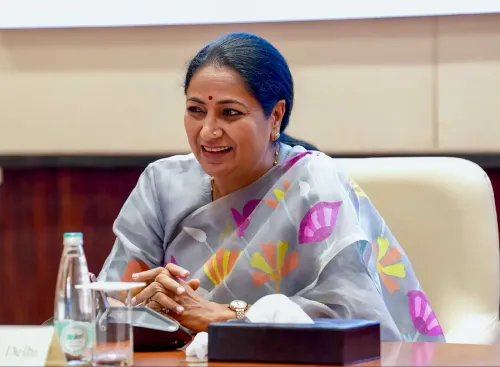
Delhi Chief Minister Rekha Gupta unleashed a sharp broadside against Congress leader Rahul Gandhi on Monday, October 12, 2026, questioning the treatment of grassroots party workers within the Congress organisation — and framing it as evidence of a deeper contempt for ordinary people.
The charge: workers as crowd, not comrades
Posting in Hindi on X, CM Gupta wrote: 'Rahul Gandhi ki rajneeti ka ajeeb charitra hai. Karyakarta dhakke khayen. Siddhant thokar khayen. Bas satta ki bhookh par aanch na aaye!' — translating to: 'The strange character of Rahul Gandhi's politics — let workers get shoved aside, let principles be kicked, just don't let the hunger for power be threatened.'
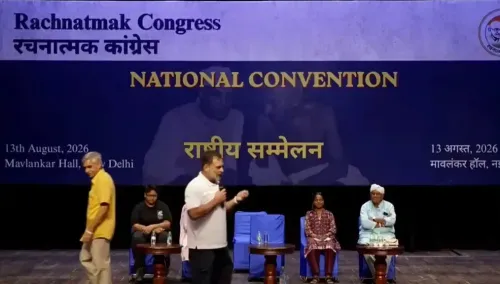
She went further, sketching what she called the Congress worker's prescribed role: 'Carry the flag, raise the slogans, and then step aside from the prince's path.' The phrase 'shahzade ke raaste se hat jao' — 'get out of the prince's way' — is a pointed reference to the dynastic critique that BJP leaders have long directed at Rahul Gandhi.
Rekha Gupta's 'shahi sanskriti' barb
The post escalates into a direct question of fitness for public office: 'One who cannot respect his own workers — what respect will he show to the people of this country?' CM Gupta labelled it 'Congress ki shahi sanskriti' — 'Congress's royal culture' — and described power as 'the jagir (estate) of one family.'
The hashtag she deployed, #SmashTheHypocrisyRaGa, is part of a recurring BJP campaign vocabulary that pairs 'RaGa' — a widely used shorthand for Rahul Gandhi — with charges of double standards. The framing here: Gandhi courts workers for optics, then physically marginalises them when the cameras close in.
The dynastic politics fault-line
The BJP's 'family party' critique of Congress is one of the most durable lines in Indian electoral politics, and CM Gupta is deploying it at its sharpest edge — not attacking policy, but attacking internal party culture. By focusing on the worker, she attempts to pull Congress's own base into the conversation, questioning whether rank-and-file members are valued beyond their utility at rallies.
CM Gupta, who leads the BJP government in Delhi following the party's return to power in the capital, has positioned herself as an assertive face of BJP's urban politics. This post is consistent with that voice — combative, rhetorically tight, directed at Congress's central leadership rather than any local dispute.
If a party cannot honour the foot soldiers who build it, the CM's closing argument runs, it has already told you everything about how it would govern a nation.
Point of View
She targets his internal party conduct, trying to drive a wedge between Congress's leadership and its own grassroots. The 'jagir of one family' framing carries particular resonance ahead of any electoral cycle, because it speaks directly to Congress workers' own grievances about promotions and recognition. For Gupta personally, leading Delhi as a first-generation BJP face in the capital, the implicit contrast — accessible leadership versus royal distance — reinforces her own political brand. The combative hashtag signals this is coordinated messaging, not an isolated comment.
NationPress
12 Oct 2026
Frequently Asked Questions
What did Rekha Gupta say about Rahul Gandhi?
Delhi CM Rekha Gupta accused Rahul Gandhi of treating Congress workers as crowd-fillers — useful at rallies but shoved aside otherwise — and described Congress as a party where power is a 'family estate' governed by a 'royal culture.'
What does 'shahi sanskriti' mean in Rekha Gupta's post?
'Shahi sanskriti' translates to 'royal culture.' Rekha Gupta used the phrase to describe what she called Congress's tradition of concentrating power within one family while ordinary workers are treated as disposable.
What is the #SmashTheHypocrisyRaGa hashtag about?
It is a BJP campaign hashtag that pairs 'RaGa' — a shorthand for Rahul Gandhi — with accusations of hypocrisy, used repeatedly by BJP leaders to frame Gandhi as saying one thing and doing another.
Why does Rekha Gupta call Rahul Gandhi 'shahzade'?
'Shahzade' means 'prince' in Hindi. BJP leaders have used the term for years to underline their dynastic critique of Rahul Gandhi as the heir of the Nehru-Gandhi family rather than a leader who rose through merit.