CM Bhupendra Patel Backs SIR, Calls Opposition Claims Baseless
Synopsis
Gujarat Chief Minister Bhupendra Patel backed the Election Commission's Special Intensive Revision on October 12, defending the statutory door-to-door voter-roll update as overdue and calling opposition claims of disenfranchisement 'manufactured falsehoods.' He urged citizens to trust documented safeguards over political rhetoric.
Key Takeaways
Gujarat CM Bhupendra Patel publicly defended the Election Commission of India's Special Intensive Revision (SIR) on October 12, 2026 .
The SIR is a statutory exercise under the Representation of the People Act , involving nationwide door-to-door voter-roll verification.
Patel stated that a comprehensive voter-list verification has been overdue for over two decades .
The exercise aims to remove deceased, duplicate, and migrated voter entries while enrolling all newly eligible citizens.
CM Patel rejected opposition criticism as 'baseless propaganda' and 'manufactured falsehoods,' asserting that statutory safeguards prevent disenfranchisement.
Structured appeal mechanisms and physical doorstep verifications are part of the SIR process, per the CM's post.
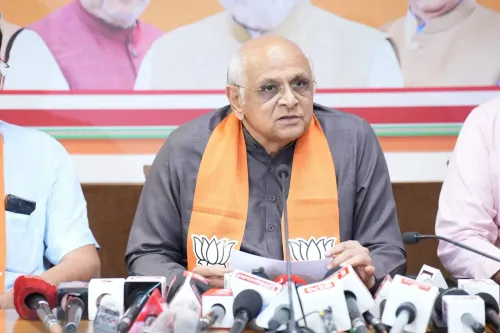
A clean voter list, Gujarat Chief Minister Bhupendra Patel argued on Monday, October 12, 2026, is not a bureaucratic formality — it is the bedrock of democracy itself. In a pointed post on X, the BJP leader threw his weight behind the Election Commission of India's Special Intensive Revision (SIR), a nationwide door-to-door voter-roll verification exercise, and hit back at what he called 'baseless propaganda' from the opposition.
What the Special Intensive Revision actually does
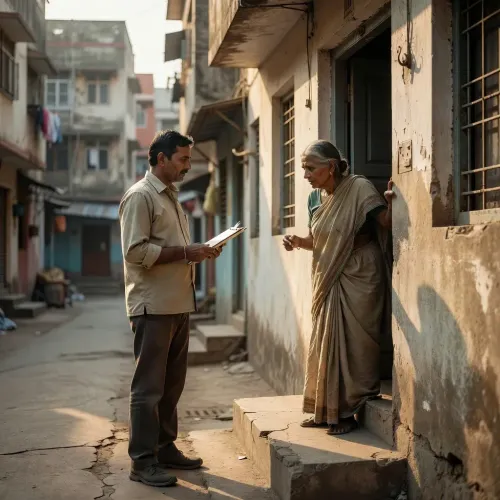
The Special Intensive Revision (SIR) is a statutory exercise conducted by the Election Commission of India under the Representation of the People Act. Its purpose is straightforward: go door to door across the country, remove entries for deceased, duplicate, and migrated voters, and simultaneously enroll every eligible citizen who has not yet registered. CM Patel noted that a nationwide verification of this scale has been overdue for over two decades — making this round especially significant.
Contrary to fears being amplified by the opposition, the exercise carries built-in protections. Established statutory safeguards, doorstep physical verifications, and structured appeal mechanisms are part of the process — legal architecture designed to ensure that no genuine voter is left off the rolls.
Patel's rebuttal: facts over political rhetoric
The CM's post was as much a political statement as a civics primer. He took direct aim at what he described as 'manufactured falsehoods designed to cast aspersions on our constitutional bodies' — a clear reference to opposition voices framing the SIR as a vehicle for voter suppression or disenfranchisement. His counter-argument: the documented reality runs in the opposite direction, and letting political rhetoric override verified facts undermines trust in constitutional institutions.
'Let documented facts prevail over political rhetoric — an accurate electoral roll is the bedrock of fair elections,' he wrote, urging the public not to 'fall prey' to misinformation.
Why the stakes around voter rolls are always high
In any democracy, a voter list revision of this scale inevitably draws scrutiny. Concerns about exclusion — particularly of the poor, migrants, and marginalised communities — are not new to India. Opposition parties have historically flagged such exercises as potential tools of selective removal. The Election Commission, for its part, has statutory independence and an established legal framework to conduct revisions. Whether the appeal mechanisms and physical verification processes are being uniformly implemented on the ground is the real question voters and civil society will be watching.
Point of View
The BJP seeks to occupy the procedural high ground while putting the opposition on the back foot for 'undermining institutions.' The underlying tension — between the genuine need to clean bloated voter rolls and the real risk of eligible voters being dropped — is the political fault line this exercise will be fought over. How the EC handles grievance redressal on the ground will determine which side of that argument holds up.
NationPress
12 Oct 2026
Frequently Asked Questions
What is the Special Intensive Revision (SIR) of voter lists?
The Special Intensive Revision (SIR) is a statutory exercise conducted by the Election Commission of India under the Representation of the People Act. It involves door-to-door verification to remove deceased, duplicate, and migrated voter entries and to enroll newly eligible citizens.
Why is CM Bhupendra Patel supporting the SIR voter list exercise?
Gujarat Chief Minister Bhupendra Patel argues the SIR is a legitimate, long-overdue constitutional exercise and has pushed back on opposition claims of disenfranchisement, calling them 'baseless propaganda' and 'manufactured falsehoods.'
Can I be removed from the voter list during the SIR without notice?
According to CM Patel's post, the SIR includes statutory safeguards, doorstep physical verifications, and structured appeal mechanisms to ensure no genuine voter is disenfranchised. Voters can contest any erroneous deletion through the appeal process.
What does the opposition say about the SIR voter-roll revision?
Opposition parties have raised concerns that the SIR could be used to remove eligible voters, particularly from marginalised groups. CM Patel dismissed these claims as 'propaganda designed to cast aspersions on constitutional bodies.'
How long has a nationwide voter-list verification been pending in India?
CM Bhupendra Patel stated in his October 12, 2026 post that a nationwide door-to-door voter-list verification has been overdue for over two decades.