Gujarat CM Bhupendra Patel dismisses Congress claims of EC rift over SIR as 'baseless'
Synopsis
Gujarat Chief Minister Bhupendra Patel went on the offensive in Gandhinagar on Sunday, calling Congress's claims of internal splits within the Election Commission over the Special Intensive Revision process 'completely baseless' — and turning the tables by pointing to the Supreme Court's own endorsement of the SIR and Congress's selective praise of the ECI when electoral outcomes favour the party.
Key Takeaways
Gujarat CM Bhupendra Patel rejected Congress's allegations of differences within the Election Commission over the Special Intensive Revision (SIR) of electoral rolls on 27 September .
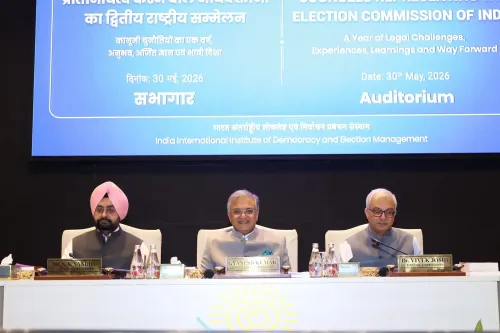
The ECI clarified that all decisions on the SIR were taken unanimously by all three Election Commissioners, including the Chief Election Commissioner.
The Supreme Court heard petitions from Congress, CPI, CPI(M), and TMC challenging the SIR process and found it appropriate.
Patel accused Congress of praising the ECI when it wins elections but raising allegations of irregularities when the BJP wins.
In Kerala , Congress reportedly credited the SIR exercise with contributing to its own electoral victory, Patel said.
Patel cited India's growth rate of 7.8 per cent and the country's trajectory toward becoming the world's third-largest economic power .
Gujarat Chief Minister Bhupendra Patel on Sunday, 27 September firmly rejected the Congress party's allegations of divisions within the Election Commission of India (ECI) over the Special Intensive Revision (SIR) of electoral rolls, calling the claims 'completely baseless.' Patel cited the ECI's own clarification that all decisions on the SIR were taken unanimously by all three Election Commissioners, including the Chief Election Commissioner.
What Patel Said at the Press Conference
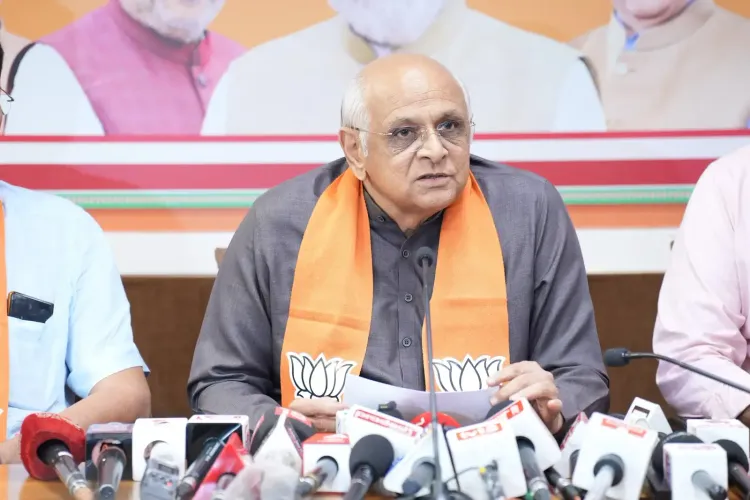
Addressing a press conference at the Bharatiya Janata Party (BJP) state headquarters in Gandhinagar, Patel described the Election Commission as an autonomous institution and said elections in India are conducted through a transparent process. 'The fact that all three Election Commissioners, including the Chief Election Commissioner, have clearly stated that all decisions regarding SIR were taken unanimously proves that the allegations of differences within the Election Commission are completely baseless,' he said.
Patel added that the Commission was actively working to ensure all eligible citizens are properly enrolled in electoral rolls and can exercise their right to vote. He also noted that the Supreme Court had found Form 6 — used for registration in electoral rolls — appropriate, with the poll panel taking care that no eligible voter is excluded.
Congress Accused of Double Standards
The Chief Minister levelled sharp criticism at the Congress, accusing the party of shifting its stance on the Election Commission based on electoral results. 'Congress has two different sets of teeth — one for chewing and another for showing,' he said, alleging that the party praised the ECI's impartiality when it won elections but raised charges of 'vote theft' and irregularities when mandates went to the BJP under Prime Minister Narendra Modi.
Patel pointed out that Congress, the Communist Party of India (CPI), the CPI(M), and the All India Trinamool Congress (TMC) had collectively approached the Supreme Court to challenge the SIR process — and that the court, after hearing the parties, had found the process appropriate. He also noted that in Kerala, Congress itself had credited the SIR exercise with contributing to its victory.
West Bengal and the Broader Political Charge
Patel invoked West Bengal to underscore what he called Congress's political inconsistency. He recalled that the Supreme Court had appointed a Special Observer for Bengal's elections following a demand from the TMC itself. He alleged that following the removal of names that had been 'illegally added' from electoral rolls and the exposure of 'fake voters,' the BJP went on to win the election in the state.
He questioned Rahul Gandhi, Priyanka Gandhi, and Sonia Gandhi over Congress's prolonged absence from power in Bengal — noting the party has been out of office there for 40 years — and in Uttar Pradesh and Bihar since 1990. He alleged that those who had historically curtailed the ECI's autonomy while in government were now making 'baseless allegations' against the institution.
Development Record and 'Seva Sankalp Abhiyan'
Patel also used the occasion to highlight what he called the development-oriented politics of Prime Minister Modi's leadership, saying India's growth rate had reached 7.8 per cent and that the country was on track to become the world's third-largest economic power. He referred to the ongoing 'Seva Sankalp Abhiyan', being held to mark Modi's 25 years in public life and service.
The Chief Minister concluded by saying that while citizens in a democracy have every right to question institutions, debates over sensitive constitutional bodies like the Election Commission must be grounded in facts, law, and confidence in those institutions — not electoral frustration. The controversy over SIR is likely to continue generating political heat as opposition parties press their challenge in the courts.
Point of View
However, is whether the SIR process itself has adequate safeguards against selective voter-roll exclusions, regardless of who benefits politically. The Supreme Court's endorsement settles the legal question for now, but it does not end the political dispute. With multiple opposition parties still contesting the process and assembly elections on the horizon in several states, the SIR row is unlikely to disappear — it will simply migrate from the courts to the campaign trail.
NationPress
28 Sept 2026
Frequently Asked Questions
What is the Special Intensive Revision (SIR) of electoral rolls?
The Special Intensive Revision (SIR) is an exercise conducted by the Election Commission of India to comprehensively update electoral rolls — adding eligible new voters and removing ineligible or duplicate entries. It has become politically contentious, with opposition parties alleging that the process has been used to exclude genuine voters, a charge the ECI and the BJP deny.
Why is Congress alleging differences within the Election Commission over SIR?
Congress and several other opposition parties have claimed there were internal disagreements among Election Commissioners over how the SIR process was conducted. The Election Commission issued a clarification stating that all three Commissioners, including the Chief Election Commissioner, took decisions unanimously, which Gujarat CM Bhupendra Patel cited on Sunday to call the allegations baseless.
What did the Supreme Court say about the SIR process?
The Supreme Court heard petitions filed by Congress, the CPI, the CPI(M), and the TMC challenging the SIR process and found it appropriate. According to Chief Minister Patel, the court also considered Form 6 — used for voter registration — a valid mechanism, and the ECI has stated that care is taken to ensure no eligible citizen is excluded.
What is the BJP's criticism of Congress's stance on the Election Commission?
BJP leaders, including Gujarat CM Bhupendra Patel, accuse Congress of adopting contradictory positions on the ECI — praising its impartiality when the party wins (as in Kerala, where Congress reportedly credited the SIR for its victory) and alleging 'vote theft' when the BJP wins. Patel claimed this selective criticism undermines constitutional institutions.
What is the 'Seva Sankalp Abhiyan' mentioned by CM Patel?
The 'Seva Sankalp Abhiyan' is a public outreach programme being held to mark Prime Minister Narendra Modi's 25 years in public life and service. Patel referenced it during the press conference as part of a broader tribute to Modi's governance record.