CM Bhupendra Patel Defends SIR Voter Roll Revision Data

Synopsis
Gujarat CM Bhupendra Patel has defended the Election Commission's Special Intensive Revision, citing higher voter-name deletion rates in BJP-ruled states including UP and Gujarat to rebut opposition claims of partisan or communal targeting in the electoral roll update exercise.
Key Takeaways
Gujarat CM Bhupendra Patel on October 13, 2026 publicly defended the Election Commission's Special Intensive Revision (SIR) of voter rolls.
He claimed BJP-ruled Uttar Pradesh saw the highest national deletions at approximately 2.05 crore names — directly challenging the partisan-manipulation narrative.
Gujarat , also BJP-governed, reportedly had around 14.5% of names removed — higher than any opposition-ruled state, per Patel's figures.
In West Bengal , Patel cited data suggesting roughly 63% of removed names belonged to Hindus, countering allegations of communal targeting.
The Representation of the People Act, 1950 mandates periodic electoral roll revisions to remove deceased, migrated, and duplicate entries.
The specific figures cited by Patel are unverified by an independent official release and form part of a political argument.
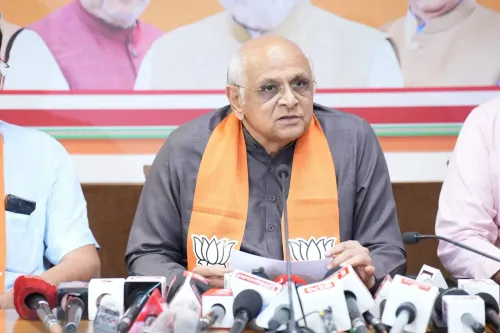
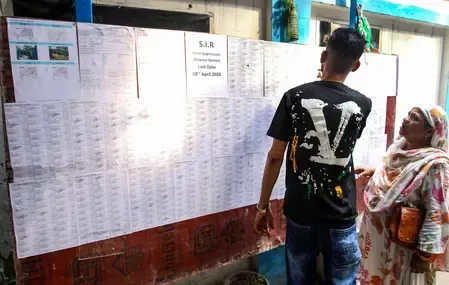
The numbers, Gujarat Chief Minister Bhupendra Patel argues, tell a story the opposition refuses to read. On Tuesday, October 13, the BJP leader took to X to mount a detailed, data-driven defence of the Election Commission's Special Intensive Revision (SIR) process — pushing back hard against charges that the exercise is being weaponised to delete voter names along political or communal lines.
The numbers Patel says opposition is ignoring
Patel's core argument rests on geographic data. He points out that BJP-ruled Uttar Pradesh saw the highest number of deletions nationwide — roughly 2.05 crore names removed. In his own state of Gujarat, also BJP-governed, approximately 14.5% of names were struck from the rolls — a figure he says exceeds the deletion rate in any opposition-ruled state. 'If the objective were political,' he asked pointedly, 'would the numbers look like this?'
The argument carries a certain internal logic: a ruling party engineering deletions for electoral advantage would be unlikely to cut deepest in its own strongholds. But the figures cited — the 2.05 crore UP number, the 14.5% Gujarat share — remain officially unconfirmed, and Patel offered them as part of a political argument rather than a sourced official release.
The West Bengal communal claim, directly addressed
Patel went further, targeting the allegation that the SIR disproportionately targets minority communities. He cited a specific claim: that in West Bengal — governed by the Trinamool Congress, not the BJP — approximately 63% of the names removed from the voter list belonged to Hindus. His conclusion: the exercise does not target any specific community. It is, he said, a clean-up of deceased, migrated, and duplicate entries.
West Bengal's inclusion in the argument is deliberate. As an opposition-governed state, its data undercuts the partisan-motivation thesis more effectively than any BJP state could. Whether that figure withstands independent scrutiny is a separate question — but as a rhetorical move, it lands precisely where Patel intends.
What the SIR actually is — and why it matters now
The Election Commission of India, India's constitutional electoral authority, conducts periodic intensive revisions of voter rolls under the Representation of the People Act, 1950. These exercises remove entries for people who have died, relocated, or appear more than once — and simultaneously open the rolls to new, young voters. Patel called the current SIR a 'statutory process' that is 'entirely transparent,' invoking the Election Commission's constitutional standing to lend the process procedural legitimacy.
Opposition parties have contested intensive revisions before. The charge that roll cleanses serve ruling-party interests is a recurring feature of Indian electoral politics — and an equally recurring counter-argument is that the data, read honestly, rarely supports it. Patel's post is the latest, and notably specific, entry in that long debate. 'A clean and accurate voter list,' he wrote, 'is the true guarantee of free and fair elections.'
With the Election Commission yet to release a comprehensive official breakdown of the SIR outcomes, the battle over whose numbers and whose narrative the public accepts is very much live.
Point of View
More aggressive posture than simply citing Election Commission authority. By leading with BJP-state deletion numbers, the party attempts to reframe what is inherently a sensitive electoral-integrity debate into a fact-check challenge for the opposition. The West Bengal communal-share figure, if it holds up to scrutiny, is the most politically potent element: it converts an opposition narrative about minority targeting into apparent evidence of the opposite. Whether the Election Commission follows up with an official data release will determine how long this particular line of argument holds.
NationPress
13 Oct 2026
Frequently Asked Questions
What is the Special Intensive Revision (SIR) of voter lists?
The Special Intensive Revision (SIR) is an Election Commission of India exercise conducted under the Representation of the People Act, 1950, to update electoral rolls by removing entries of deceased, migrated, or duplicate voters and enrolling new eligible voters.
Why is the SIR process controversial?
Opposition parties have alleged that the current SIR exercise is being used to unilaterally delete the names of eligible voters along political or communal lines. The BJP and Gujarat CM Bhupendra Patel dispute this, citing higher deletion rates in BJP-governed states as evidence of impartiality.
Which state had the most voter names removed under the SIR?
According to figures cited by Gujarat CM Bhupendra Patel, BJP-ruled Uttar Pradesh had the highest number of deletions nationally — around 2.05 crore names. These figures have not yet been officially confirmed by the Election Commission.
What did Gujarat CM Bhupendra Patel say about West Bengal voter deletions?
Patel claimed that in West Bengal — governed by the Trinamool Congress — approximately 63% of names removed from the voter list belonged to Hindus, using this to counter allegations that the SIR targets any specific religious community.
Is the deletion of voter names by the Election Commission legal?
Yes. The Election Commission of India is constitutionally mandated to maintain accurate electoral rolls. Periodic revisions that remove deceased, migrated, or duplicate entries are a standard statutory function under the Representation of the People Act, 1950.