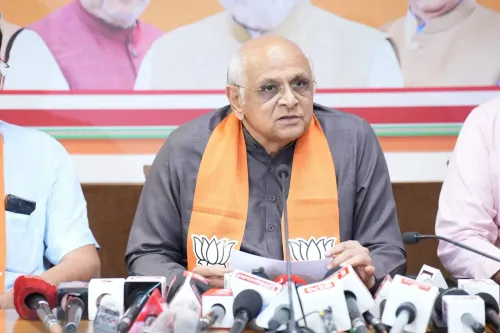
Gujarat SIR: CM Bhupendra Patel says 14.5% voter names removed, defends process
Synopsis
Gujarat CM Bhupendra Patel revealed that 14.5% of the state's voter names were removed under the SIR — a higher share than in any opposition-governed state — and dismissed allegations of targeted deletions. His remarks came on the same day the BJP swept 38 of 44 seats in the Gandhinagar Municipal Corporation, deepening the political stakes around electoral roll management.
Key Takeaways
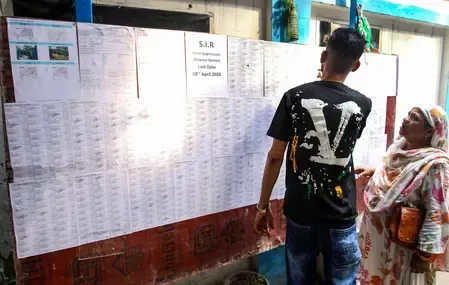
Gujarat CM Bhupendra Patel confirmed that approximately 14.5% of voter names were removed from the state's electoral rolls under the Special Intensive Revision (SIR) .
Patel said the removed names primarily covered deceased voters, migrants, and duplicate entries, describing the process as impartial and transparent.
Uttar Pradesh (BJP-governed) saw around 2.05 crore names deleted; Patel cited this to counter claims of partisan targeting.
The BJP won 38 of 44 seats in the Gandhinagar Municipal Corporation on the same day; Congress won 5 , AAP won none.
Opposition parties continue to allege the SIR risks disenfranchising eligible voters and have called for independent scrutiny of deletion data.
Gujarat Chief Minister Bhupendra Patel on Tuesday, 13 October 2026, mounted a robust defence of the Special Intensive Revision (SIR) of electoral rolls, disclosing that approximately 14.5 per cent of names had been removed from the state's voter list — a proportion he said exceeded that of any opposition-governed state — and firmly rejected allegations that the exercise was being used to selectively purge voters.
What Patel Said on X
In a post on social media platform X, the Chief Minister called opposition claims that the revision was aimed at unilaterally removing voters' names 'completely divorced from reality.' He argued that the scale of deletions across BJP-ruled and non-BJP-ruled states alike demonstrated that the process was impartial. Uttar Pradesh, governed by the Bharatiya Janata Party (BJP), saw around 2.05 crore names removed from its electoral rolls, he noted.
Nature of the Removed Entries
'The vast majority of the removed names belong to individuals who have passed away, migrated, or had duplicate entries,' Patel said, underlining that accurate electoral rolls are essential for free and fair elections. He described the SIR as a 'statutory process' conducted by the Election Commission of India (ECI) and maintained that it was fully transparent. Patel also referred to West Bengal, claiming that approximately 63 per cent of the names deleted there belonged to Hindus — a point he used to counter suggestions that the exercise targeted any one community. 'If the objective were political, would the numbers look like this?' he asked.
Political Context: BJP's Strong Local Body Results
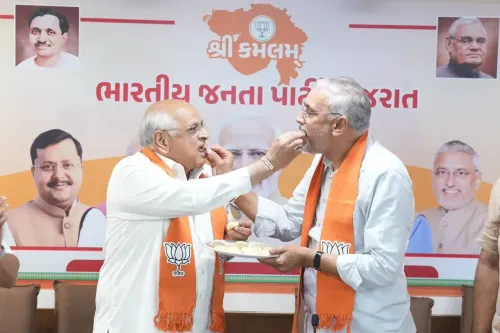
The Chief Minister's remarks came on the same day that the BJP posted strong results in Gujarat's local body elections. In the Gandhinagar Municipal Corporation, the party won 38 of 44 seats. The Indian National Congress secured five seats, an Independent candidate won one, and the Aam Aadmi Party (AAP) — which had won one seat in the 2021 elections — failed to open its account this time.
Patel linked the results to public endorsement of Prime Minister Narendra Modi's leadership and the BJP's development agenda. Citing remarks made by Union Home Minister Amit Shah following the outcome, he said the mandate reflected voters' rejection of what he described as the opposition's 'negative narrative and politics based on falsehoods.' In a separate post, Patel called on the Congress and the INDIA bloc to introspect over their repeated electoral defeats in Gujarat.
Why SIR Has Become a Political Flashpoint
The SIR exercise has emerged as a significant point of political contention nationally. Opposition leaders have raised concerns about mass deletions from electoral rolls and the potential disenfranchisement of eligible voters. The Election Commission periodically conducts such revisions to remove invalid entries — including those of deceased electors, migrants, and duplicates — while simultaneously adding newly eligible voters. This is the latest episode in a broader debate over the integrity and neutrality of electoral roll management in India, a concern that has recurred ahead of several state and general election cycles.
What Comes Next
With the SIR controversy showing no signs of abating, opposition parties are expected to continue pressing the Election Commission for transparency and independent audits of deletion data. The BJP's clean sweep in Gandhinagar, meanwhile, is likely to sharpen the political narrative heading into future electoral contests in Gujarat.
Point of View
But it sidesteps the core opposition concern: not whether BJP states deleted more names in absolute terms, but whether deletion methodology is consistently auditable and contestable by affected voters. The 14.5% figure is unusually high by any historical benchmark and deserves independent verification rather than partisan framing from either side. The BJP's Gandhinagar sweep on the same day risks conflating two separate issues — electoral roll integrity and electoral popularity — in ways that make sober scrutiny harder. India's voter roll management has long suffered from opacity; the SIR debate is an opportunity to demand systemic transparency, not a trophy for any party.
NationPress
14 Oct 2026
Frequently Asked Questions
What is the Special Intensive Revision (SIR) of electoral rolls in Gujarat?
The Special Intensive Revision (SIR) is a statutory exercise conducted by the Election Commission of India to update voter lists by removing invalid entries — such as those of deceased persons, migrants, and duplicate registrations — and adding newly eligible voters. In Gujarat, the current SIR round resulted in approximately 14.5% of names being removed from the state's voter list.
Why is the SIR exercise controversial?
Opposition parties have alleged that the SIR is being used to selectively delete the names of eligible voters, potentially disenfranchising certain communities. Gujarat CM Bhupendra Patel has rejected these claims, arguing that deletions in BJP-ruled Uttar Pradesh and other states show the process is impartial and follows standard Election Commission guidelines.
What were the Gandhinagar Municipal Corporation election results?
The BJP won 38 of 44 seats in the Gandhinagar Municipal Corporation elections held on 13 October 2026. The Congress won five seats, one Independent candidate won one seat, and the AAP — which had won one seat in 2021 — failed to win any this time.
How does Gujarat's 14.5% voter deletion rate compare to other states?
Gujarat CM Patel claimed that 14.5% is a higher proportion than in any opposition-governed state, and cited Uttar Pradesh — governed by the BJP — as having had around 2.05 crore names removed from its rolls. He also referenced West Bengal, where he claimed about 63% of deleted names belonged to Hindu voters.
What happens next in the SIR and electoral rolls debate?
Opposition parties are expected to continue pressing the Election Commission for transparency and an independent audit of deletion data. The BJP's strong performance in Gandhinagar has added a political dimension to the dispute, which is likely to persist as a point of contention ahead of future elections in Gujarat.