CM Rekha Gupta slams Rahul Gandhi over remarks on female head of state
Synopsis
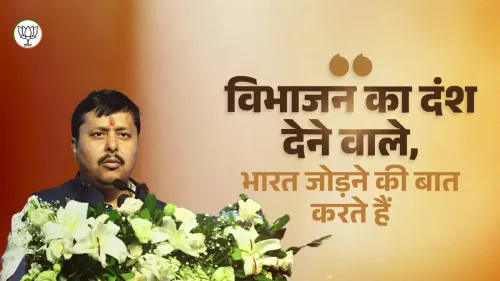
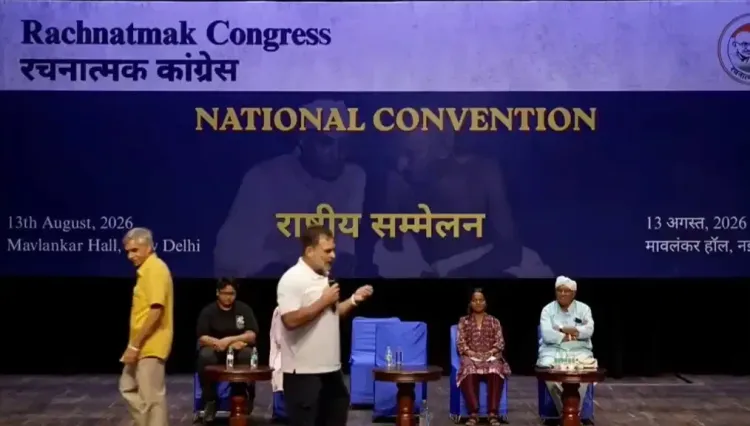
Delhi Chief Minister Rekha Gupta has condemned Rahul Gandhi and the Congress party after an alleged objectionable remark about a female head of state was made at a Congress event, with other leaders on stage reportedly laughing. Gupta called it a reckless gamble with India's diplomatic relationships.
Key Takeaways
Delhi CM Rekha Gupta posted a sharp condemnation on X on 14 August 2026 , targeting Rahul Gandhi and the Congress party .
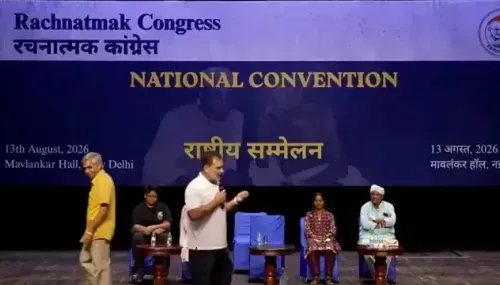
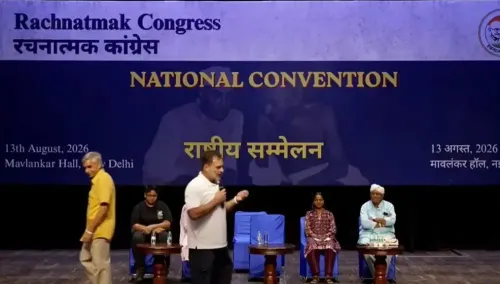
She alleged a Congress leader made an 'objectionable remark' about a female head of state at a public event, with other leaders on stage responding with laughter.
Gupta, writing as a woman, said the incident caused her particular anguish and constituted a 'disgraceful situation'.
She accused Congress of staking the 'sensitivities of international relations' for the sake of a headline, calling it the 'height of irresponsibility'.
The BJP has a well-established pattern of positioning itself as the defender of diplomatic decorum against opposition statements on foreign policy.
Gupta noted that the character of Congress and Rahul Gandhi is now visible not just to India, but to the world.
A remark made at a public Congress event — allegedly targeting a female head of state — has drawn sharp condemnation from Delhi Chief Minister Rekha Gupta, who called it a stain on democratic decorum and a reckless gamble with India's international relationships. Writing on X on Friday, 14 August 2026, Gupta did not mince words: the incident, she said, causes her particular anguish as a woman.
Gupta's post, written in Hindi, accuses Rahul Gandhi and the Indian National Congress of being consumed by 'vikrit soch' (a distorted or perverted mindset) and leaving no stone unturned in tarnishing democratic propriety. She describes watching other leaders on stage break into laughter at what she calls an 'unseemly remark' about a woman who is a head of state — a moment she says provoked genuine outrage.
The remark that lit the fuse
The specific trigger is a comment — made, Gupta implies, by a Congress leader who styles himself a 'swaghoshot yuva Turk' (self-proclaimed young Turk) — directed at a female head of state. Gupta does not name the individual or the head of state in her post. What she underscores is the reaction on stage: laughter from fellow leaders, which she argues amplifies the offence and signals an institutional failure of restraint within the party.
Her sharpest charge is not personal but strategic: that Congress is willing to 'stake the sensitivities of international relations' in pursuit of a headline. That framing positions the episode not merely as a lapse in manners but as a potential diplomatic liability — a line the BJP has consistently deployed against opposition commentary on foreign policy.
BJP's long-running 'diplomatic decorum' playbook
This is not the first time the ruling party has accused Congress of recklessness on foreign-policy optics. Over the past decade, BJP leaders have repeatedly cast themselves as guardians of institutional propriety in international affairs, arguing that opposition statements — particularly those touching on neighbouring countries or foreign dignitaries — can undermine carefully built bilateral relationships. Such exchanges tend to sharpen around high-profile diplomatic moments.
Gupta closes with a pointed observation: India is watching Congress's character — and now, she says, so is the world.
Whether the Ministry of External Affairs issues any formal response, or whether the episode surfaces during the next parliamentary session, will determine how far this controversy travels beyond the political arena.
Point of View
She adds a layer of moral authority to what is otherwise a partisan political attack — making it harder for Congress to dismiss the criticism as routine political sparring. The episode, if the underlying remark is verified, could hand the ruling party a durable narrative heading into any parliamentary session: that Congress is willing to embarrass India on the world stage for domestic political gain. The reference to an international audience watching suggests the BJP intends to amplify this beyond domestic politics.
NationPress
28 Sept 2026
Frequently Asked Questions
What did Rekha Gupta say about Rahul Gandhi?
Delhi Chief Minister Rekha Gupta accused Rahul Gandhi and the Congress party of tarnishing democratic decorum, alleging that a Congress leader made an objectionable remark about a female head of state while other leaders on stage laughed. She called it reckless and a threat to India's international relationships.
What remark about a female head of state is Rekha Gupta referring to?
Gupta's post does not name the specific individual who made the remark or the female head of state targeted. The exact remark and the identity of the parties involved have not been officially confirmed.
Why is Rekha Gupta criticising Congress over foreign policy?
Gupta argues that making objectionable comments about a foreign head of state — and laughing about it publicly — stakes the sensitivities of India's international relations for the sake of grabbing headlines, which she calls the height of irresponsibility.
Will the Ministry of External Affairs respond to this controversy?
As of the time of Gupta's post, no official statement from the Ministry of External Affairs has been reported. Any formal government response or parliamentary debate would be the next significant development to watch.