CM Rekha Gupta hits back at Kharge over remarks on PM Modi
Synopsis
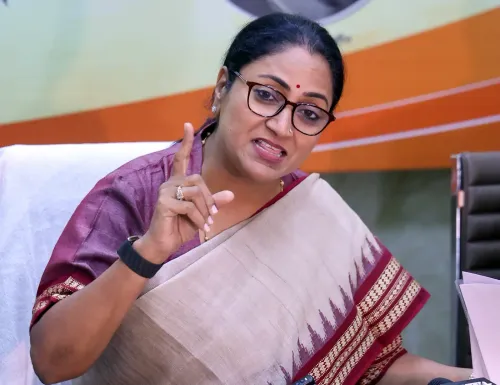
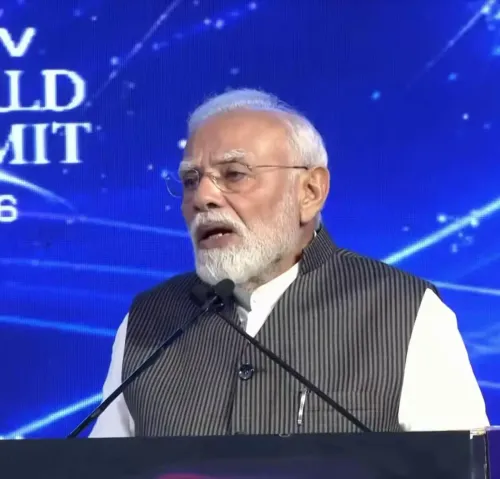
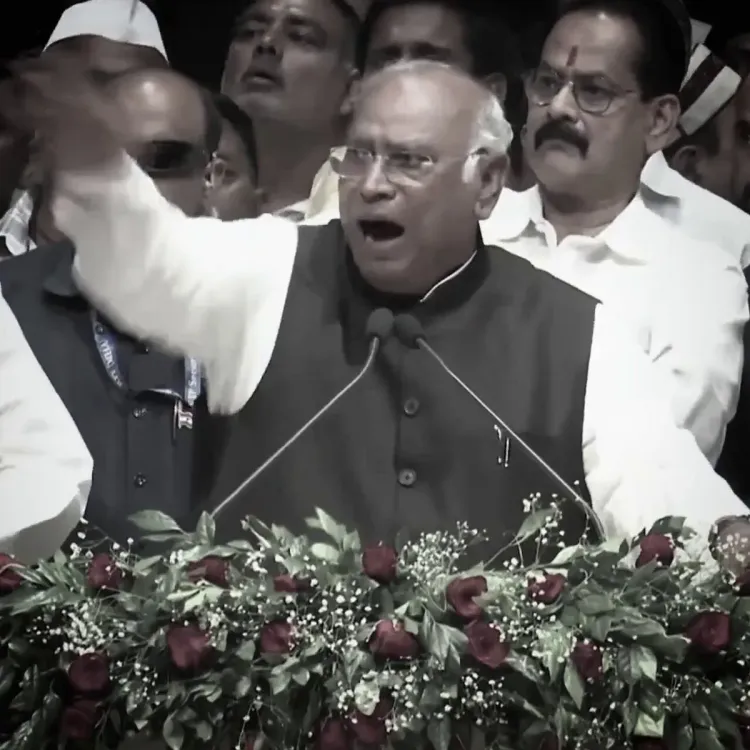
Delhi Chief Minister Rekha Gupta on 25 October 2026 sharply rebuked Congress president Mallikarjun Kharge for remarks about PM Modi, calling his language the 'pinnacle of Congress's moral decline' and framing the Congress as unable to accept a commoner Prime Minister chosen by ordinary voters.
Key Takeaways
Delhi CM Rekha Gupta posted a sharp Hindi-language rebuttal directed at Congress president Mallikarjun Kharge on 25 October 2026 .
She called Kharge's language 'vile' and described it as the 'epitome of Congress's moral and ideological decline.' Gupta argued Congress's real problem is with the ordinary Indian voter who elected a man from a common family as Prime Minister in 2014 .
She coined the phrase 'darbari ahankaar' (courtly arrogance) to characterise Congress's attitude toward the democratic verdict.
The post defended PM Modi's family against what she called 'indecent remarks,' labelling such attacks 'ideological poverty' rather than political courage.
The exchange fits a recurring BJP pattern of framing Congress criticism of Modi as elite contempt for ordinary voters, a strategy central to BJP campaigns since 2014.
A sharp political volley landed on Sunday evening when Delhi Chief Minister Rekha Gupta took direct aim at Congress president Mallikarjun Kharge, calling his language against Prime Minister Narendra Modi the 'pinnacle of Congress's moral and ideological decline.' The post, published on 25 October 2026, framed the exchange not merely as a political spat but as a symptom of a deeper elite contempt for ordinary Indian voters.
Gupta's broadside, written in Hindi, goes beyond a standard rebuttal. Addressing Kharge directly, she wrote: 'ऐसी घटिया भाषा कांग्रेस के नैतिक और वैचारिक पतन की पराकाष्ठा है' — 'Such vile language is the epitome of Congress's moral and ideological bankruptcy.' Her core argument: Congress's real grievance is not with Modi the politician, but with the ordinary Indian voter who dismantled dynastic privilege by electing a man from a common family as Prime Minister.
The dynastic politics argument, sharpened again
This is a well-worn but persistently effective line for the BJP. Since the 2014 Lok Sabha election that ended a decade of Congress-led UPA rule, the party has framed Modi's rise as a democratic verdict against the Nehru-Gandhi family's multigenerational grip on Indian politics. Gupta's post is a crisp distillation of that argument: 'This truth is something Congress's courtly arrogance has never been able to accept.'
The phrasing 'darbari ahankaar' — courtly arrogance — is pointed and deliberate. It casts the Congress leadership not as a legitimate opposition but as a displaced court still furious at losing the throne. It is a rhetorical move designed to resonate with voters who associate the Congress with entitlement and insider politics.
Rekha Gupta's defence of the ordinary voter
The second half of the post pivots to voters rather than opponents. Gupta writes that India's ordinary citizen 'knows the power of their vote and their own future,' and has full confidence that under Modi's leadership, India is advancing towards becoming a Viksit Rashtra — a developed nation. This framing is textbook BJP messaging: the voter as the real protagonist, the Prime Minister as the vehicle of popular will.
She closes with a direct rebuke: 'Making indecent remarks about the respected Prime Minister's family is not political courage — it is ideological poverty.' The Hindi phrase she uses, 'vaicharik daridrata', carries a particular sting — poverty of thought, not just bad manners.
Congress-BJP war of words: the pattern and the stakes
Exchanges of this kind — a Congress leader makes a pointed remark about Modi, a BJP leader responds with a counter-offensive framing Congress as elitist and dynastic — have been a recurring feature of Indian politics since 2014. What gives this particular round some edge is the seniority of the target: Kharge, as Congress president and former Leader of the Opposition in the Rajya Sabha, is not a junior spokesperson but the party's most senior official voice. Gupta's response signals that the BJP intends to hold Kharge personally accountable for every word he uses about the Prime Minister.
As Parliament's winter session approaches and state election cycles keep the political temperature elevated, these exchanges will likely intensify. The BJP's calculation is straightforward: every time Congress leadership uses sharp personal language about Modi, the BJP can reframe the story as establishment contempt for a commoner Prime Minister — and for the millions who voted him in.
Point of View
Congress as a displaced dynastic court. By addressing Kharge by name and elevating the exchange to a question of 'ideological poverty,' the BJP raises the reputational cost for the Congress president every time he takes a personal shot at the Prime Minister. The move also pre-empts any Congress attempt to frame the original remarks as policy criticism — instead, it resets the entire conversation on terrain the BJP has owned since 2014. With the winter session of Parliament on the horizon, this kind of early escalation is likely a signal of the combative posture both sides are preparing to adopt.
NationPress
25 Oct 2026
Frequently Asked Questions
What did Rekha Gupta say about Mallikarjun Kharge?
Delhi Chief Minister Rekha Gupta accused Congress president Mallikarjun Kharge of using 'vile language' against PM Modi, calling it the 'pinnacle of Congress's moral and ideological decline' and describing such remarks as 'ideological poverty' rather than political courage.
Why did Rekha Gupta attack Congress over dynastic politics?
Gupta argued that Congress's hostility toward PM Modi stems from its inability to accept that ordinary Indian voters dismantled dynastic privilege by electing a man from a common family as Prime Minister — a BJP narrative central to politics since the 2014 general election.
What does 'vaicharik daridrata' mean in Rekha Gupta's post?
'Vaicharik daridrata' translates from Hindi as 'ideological poverty' — Gupta used the phrase to characterise remarks made about PM Modi's family, arguing they reflect intellectual and moral bankruptcy rather than legitimate political opposition.
Who is Mallikarjun Kharge?
Mallikarjun Kharge is the president of the Indian National Congress and a senior opposition leader who has served as Leader of the Opposition in the Rajya Sabha.
What is the BJP's 'dynastic politics' argument against Congress?
Since 2014, the BJP has repeatedly argued that the Congress party is dominated by the Nehru-Gandhi family across generations, contrasting this with PM Narendra Modi's rise from a non-political, common family background as a symbol of genuine democratic representation.