Smriti Irani chairs BJP organisational meet in Chhattisgarh
Synopsis
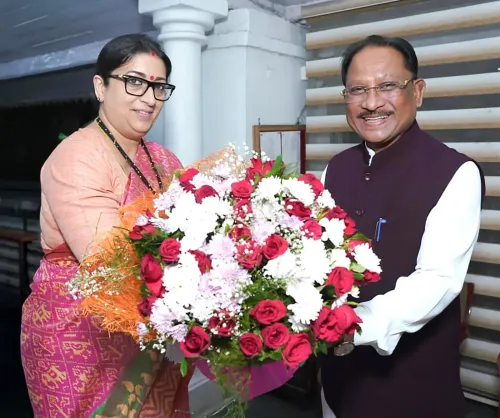
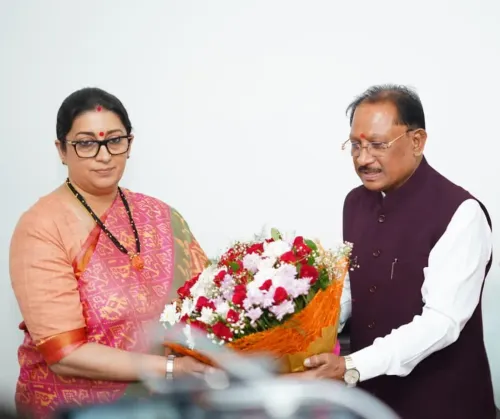
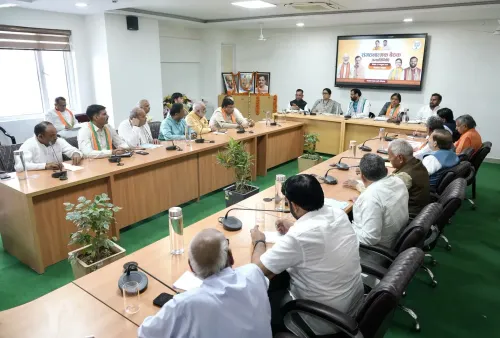
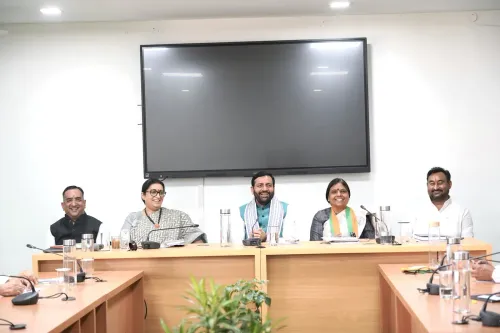
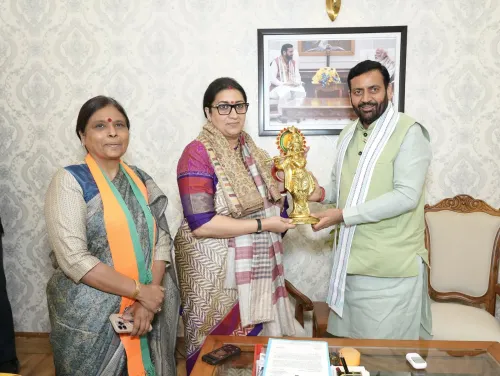
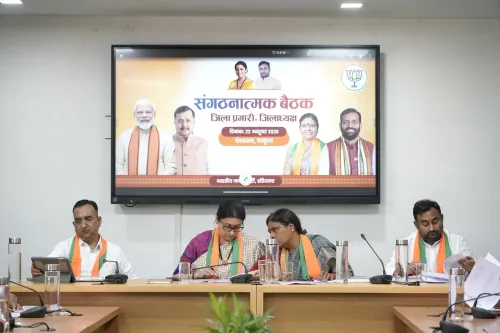
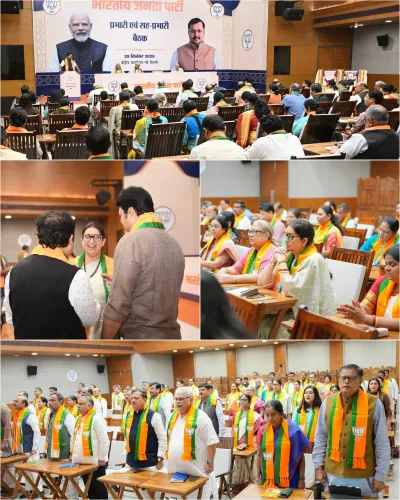
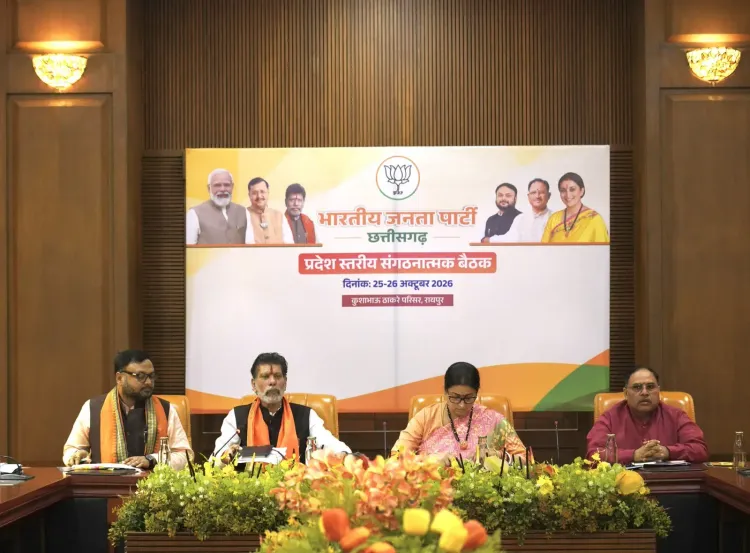
BJP leader Smriti Irani attended a Chhattisgarh state office-bearers' meeting on 25 October 2026, joining national secretary Sidharth Shambhu, state president Kiran Deo, and organisation general secretary Karmveer to discuss party priorities and future action plans.
Key Takeaways
BJP leader Smriti Irani participated in a state office-bearers' meeting in Chhattisgarh on 25 October 2026 .
Discussions focused on organisational priorities, upcoming work plans, and strengthening the party structure.
Sidharth Shambhu , BJP National Secretary and Chhattisgarh co-incharge, was present alongside state leadership.
Kiran Deo , BJP Chhattisgarh unit president, and organisation general secretary Karmveer also attended.
Chhattisgarh has been under BJP governance since the party's victory in the 2023 assembly elections .
Follow-up state executive meetings or organisational appointment announcements are expected as downstream outcomes.
State-building happens in closed rooms before it shows up on ballot papers. On Sunday, 25 October 2026, BJP leader Smriti Irani — senior party figure and former Union Minister — travelled to Chhattisgarh to chair a meeting of the state's party office-bearers, turning the focus squarely on organisational priorities and the action plan ahead.
Irani wrote that discussions covered 'organisational priorities, upcoming work plans, and matters related to making the organisation even stronger' — a compact mandate that signals the party is in active consolidation mode in the state it recaptured in the 2023 assembly elections.
Who was in the room — and why it matters
The gathering brought together the key pillars of the BJP's Chhattisgarh machinery. Sidharth Shambhu, BJP National Secretary and state co-incharge, represented the central party's oversight role. Kiran Deo, president of the BJP Chhattisgarh unit, anchored the state leadership, while Karmveer, the state organisation's general secretary, held the brief for ground-level cadre management. When the national secretary, the state president, and the organisation general secretary are in the same room with a senior central leader, the agenda is almost never ceremonial.
Irani's role in Chhattisgarh's party circuit
BJP leaders of Irani's stature routinely conduct these closed-door reviews in states where the party holds power, acting as a bridge between the central leadership and state units. The format is a long-standing one: senior leaders arrive, assess organisational health, align on upcoming programmes, and return to Delhi with a read of the ground. The visit signals that Chhattisgarh remains firmly on the party's active monitoring list — a state it is keen to consolidate after winning it back.
What emerges from such meetings often shapes the next round of organisational appointments, district-level mobilisation drives, and the structure of the party's campaign infrastructure — the scaffolding that rarely makes headlines until an election is announced.
Watch for follow-up announcements on state executive committee meetings or changes in organisational posts in the weeks ahead — those are the downstream signals that a meeting like this has produced concrete decisions.
Point of View
A state won back from Congress in 2023, the priority now shifts from electoral victory to consolidating cadre strength and governance credibility ahead of any future electoral test. The presence of both the central co-incharge and the full state leadership troika in one room suggests this was a structured review, not a courtesy call — decisions made in rooms like this typically ripple through to district-level structures within weeks.
NationPress
25 Oct 2026
Frequently Asked Questions
Why did Smriti Irani visit Chhattisgarh in October 2026?
Smriti Irani visited Chhattisgarh on 25 October 2026 to participate in a BJP state office-bearers' meeting focused on organisational priorities, upcoming work plans, and strengthening the party structure in the state.
Who attended the BJP organisational meeting in Chhattisgarh?
The meeting was attended by Smriti Irani, BJP National Secretary and Chhattisgarh co-incharge Sidharth Shambhu, state president Kiran Deo, organisation general secretary Karmveer, and other state office-bearers.
What is Sidharth Shambhu's role in Chhattisgarh BJP?
Sidharth Shambhu serves as the BJP National Secretary and has been designated as the party's co-incharge for Chhattisgarh, acting as the central leadership's point of contact with the state unit.
Who is the BJP Chhattisgarh state president?
Kiran Deo is the president of the BJP Chhattisgarh state unit and was among the senior leaders present at the organisational meeting with Smriti Irani.
Is Chhattisgarh governed by the BJP?
Yes. The BJP has governed Chhattisgarh since winning the state assembly elections in 2023, recapturing the state after a period in opposition.