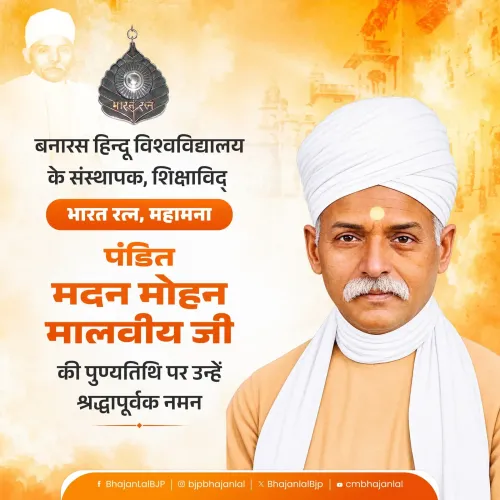
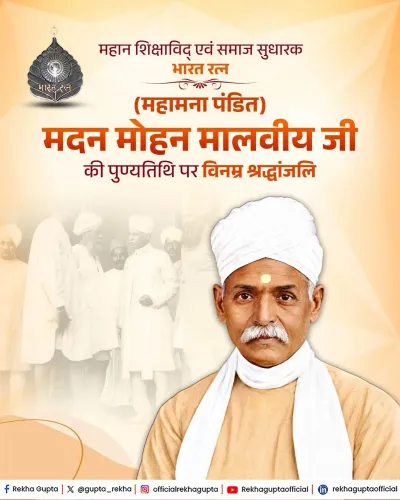
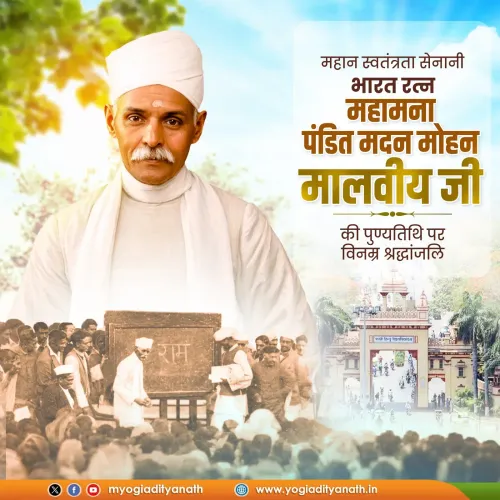
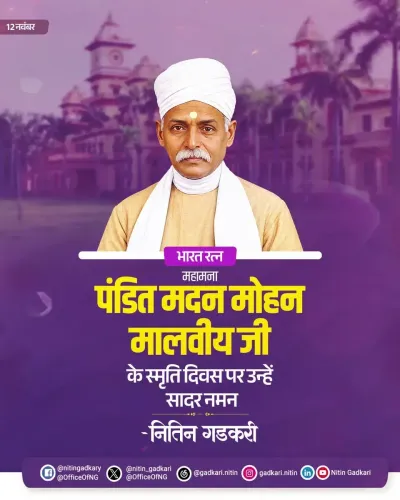
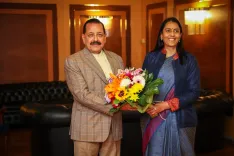
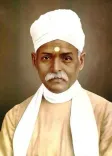
Dr. Jitendra Singh pays tribute to Bharat Ratna Madan Mohan Malviya
Synopsis
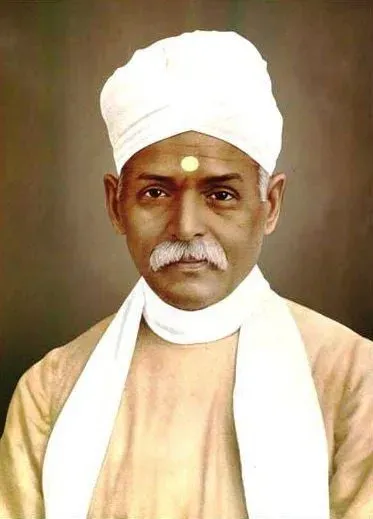
Union Minister Dr. Jitendra Singh honoured Pandit Madan Mohan Malviya on his death anniversary, saluting the Bharat Ratna awardee who founded Banaras Hindu University in 1916 and shaped India's educational and nationalist landscape.
Key Takeaways
Jitendra Singh , Union Minister for Science and Technology, paid tribute to Pandit Madan Mohan Malviya on his death anniversary, 12 November 2026 .
Malviya was a freedom fighter, social reformer, and educationist who founded Banaras Hindu University in Varanasi in 1916 .
The Government of India conferred the Bharat Ratna on Malviya posthumously in 2014 .
BHU is among India's oldest and largest residential universities, standing as Malviya's enduring institutional legacy.
Annual commemorations are held at BHU on 12 November each year to mark the anniversary.
On the death anniversary of Pandit Madan Mohan Malviya — freedom fighter, social reformer, and the visionary who built one of India's greatest universities from the ground up — Union Science and Technology Minister Dr. Jitendra Singh offered a public salute on Thursday, 12 November 2026, honouring a legacy that continues to shape Indian education over a century later.
Posting in Hindi on X, Dr. Singh wrote: 'महान स्वतंत्रता सेनानी, समाज सुधारक, शिक्षाविद् एवं बनारस हिंदू विश्वविद्यालय के संस्थापक, भारत रत्न महामना पं. मदन मोहन मालवीय जी की पुण्यतिथि पर सादर नमन और विनम्र श्रद्धांजलि।' — 'Respectful salutations and humble homage on the death anniversary of the great freedom fighter, social reformer, educationist and founder of Banaras Hindu University, Bharat Ratna Mahamana Pandit Madan Mohan Malviya.'
The man who built a university for a nation in chains
Pandit Madan Mohan Malviya's life was an act of sustained defiance wrapped in constructive purpose. Born in 1861, he was at once a leading voice in the Indian independence movement and a tireless builder of institutions — convinced that a free India would need educated citizens to sustain that freedom. His crowning achievement, Banaras Hindu University (BHU), was established in Varanasi in 1916 and stands today as one of India's oldest, largest, and most prestigious residential universities.
The scale of that vision is worth pausing on. BHU was not merely a college — it was a statement that Indians could create world-class centres of learning on their own terms, in their own land, while still under colonial rule. That act of institution-building during the independence struggle elevated Malviya to what admirers called 'Mahamana' — the great-souled one.
Bharat Ratna conferred posthumously in 2014
In 2014, the Government of India awarded Malviya the Bharat Ratna posthumously — the country's highest civilian honour — cementing his place in the official pantheon of nation-builders. The recognition was widely seen as long overdue for a figure whose contributions spanned nationalist politics, journalism, education reform, and social uplift.
Union ministers offering public tribute on such anniversaries is a consistent feature of India's political calendar — a practice that connects contemporary governance to the independence-era figures who made modern India possible. Dr. Singh's post, brief and unambiguous, fits that tradition precisely.
Every 12 November, Banaras Hindu University in Varanasi marks the anniversary with commemorations on campus — a living institution paying its respects to the man who willed it into existence. Mahamana's reminder endures: the strongest act of patriotism is often the hardest one — building something that outlasts you.
Point of View
Particularly BHU, also carries symbolic weight for a government that has repeatedly foregrounded Varanasi as a cultural and political flagship. Such tributes, while ceremonial in form, function as soft ideological markers — connecting the present administration's self-image to the nation-builders of the past. The posthumous Bharat Ratna of 2014 itself was a political moment that underscored this continuity.
NationPress
12 Nov 2026
Frequently Asked Questions
Who was Pandit Madan Mohan Malviya?
Pandit Madan Mohan Malviya was a prominent Indian freedom fighter, social reformer, and educationist born in 1861. He is best known for founding Banaras Hindu University in Varanasi in 1916 and was posthumously awarded the Bharat Ratna in 2014.
When did Madan Mohan Malviya found Banaras Hindu University?
Madan Mohan Malviya founded Banaras Hindu University in Varanasi in 1916. It is one of India's oldest and largest residential central universities.
When was Bharat Ratna given to Madan Mohan Malviya?
The Bharat Ratna, India's highest civilian honour, was conferred posthumously on Pandit Madan Mohan Malviya in 2014 by the Government of India.
Why is 12 November significant for BHU?
12 November is the death anniversary of Pandit Madan Mohan Malviya, the founder of Banaras Hindu University. The university and public figures across India observe the day with commemorations and tributes.
What did Dr. Jitendra Singh post about Madan Mohan Malviya?
Union Minister Dr. Jitendra Singh posted a tribute in Hindi on X on 12 November 2026, offering respectful homage to Pandit Madan Mohan Malviya on his death anniversary, calling him a great freedom fighter, social reformer, educationist, and founder of Banaras Hindu University.