Mandaviya pays tribute to Deendayal Upadhyay on birth anniversary
Synopsis
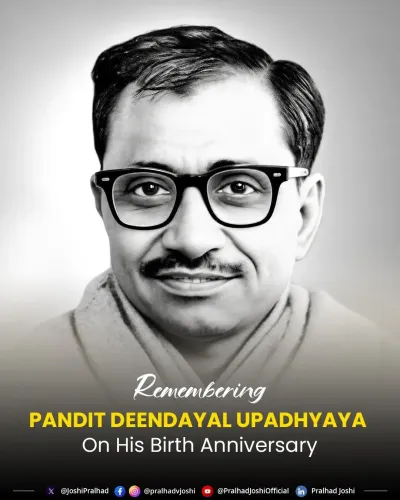
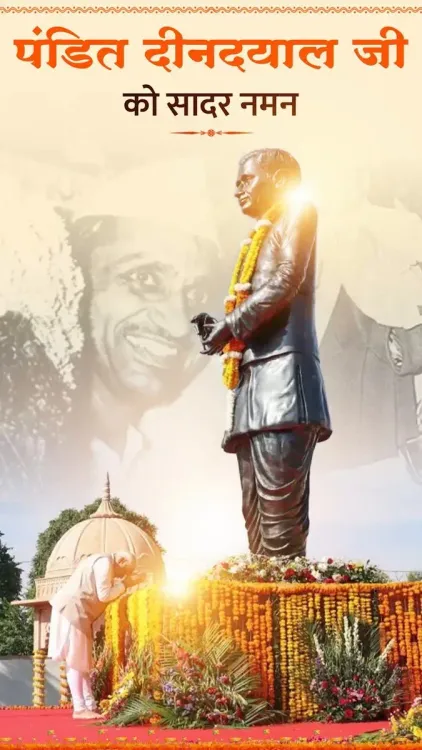
Union Minister Mansukh Mandaviya paid tribute to Pandit Deendayal Upadhyay on his birth anniversary on 25 September 2026, honouring the BJP founding ideologue's Antyodaya philosophy and its enduring influence on Indian welfare policy.
Key Takeaways
Union Minister Mansukh Mandaviya posted a tribute to Pandit Deendayal Upadhyay on 25 September 2026 , the ideologue's birth anniversary.
Upadhyay, born in 1916 , founded the Bharatiya Jana Sangh , the ideological predecessor of the BJP.
His twin doctrines — Integral Humanism and Antyodaya — remain central to BJP's stated welfare philosophy.
The BJP and Jana Sangh have marked this anniversary every year since 1968 as an act of organisational and ideological continuity.
The Antyodaya principle has explicitly shaped multiple central government welfare programmes since 2014 .
Every 25 September, India's ruling establishment pauses to honour the man whose philosophy still shapes its welfare architecture — and this year, Union Minister of Labour, Employment, Youth Affairs and Sports Mansukh Mandaviya added his voice to that tradition with a heartfelt salute on X.
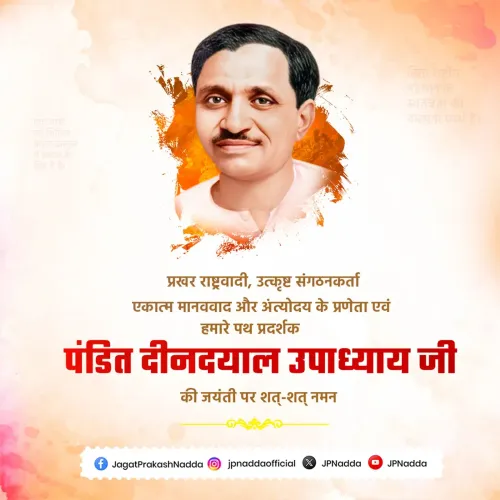
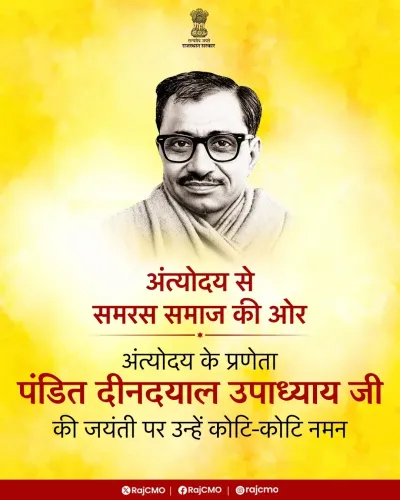
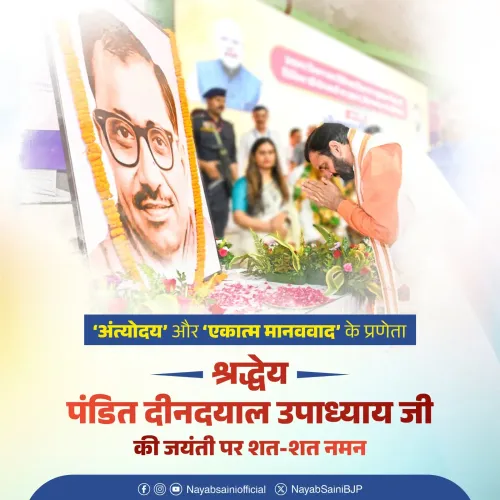
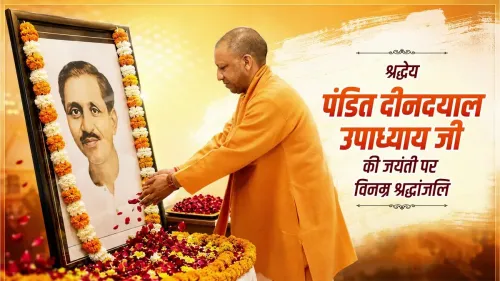
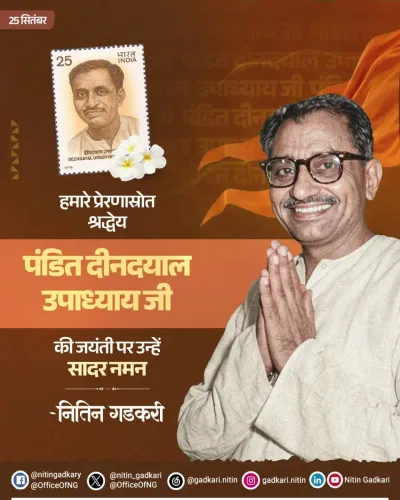
Mandaviya's post — in Hindi — described Pandit Deendayal Upadhyay as a 'great thinker, powerful orator, our source of inspiration, and one who gave society a new direction through the philosophy of Antyodaya.' The tribute was brief, but its ideological weight is anything but.
The man the BJP calls its moral compass
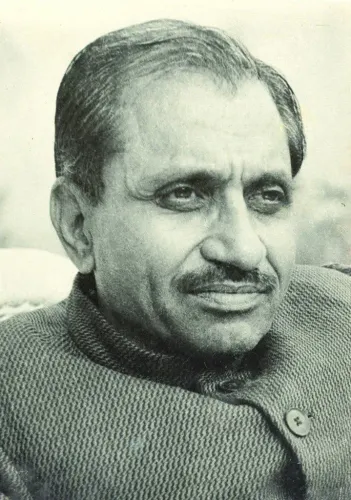
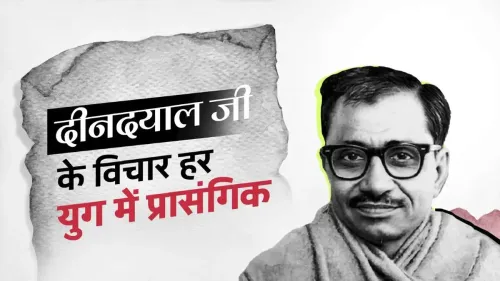
Born in 1916, Pandit Deendayal Upadhyay rose to become the founding architect of the Bharatiya Jana Sangh — the direct ideological predecessor of today's Bharatiya Janata Party. His two landmark contributions were the doctrine of Integral Humanism (एकात्म मानवदर्शन), which sought to reconcile individual freedom with social harmony, and Antyodaya — the principle of uplifting the very last person in the social order before all others.
That second idea, Antyodaya, has never stayed confined to philosophy seminars. Since 2014, it has served as an explicit frame for a range of central government welfare programmes — from food security to rural housing — giving Upadhyay's century-old thinking a live policy afterlife.
An annual ritual with organisational meaning
The BJP and its predecessor Jana Sangh have marked Upadhyay's birth anniversary every year since 1968. Senior ministers, chief ministers, and party workers across India issue tributes in unison — a coordinated act of ideological reinforcement as much as personal reverence. For the party, the commemoration is a reminder that its welfare commitments are rooted in a coherent worldview, not electoral convenience.
Mandaviya's tribute follows that pattern precisely — warm, dignified, and aligned with the party's long-standing emphasis on Upadhyay's vision as the moral engine behind inclusive governance.
The ideas of one man, articulated decades ago, continue to echo in budget speeches, scheme nameplates, and now, a minister's morning post. That is the quiet staying power of Antyodaya.
Point of View
He is actively invoked to anchor welfare delivery in a moral framework that predates the party's electoral dominance. The Antyodaya framing, in particular, allows the ruling party to present its welfare schemes as the fulfilment of a decades-old philosophical promise rather than electoral calculation. On a day when dozens of senior leaders post similar tributes, the coordinated salute also functions as an organisational signal of cohesion and ideological alignment across the party's vast machinery.
NationPress
25 Sept 2026
Frequently Asked Questions
Who was Pandit Deendayal Upadhyay?
Pandit Deendayal Upadhyay (1916–1968) was an Indian thinker and politician who founded the Bharatiya Jana Sangh — the forerunner of the BJP — and developed the doctrines of Integral Humanism and Antyodaya, which emphasise uplifting the weakest members of society.
What is Antyodaya philosophy?
Antyodaya is the principle, articulated by Deendayal Upadhyay, that the measure of social progress is the welfare of the very last and most marginalised person. It has since been used as a guiding frame for several central government welfare schemes in India.
When is Deendayal Upadhyay's birth anniversary?
Pandit Deendayal Upadhyay's birth anniversary falls on 25 September every year. The BJP and its predecessor Jana Sangh have commemorated this date since 1968.
Why does the BJP mark Deendayal Upadhyay Jayanti every year?
The BJP traces its ideological lineage directly to Upadhyay's Bharatiya Jana Sangh. Annual commemorations reinforce the party's philosophical roots in cultural nationalism, social harmony, and Antyodaya-based welfare delivery.
What did Mansukh Mandaviya say about Deendayal Upadhyay?
Union Minister Mansukh Mandaviya described Upadhyay as a 'great thinker, powerful orator, and source of inspiration' who gave society a new direction through the philosophy of Antyodaya, paying tribute on X on 25 September 2026.