Puri pays tribute to Deendayal Upadhyay on birth anniversary
Synopsis
Union Petroleum Minister Hardeep Singh Puri marked Pandit Deendayal Upadhyay's birth anniversary on 25 September 2026, paying tribute to the BJP ideologue's twin philosophies of Antyodaya and Integral Humanism as enduring principles for inclusive national development.
Key Takeaways
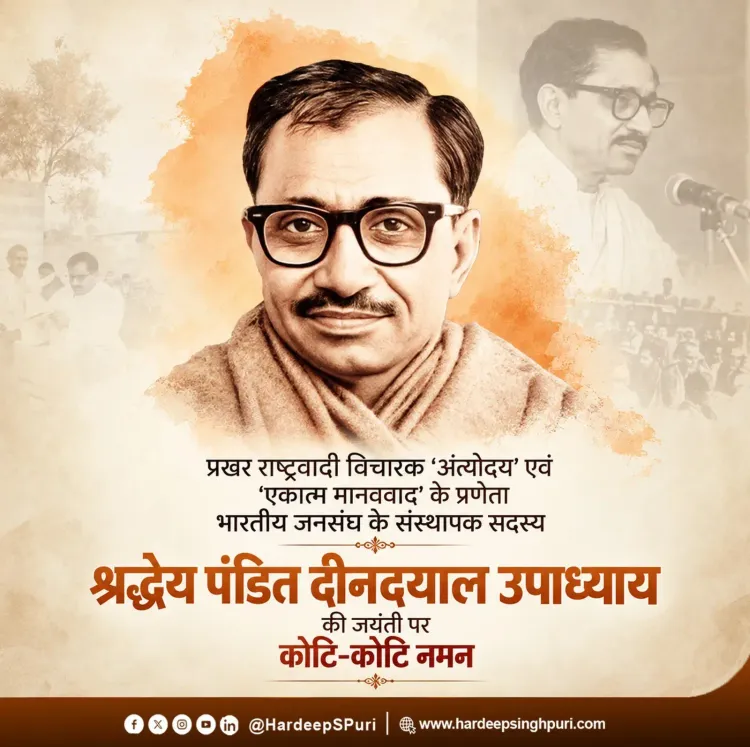
Hardeep Singh Puri posted a Hindi tribute to Pandit Deendayal Upadhyay on his birth anniversary, 25 September 2026 .
Antyodaya — welfare of the last and most marginalised person — and Ekatma Manavvad (Integral Humanism) are the two core philosophies Upadhyay is remembered for.
Upadhyay served as president of the Bharatiya Jana Sangh in 1967 , making him a direct ideological forerunner of the BJP.
BJP leaders have routinely referenced Antyodaya to frame contemporary welfare and development schemes since the party's founding.
Puri's post called for renewed resolve towards public service, social harmony, and national interest — a standard BJP rhetorical invocation on this date.
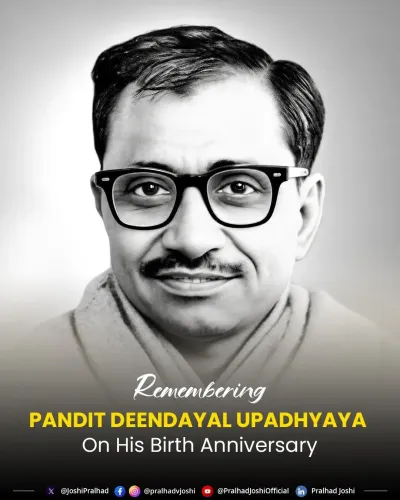
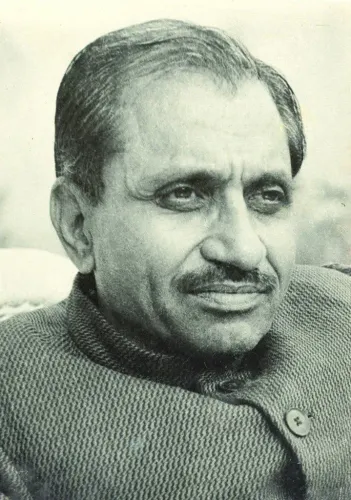
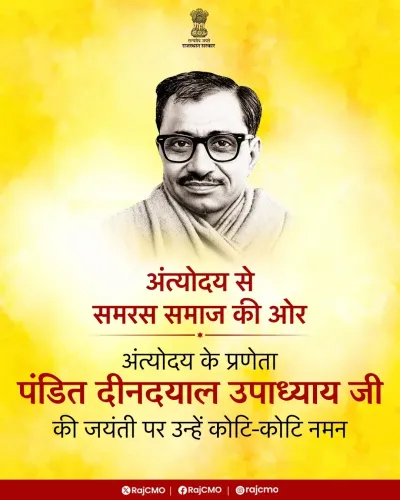
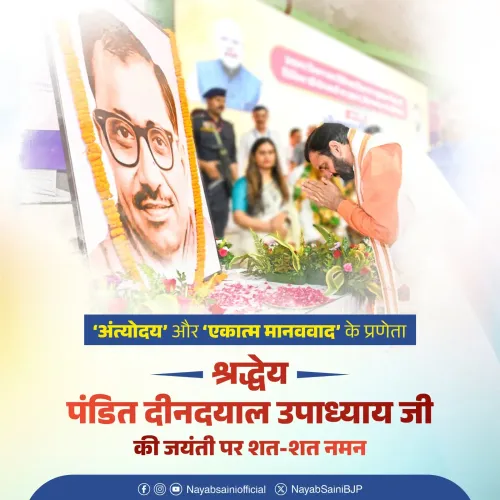
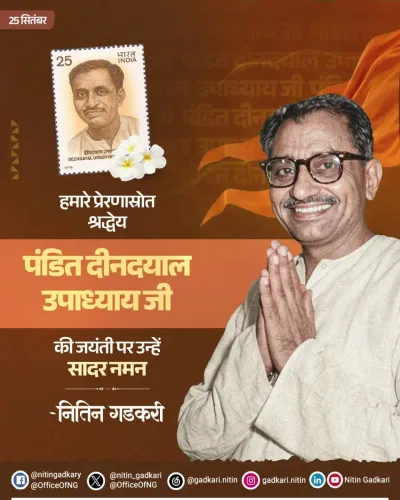
On the birth anniversary of one of modern India's most consequential political philosophers, Union Petroleum Minister Hardeep Singh Puri on Friday, 25 September 2026 offered his tribute to Pandit Deendayal Upadhyay, invoking the thinker's twin ideals of Antyodaya (upliftment of the last person) and Ekatma Manavvad (Integral Humanism) as living guides for governance and nation-building.
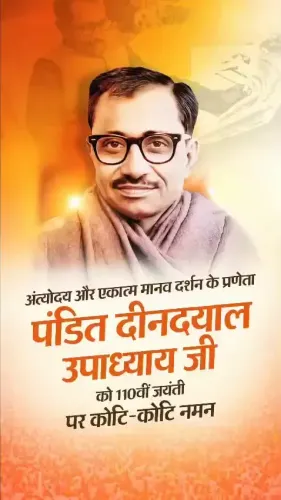
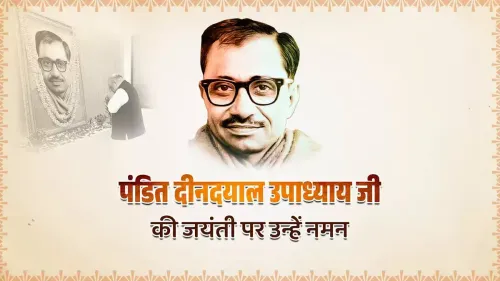
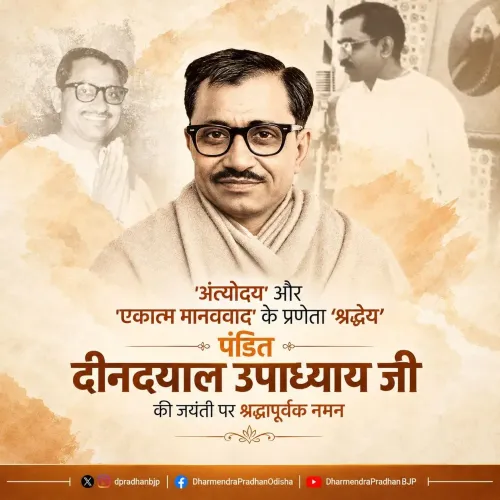
Puri's post in Hindi read: 'Salutations to Pandit Deendayal Upadhyay ji, the pioneer of Antyodaya, the thinker of Integral Humanism, and the seeker of national service, on his birth anniversary. His 'Antyodaya' and 'Integral Humanism' remain a source of inspiration for public service and nation-building even today. His life reminds us that the progress of a nation is meaningful only when the light of development reaches the last person.'
Who was Pandit Deendayal Upadhyay?
Pandit Deendayal Upadhyay was an Indian politician and ideologue who served as president of the Bharatiya Jana Sangh in 1967. His philosophy of Ekatma Manavvad — Integral Humanism — argued that Western models of capitalism and communism both failed to account for the holistic development of the human being, and proposed instead a uniquely Indian framework rooted in cultural continuity and social harmony.
His concept of Antyodaya — the welfare of the very last, most marginalised person in society — became one of the most frequently cited principles in Indian centre-right political thought. The idea places the poorest citizen, not aggregate economic growth, at the centre of developmental success. It is a moral yardstick: development counts only when it reaches those furthest from it.
A founding idea that still shapes BJP's policy language
BJP leaders across ranks have routinely marked 25 September — Upadhyay's birth anniversary — with tributes that link his philosophy directly to current governance priorities. References to Antyodaya appear in party documents, budget speeches, and flagship scheme narratives, from direct benefit transfers to rural electrification drives, as proof of the ideology in action.
Puri's closing call in his post — to 'strengthen our resolve towards public service, social harmony, and national interest' — follows that same rhetorical template, connecting a 1960s philosophical framework to a contemporary political mission. For senior BJP figures, honouring Upadhyay is simultaneously an act of ideological reaffirmation and a public commitment to the party's founding values.
Sixty years after Upadhyay articulated it, the question his philosophy poses remains blunt: when the last person gains access to light, opportunity, and dignity — only then does development earn its name.
Point of View
Anchoring contemporary welfare policy in a pre-independence philosophical lineage. For senior ministers like Puri, invoking Antyodaya signals continuity between Upadhyay's 1960s vision and the current government's direct-benefit and last-mile delivery programmes. The tribute also serves an internal party function: reaffirming shared ideological heritage across factions and generations. As long as Antyodaya remains the BJP's moral metric for development, the 25 September anniversary will carry policy weight well beyond its commemorative surface.
NationPress
25 Sept 2026
Frequently Asked Questions
Who was Pandit Deendayal Upadhyay?
Pandit Deendayal Upadhyay was an Indian politician and philosopher, president of the Bharatiya Jana Sangh in 1967, and the key architect of Integral Humanism (Ekatma Manavvad) and the Antyodaya concept, both of which became foundational to BJP's political ideology.
What is Integral Humanism (Ekatma Manavvad)?
Integral Humanism, or Ekatma Manavvad, is a political philosophy articulated by Deendayal Upadhyay that rejects both Western capitalism and communism in favour of a holistic, culturally rooted Indian model of governance and social organisation.
Why do BJP leaders pay tribute to Deendayal Upadhyay on 25 September?
25 September is Deendayal Upadhyay's birth anniversary. As the ideological founder of the Bharatiya Jana Sangh — the BJP's predecessor — he holds a central place in the party's identity, and annual tributes reaffirm the party's commitment to his philosophy.
What did Hardeep Singh Puri say about Deendayal Upadhyay?
Hardeep Singh Puri called Upadhyay the pioneer of Antyodaya and the thinker of Integral Humanism, saying his ideas remain a source of inspiration for public service and nation-building, and that true national progress is meaningful only when development reaches the last person.