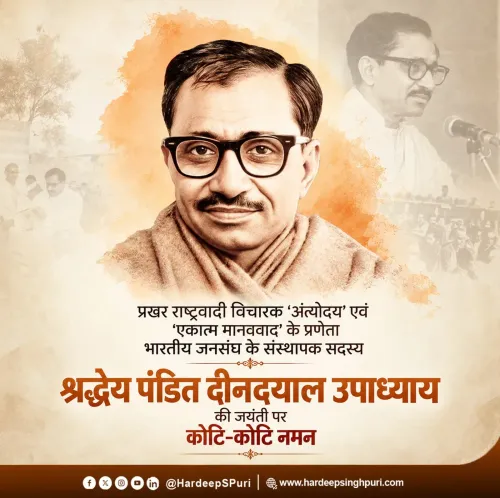
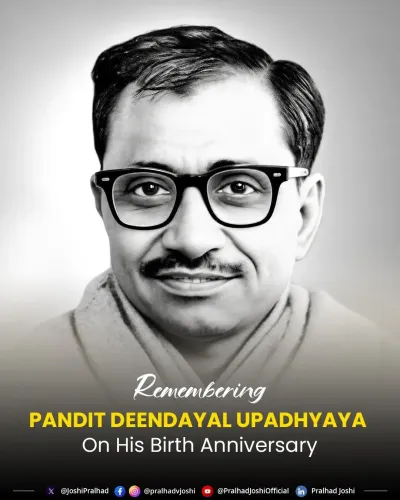
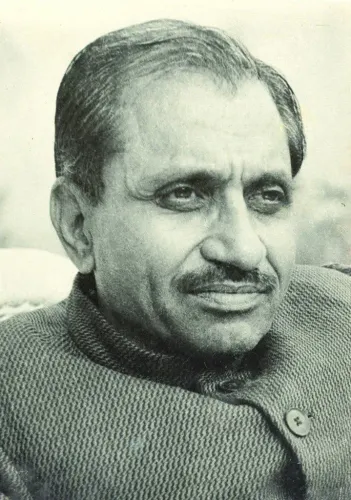
Shekhawat pays tribute to Deendayal Upadhyay on birth anniversary
Synopsis
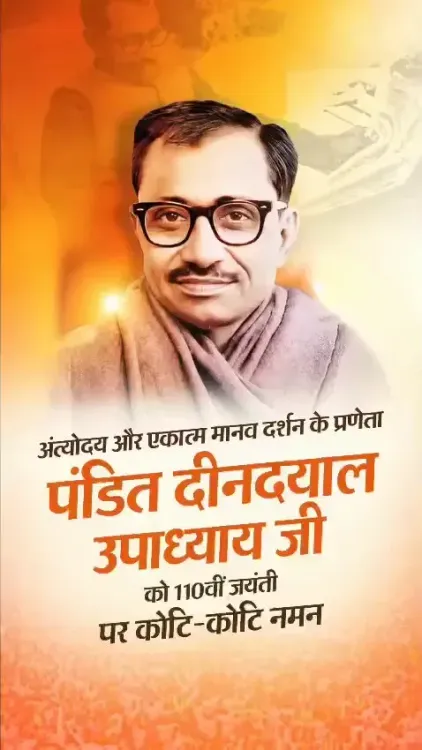
Union Minister Gajendra Singh Shekhawat marked the birth anniversary of BJP ideological fountainhead Pandit Deendayal Upadhyay on September 25, 2026, paying tribute to his philosophy of Integral Humanism and Antyodaya and his vision of a politics driven by people's power, not family dynasties.
Key Takeaways
Gajendra Singh Shekhawat , Union Minister of Culture and Tourism, paid homage to Pandit Deendayal Upadhyay on his birth anniversary, September 25, 2026 .
Shekhawat highlighted Upadhyay's advocacy of self-reliance and a politics powered by the people rather than by a few powerful families.
Pandit Deendayal Upadhyay co-founded the Bharatiya Jana Sangh in 1951 and developed the philosophies of Integral Humanism (Ekatmavad) and Antyodaya .
His Antyodaya principle — uplift of the last and least — was institutionalised in the Deendayal Upadhyay Antyodaya Yojana launched in 2014 .
BJP leaders routinely mark September 25 to reaffirm the party's ideological roots in pre-dynastic, people-centric Jana Sangh thought.
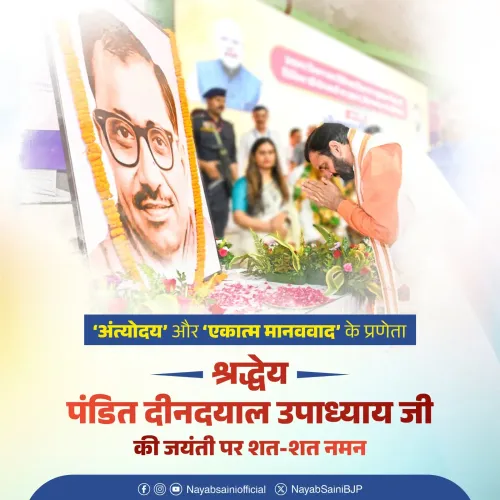
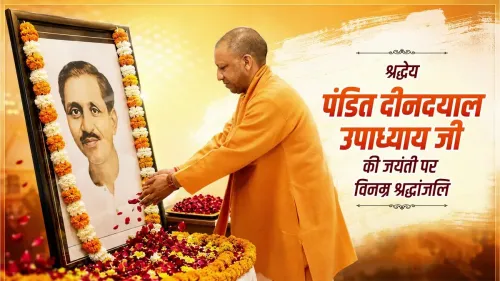
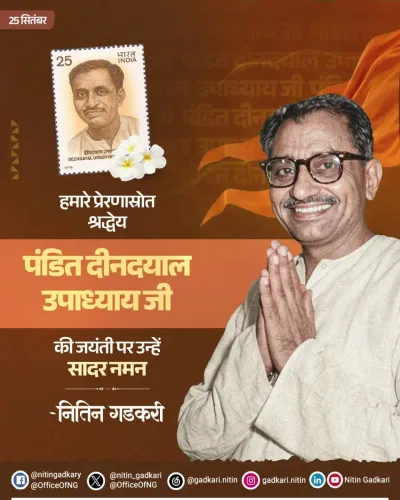
On the birth anniversary of Pandit Deendayal Upadhyay, Union Culture and Tourism Minister Gajendra Singh Shekhawat offered his reverence to the thinker who shaped the ideological spine of Indian conservative politics — invoking his twin pillars of Ekatmavad (Integral Humanism) and Antyodaya (uplift of the last person) as a living compass, not just a calendar tribute.
Posting on X on September 25, 2026, Shekhawat wrote in Hindi: 'Bharatiya rajneeti ki dhara badalne wale hamare preranasrot Pandit Deendayal Upadhyay ji ki jayanti par unhe kotishaha pranam!' — 'Salutations beyond count to our inspiration Pandit Deendayal Upadhyay, who transformed the course of Indian politics, on his birth anniversary.' He underlined Upadhyay's conviction that politics must be powered by the strength of the people — not steered by a handful of families — and that his entire life was consecrated to the nation.
The philosopher who gave BJP its founding grammar
Pandit Deendayal Upadhyay co-founded the Bharatiya Jana Sangh in 1951 and articulated Integral Humanism — a doctrine that rejected both Western capitalism and Soviet communism in favour of a holistic, India-rooted vision of human development. His concept of Antyodaya — measuring a society's progress by the condition of its weakest member — became the moral anchor of Jana Sangh thought and, later, of the Bharatiya Janata Party.
That legacy found policy expression when the Deendayal Upadhyay Antyodaya Yojana was launched in 2014, channelling his philosophy into a national livelihood programme targeting the rural and urban poor. For the BJP, invoking Upadhyay on September 25 is both an act of remembrance and a statement of ideological identity — a deliberate contrast with what the party frames as 'dynastic' political culture.
Why BJP leaders return to this anniversary every year
Shekhawat's tribute follows a well-established pattern: senior BJP figures mark Upadhyay's birth anniversary to reinforce the party's claim to a pre-dynastic, people-centric political tradition rooted in pre-1960s Jana Sangh thought. The anti-dynastic thread Shekhawat highlighted — that politics should flow from the people's power, not from a few powerful families — is a refrain that resurfaces across BJP messaging at election season and beyond.
As a senior BJP leader and Lok Sabha MP from Jodhpur, Rajasthan, Shekhawat's tribute also carries ministerial weight: his current portfolio covering Culture and Tourism makes his public alignment with Upadhyay's civilisational and self-reliance arguments more than routine party ritual.
Upadhyay's ideas remain a live current in Indian policy debate. Whether fresh central schemes or budget-cycle programmes will carry explicit Antyodaya branding in the coming fiscal year is a signal worth watching.
Point of View
The minister simultaneously honours a founding figure and draws an implicit contrast with opposition parties the BJP routinely brands as family-run enterprises. The invocation of Ekatmavad and Antyodaya also anchors the party's welfare-state interventions — from rural livelihood schemes to social-sector spending — within a home-grown philosophical tradition rather than borrowed Western frameworks. For a Culture and Tourism minister, aligning publicly with Upadhyay's civilisational self-reliance argument carries added resonance, reinforcing a government-wide emphasis on indigenous knowledge and heritage. Watch whether this anniversary triggers fresh scheme announcements that wear the Antyodaya label explicitly in the coming budget cycle.
NationPress
25 Sept 2026
Frequently Asked Questions
Who was Pandit Deendayal Upadhyay?
Pandit Deendayal Upadhyay was an Indian thinker and politician who co-founded the Bharatiya Jana Sangh in 1951 and developed the philosophies of Integral Humanism (Ekatmavad) and Antyodaya, which remain foundational to the BJP's ideology.
What is Antyodaya and why does BJP invoke it?
Antyodaya means 'uplift of the last person' — the principle that a society's true progress is measured by the welfare of its poorest member. BJP uses it to connect welfare programmes to Upadhyay's philosophy and to differentiate its politics from what it calls dynastic governance.
What is the Deendayal Upadhyay Antyodaya Yojana?
Launched in 2014, the Deendayal Upadhyay Antyodaya Yojana is a central government scheme promoting livelihoods for the rural and urban poor, explicitly named to honour Upadhyay's Antyodaya principle.
Why did Gajendra Singh Shekhawat post a tribute to Deendayal Upadhyay?
September 25 is Pandit Deendayal Upadhyay's birth anniversary. Union Minister Shekhawat's tribute is part of a recurring BJP tradition of honouring their ideological founding figure on this date.
What is Ekatmavad or Integral Humanism in simple terms?
Integral Humanism (Ekatmavad) is Upadhyay's political philosophy that rejected both capitalism and communism, arguing instead for a holistic approach to development rooted in Indian cultural and civilisational values, treating the individual, family, society, and nation as an integrated whole.