Kishan Reddy hails PM Modi's defence push, cites #ZeroCasualties goal
Synopsis
Union Minister G. Kishan Reddy on November 9, 2026 credited PM Modi with strengthening Indian security forces, invoking Diwali frontline celebrations and the #ZeroCasualties hashtag to frame the government's defence record as both human and strategic.
Key Takeaways
Kishan Reddy , Union Coal and Mines Minister and BJP Telangana president, posted on November 9, 2026 praising PM Modi's defence leadership.
The post invokes #ZeroCasualties as a benchmark for force protection under the current government.
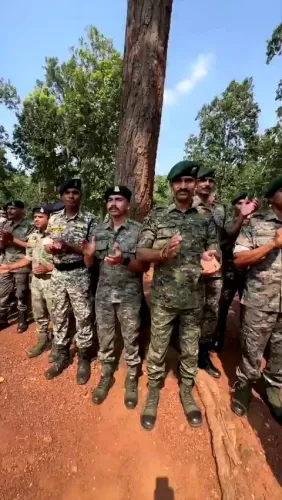
It references frontline Diwali celebrations, a recurring BJP communication motif linking festivity to military solidarity.
The policy lineage cited includes the 2016 surgical strikes (post-Uri) and the 2019 Balakot airstrike , both framed as proof of proactive force doctrine.
Specific casualty statistics cited in the post are aspirational and not independently verified from public data.
The next Union Defence Budget and indigenous equipment induction updates will be key markers of whether the ambition is funded.
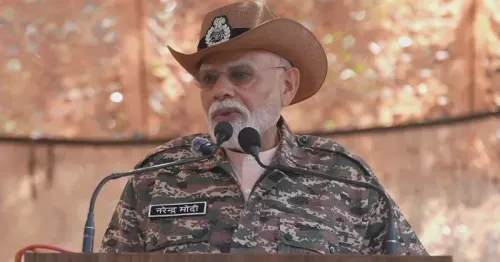
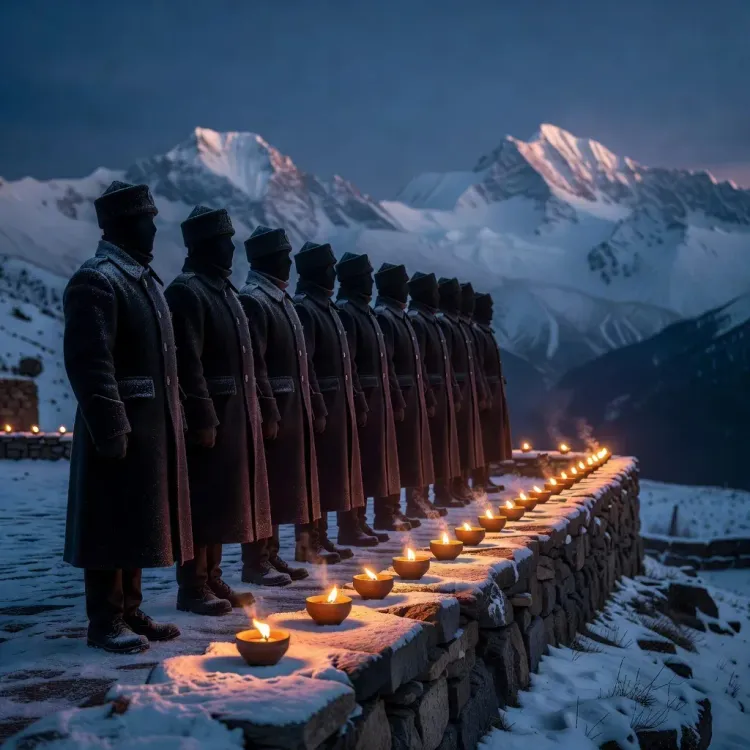
From Diwali celebrations on the frontlines to a steady drumbeat of defence modernisation, Union Coal and Mines Minister G. Kishan Reddy used the occasion on Monday, November 9, 2026 to credit Prime Minister Narendra Modi with building a military that is, in his words, 'stronger and safer than ever.' The post, shared under the hashtag #ZeroCasualties, frames festive solidarity with troops as inseparable from a larger strategic ambition.
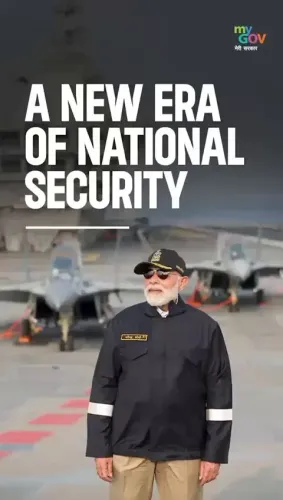
Diwali on the frontier — the image the BJP wants India to see
The tradition of a Prime Minister or senior leadership visiting forward posts during Diwali has become a fixture of BJP political communication, projecting personal proximity to the armed forces. Kishan Reddy's post leans into that imagery, linking the warmth of a festival celebrated at altitude or along contested borders to concrete claims about reduced risk to personnel. The #ZeroCasualties hashtag carries significant weight — it signals an aspirational operational benchmark, not merely a sentiment.
Modi's defence record: surgical strikes to self-reliance
The policy lineage the post draws on is real and well-documented. The 2016 surgical strikes across the Line of Control following the Uri attack, and the 2019 Balakot airstrike, marked a visible shift in India's willingness to project force. Since then, the government has repeatedly tied those decisions to a broader 'force protection through capability' argument — the idea that indigenous equipment, better intelligence, and pre-emptive doctrine together lower the human cost of guarding India's borders.
Kishan Reddy, as BJP's Telangana state president, also speaks to a southern audience for whom the armed forces are a point of deep pride. The post serves double duty: national defence messaging and regional political signalling in a state the party is working hard to consolidate.
What #ZeroCasualties actually demands
The hashtag is an ambition, and it is a demanding one. Achieving zero combat or duty-related casualties across deployments in Jammu and Kashmir, the northeastern frontier, and high-altitude posts along the Line of Actual Control would require sustained investment in surveillance technology, soldier equipment, and medical evacuation infrastructure. The next Union Defence Budget and updates on indigenous equipment induction timelines will be the real test of whether the aspiration is backed by allocation.
For now, Kishan Reddy's message is a political statement rooted in a genuine policy direction — one that every government since the Kargil War of 1999 has claimed, but that the current dispensation has amplified most loudly.
Point of View
Even if defence analysts would question its measurability. As BJP's Telangana state president, Reddy is also speaking to a state electorate where ex-servicemen communities hold significant influence. The real policy accountability moment arrives with the next defence budget — until then, this remains political aspiration expressed as achievement.
NationPress
9 Nov 2026
Frequently Asked Questions
What did G. Kishan Reddy say about PM Modi and the defence forces?
Kishan Reddy posted on November 9, 2026 that PM Modi's leadership has ensured Indian security forces are 'stronger and safer than ever,' linking frontline Diwali celebrations to broader defence capability improvements and using the hashtag #ZeroCasualties.
What does #ZeroCasualties mean in the context of Indian defence?
#ZeroCasualties is an aspirational benchmark signalling the government's stated goal of reducing to zero the operational casualties suffered by Indian security forces through technology, better equipment, and improved doctrine.
What are the surgical strikes and Balakot airstrike referenced in defence messaging?
The surgical strikes were cross-LoC operations conducted in 2016 following the Uri army base attack; the Balakot airstrike in 2019 targeted alleged militant infrastructure in Pakistan. Both are cited by the BJP as evidence of a more assertive force-protection doctrine under PM Modi.
Who is G. Kishan Reddy?
G. Kishan Reddy is India's Union Minister of Coal and Mines and the BJP's Telangana state president. He is a senior BJP leader from Hyderabad.
Why does the BJP use Diwali frontline imagery in political communication?
Diwali visits or references to troops celebrating on the frontlines serve as a powerful visual of leadership solidarity with the military. The BJP has consistently used this motif to reinforce its positioning as the party most closely aligned with the armed forces.