Kishan Reddy Hails 12 Years of Security Gains Under Modi
Synopsis
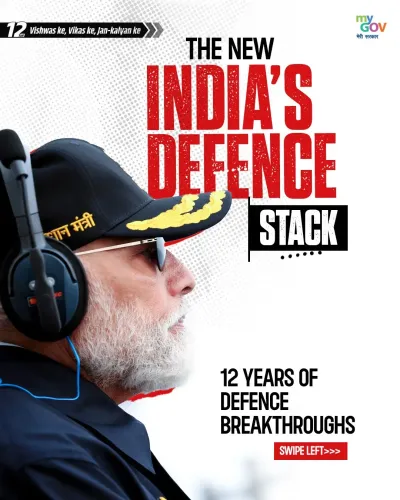
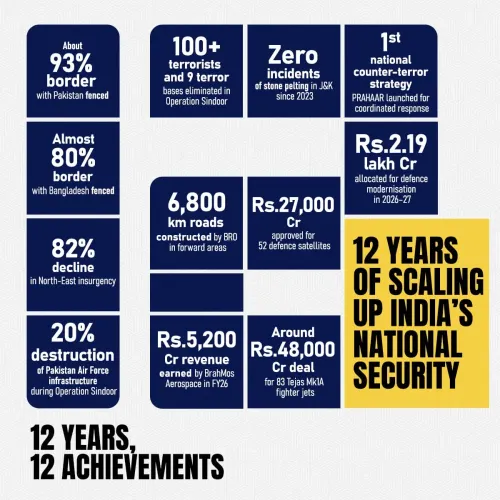
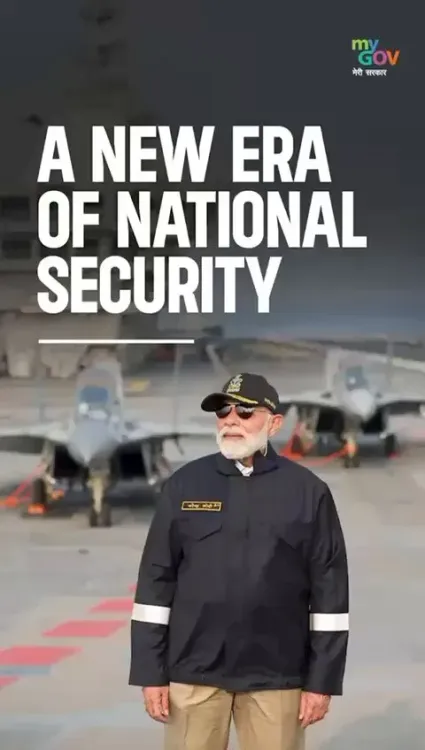
Union Minister G. Kishan Reddy marked twelve years of the Modi government's security agenda on June 17, 2026, highlighting border strengthening, armed forces modernisation, and the Atmanirbhar Bharat defence push as cornerstones of a transformed national security landscape.
Key Takeaways
Kishan Reddy , Union Coal and Mines Minister and BJP Telangana president, posted on June 17, 2026 under #12YearsOfSurakshitBharat praising Modi's security record.
The Chief of Defence Staff post was created in December 2019 , marking the most significant military command reform since independence.
Successive Union Budgets have increased capital defence outlay and introduced positive indigenisation lists under the Atmanirbhar Bharat policy.
The Agnipath short-service recruitment scheme was launched in 2022 to reshape the military's age and pension profile.
Border road and tunnel construction along the Line of Actual Control and Line of Control has been a stated government priority since 2014.
Full operationalisation of integrated theatre commands and the next defence budget remain key policy milestones to watch.
Union Coal and Mines Minister G. Kishan Reddy on Wednesday, June 17, 2026, credited Prime Minister Narendra Modi's twelve-year tenure with a 'historic transformation' of India's security landscape, citing border strengthening, armed forces modernisation, and enhanced internal security as defining achievements of the period.
Context
Posting under the hashtag #12YearsOfSurakshitBharat (12 Years of a Secure India), Kishan Reddy wrote that the nation has moved forward 'with confidence and resolve' under what he described as the 'visionary leadership' of the Prime Minister. The post coincides with BJP-aligned campaigns marking a dozen years since Modi first assumed office in May 2014, with security and defence reform emerging as a central theme in the party's messaging.
Reddy, who also serves as BJP's Telangana state president, framed the anniversary in broad terms — pointing to border infrastructure, force modernisation, and the empowerment of security personnel as pillars of the government's record.
Policy Backdrop
The government's defence reform agenda since 2014 has included several structural shifts. The creation of the post of Chief of Defence Staff in December 2019 marked the most significant reorganisation of military command in independent India, aimed at promoting integration among the Army, Navy, and Air Force.
Successive Union Budgets have raised capital outlay for defence and introduced positive indigenisation lists — catalogues of equipment that must be procured domestically — as part of the Atmanirbhar Bharat (self-reliant India) drive. Parallel investments in border road and tunnel construction along the Line of Actual Control and the Line of Control have been cited by the government as evidence of improved frontier readiness.
The Agnipath scheme, launched in 2022, introduced a short-service recruitment model for the armed forces, intended to reshape the age profile of the military while managing the long-term pension burden — a move that generated both support and significant public debate at the time of its announcement.
Stakeholders and Impact
The constituencies most directly affected by the policies Reddy references include serving and retired armed forces personnel, paramilitary and police forces, and residents of border states such as Jammu and Kashmir, Arunachal Pradesh, Ladakh, and Rajasthan. The government's 2019 abrogation of Article 370 was also presented at the time as a measure to normalise internal security management in Jammu and Kashmir.
Defence industry stakeholders — both public-sector undertakings and private manufacturers — have been direct beneficiaries of indigenisation mandates, with domestic defence production figures cited by the government as having risen substantially over the twelve-year window.
What's Next
Parliamentary deliberations on the next defence budget and any formal announcements on the full operationalisation of integrated theatre commands will be closely watched as indicators of whether the structural reforms initiated over the past decade are being consolidated. The BJP's use of the #12YearsOfSurakshitBharat framing signals that security will remain a prominent plank in the party's political communication in the months ahead.
Point of View
The CDS creation, and force modernisation in a single breath, the BJP is consolidating its 'strong on security' brand, a positioning that has proved electorally durable since 2014. The choice of a Cabinet minister who is also a state party president to amplify the message in Telangana — a state the BJP is keen to expand in — is unlikely to be coincidental. Whether the substance of the claims withstands scrutiny will depend on forthcoming parliamentary debates on defence budgets and the pace of theatre command operationalisation.
NationPress
19 Sept 2026
Frequently Asked Questions
What is #12YearsOfSurakshitBharat?
#12YearsOfSurakshitBharat is a BJP-led social media campaign marking twelve years of the Narendra Modi government, focusing on security and defence reforms since May 2014.
Who is G. Kishan Reddy?
G. Kishan Reddy is India's Union Minister of Coal and Mines and the BJP's Telangana state president, a senior leader in the Modi government.
What is the Chief of Defence Staff post in India?
The Chief of Defence Staff is India's highest-ranking military officer, a post created in December 2019 to promote integration and jointness among the Army, Navy, and Air Force.
What is the Agnipath scheme?
The Agnipath scheme, launched in 2022, is a short-service military recruitment model that enrolls personnel for a fixed term, aimed at maintaining a younger force profile and managing long-term pension costs.
What is Atmanirbhar Bharat in defence?
Atmanirbhar Bharat in defence refers to India's policy of self-reliance in military procurement, implemented through positive indigenisation lists that require certain equipment to be sourced from domestic manufacturers rather than imported.