Kishan Reddy highlights 12 years of digital governance gains for middle class
Synopsis
Union Minister G. Kishan Reddy marked twelve years of BJP-led central governance on 15 June 2026, citing digital services, GST, Aadhaar-linked benefits, and reduced paperwork as key gains for India's middle-class families under #12YearsOfSakshamMiddleClass.
Key Takeaways
Union Coal and Mines Minister G.
Kishan Reddy posted on 15 June 2026 under #12YearsOfSakshamMiddleClass , marking twelve years of BJP-led governance reforms.
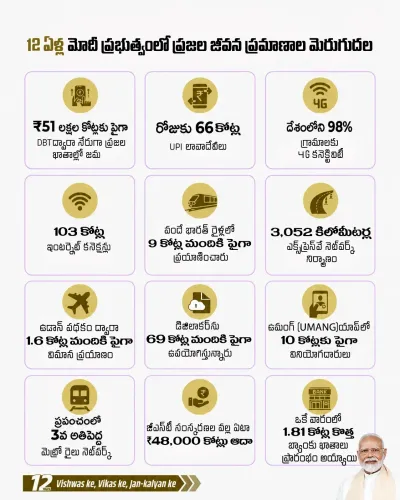
The post highlights reduced paperwork, digital service delivery, simplified taxation, seamless travel, and direct benefit access as outcomes of the past twelve years.
The Digital India programme (launched 1 July 2015 ), GST (implemented 1 July 2017 ), Aadhaar-linked DBT , and UPI (2016) are among the flagship initiatives underpinning the claims.
Faceless income-tax assessments introduced after 2019 reduced physical interface between salaried taxpayers and revenue authorities.
Reddy's dual role as Union Minister and BJP Telangana state president positions the post as both national messaging and state-level political outreach.
Further paperless reforms across central ministries are expected during the 2026-27 budget cycle .
Union Coal and Mines Minister G. Kishan Reddy on Monday, 15 June 2026 marked twelve years of central government governance reforms with a social media post crediting technology-driven changes for making everyday life simpler and more accessible for millions of middle-class families across India. The post, shared under the hashtag #12YearsOfSakshamMiddleClass, highlighted reduced paperwork, digital service delivery, simplified taxation, seamless travel, and direct access to welfare benefits as key outcomes of the past decade-plus of governance.
Context
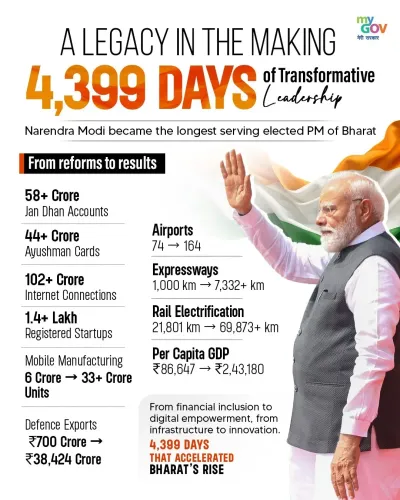
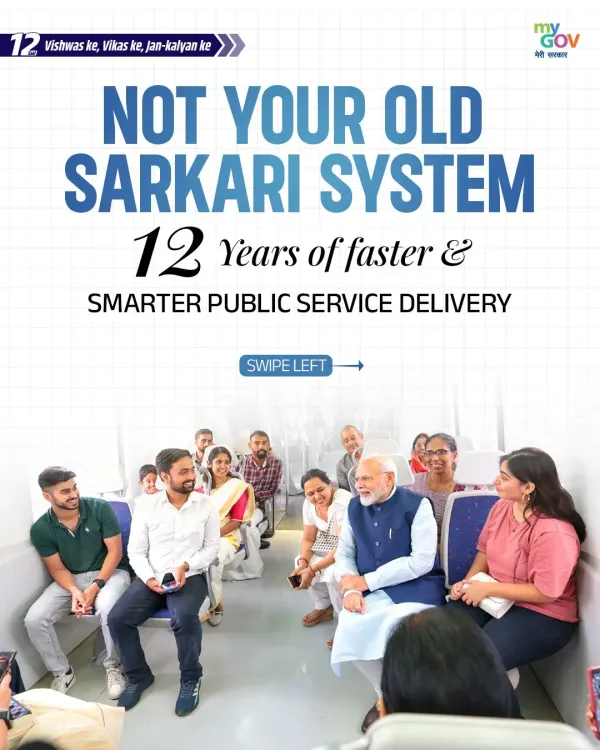
Reddy's post arrives as the Bharatiya Janata Party marks twelve years since Narendra Modi assumed office as Prime Minister in May 2014. The post frames the period as one of sustained, citizen-centric reform, stating: 'The last 12 years have been about making governance faster, smarter, and more citizen-centric.' The reference to 'middle-class families' signals a deliberate outreach to urban and semi-urban households that have been central to the BJP's electoral coalition.
As BJP Telangana state president, Reddy also serves a dual function — amplifying central government messaging while reinforcing the party's narrative in a state where it is seeking to expand its footprint following its return to relevance in Telangana politics.
Policy Backdrop
The governance transformation Reddy references draws on several landmark initiatives. The Digital India programme, launched on 1 July 2015, set out to build digital infrastructure and shift citizen-government interactions online, reducing the need for physical documentation and in-person visits to government offices.
The Goods and Services Tax (GST), implemented on 1 July 2017 following a constitutional amendment, replaced a layered structure of central and state levies with a unified indirect tax regime. For small businesses and individual taxpayers, the shift was positioned as a simplification of compliance. Separately, the Aadhaar-linked Direct Benefit Transfer (DBT) framework — expanded significantly after 2014 — enabled paperless authentication and direct transfer of subsidies to bank accounts, reducing leakages and intermediaries. The Unified Payments Interface (UPI), rolled out by the National Payments Corporation of India in 2016, further embedded real-time digital payments into daily commerce.
Income-tax reforms, including e-filing and the introduction of faceless assessments in phases after 2019, reduced the physical interface between taxpayers and the revenue department — a change particularly relevant to salaried middle-class filers.
Stakeholders and Impact
The primary beneficiaries cited in the post are middle-class families — a broad demographic encompassing urban taxpayers, formal-sector employees, small business owners, and digital payment users. These households interact most directly with income-tax systems, GST compliance portals, Aadhaar-linked services, and digital travel documentation.
The 'ease of living' agenda, of which these reforms form a part, has also involved real-time grievance redressal platforms and paperless documentation requirements across central ministries. The emphasis on this demographic reflects both a policy priority and an electoral calculus, as middle-class voters have been a consistent focus of BJP outreach since 2014.
What's Next
Further digitisation of citizen services is expected across remaining central ministries during the 2026-27 budget cycle, with parliamentary review of digital governance legislation also on the horizon. The #12YearsOfSakshamMiddleClass campaign suggests the BJP intends to consolidate its governance record as a political asset heading into future electoral cycles, with ministers like Reddy serving as amplifiers of the central message at the state level. How the middle class assesses these changes — against the backdrop of cost-of-living pressures and employment conditions — will shape whether the narrative translates into durable political support.
Point of View
Taxes, travel, benefits), the party sidesteps abstract macro-economic claims in favour of tangible, relatable change. The choice of a state-level party president who also holds a Union cabinet portfolio ensures the message carries both national authority and regional resonance, particularly in a competitive state like Telangana. The campaign's timing, twelve years after May 2014, suggests the BJP is beginning to frame its long-term governance record as a foundational argument for continued public trust.
NationPress
19 Sept 2026
Frequently Asked Questions
What is #12YearsOfSakshamMiddleClass?
#12YearsOfSakshamMiddleClass is a BJP social media campaign marking twelve years of the Modi government, highlighting governance reforms such as digital services, GST, Aadhaar-linked benefits, and reduced paperwork that are said to have improved daily life for middle-class families.
What has the Digital India programme achieved for citizens?
The Digital India programme, launched on 1 July 2015 , has shifted a wide range of government services online, reducing the need for physical documentation, in-person visits, and paperwork for citizens accessing public services.
How has GST simplified taxation for the middle class?
The Goods and Services Tax , implemented on 1 July 2017 , replaced a complex structure of multiple central and state levies with a single unified indirect tax, simplifying compliance for individual taxpayers and small businesses.
What is Direct Benefit Transfer and who does it help?
Direct Benefit Transfer (DBT) is a framework that links Aadhaar to bank accounts to transfer government subsidies and welfare payments directly to beneficiaries, reducing intermediaries and ensuring faster, more transparent delivery of benefits.
Who is G. Kishan Reddy?
G. Kishan Reddy is the Union Minister of Coal and Mines in the Narendra Modi government and the president of the BJP's Telangana state unit , making him a key figure in both central policy and the party's regional political strategy.