Giriraj Singh Hails Naxal-Free Diwali as New India Chapter
Synopsis
Union Textiles Minister Giriraj Singh marked Diwali 2026 by calling a Naxal-free festival a symbol of India's security transformation, crediting PM Modi's resolve and Home Minister Amit Shah's leadership in left-wing extremism-affected states like Chhattisgarh, Jharkhand and Odisha.
Key Takeaways
Giriraj Singh described a Naxal-free Diwali as a 'powerful portrait of a changing and secure India' in a post dated November 9, 2026 .
He credited Prime Minister Narendra Modi's 'firm resolve' and Home Minister Amit Shah's leadership for the shift in LWE-affected regions.
The post- 2014 central strategy combines security operations with development in LWE districts across Chhattisgarh, Jharkhand and Odisha .
The Ministry of Home Affairs periodically reclassifies LWE districts as conditions improve, unlocking accelerated development funding.
Tribal communities and residents of LWE districts remain the primary stakeholders — and key electoral constituencies — in this ongoing security-development effort.
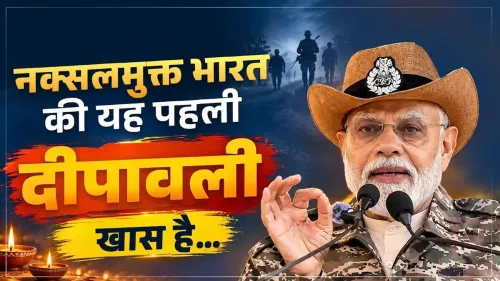
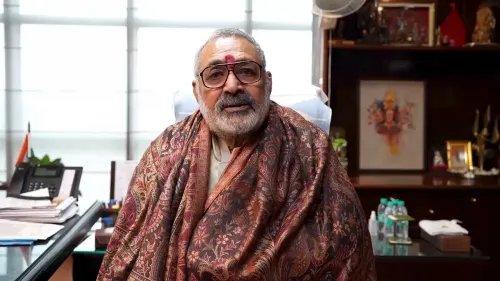
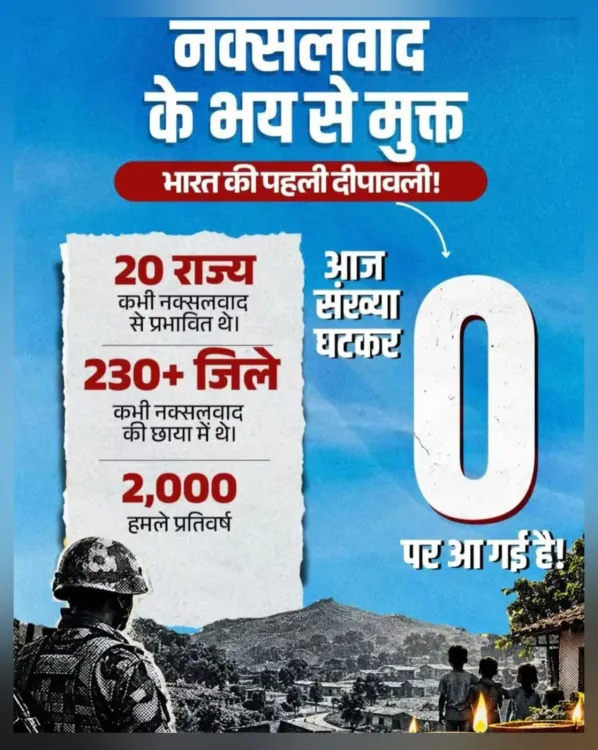
A Diwali free from the shadow of Naxal violence — that is the image Union Textiles Minister Giriraj Singh held up on Monday, November 9, 2026, calling it a 'powerful portrait of a changing and secure India.' In a post on X, the senior BJP leader and Lok Sabha MP from Begusarai, Bihar framed the festival season as a marker of transformation in regions long gripped by left-wing extremism.
Giriraj Singh wrote in Hindi: 'Naksalwad ke bhay se mukt Deepawali, badte aur surakshit Bharat ki sashakt tasveer hai' — 'A Diwali free from the fear of Naxalism is a powerful image of a changing and secure India.' He credited Prime Minister Narendra Modi's 'firm resolve' and Home Minister Amit Shah's leadership for 'writing a new chapter of peace, security and development' in Naxal-affected areas.
Decades of Violence, Now Receding
Left-wing extremism, often called the Maoist or Naxal insurgency, has haunted a broad belt spanning Chhattisgarh, Jharkhand and Odisha for decades, costing thousands of lives among security forces, civilians and cadres alike. For tribal communities across these districts, Diwali often arrived under curfew-like tension — celebrations muted by the threat of ambushes or enforced shutdowns called by Maoist groups.
The post-2014 central government approach combined sustained security operations with an infrastructure and welfare push in what the Ministry of Home Affairs classifies as Left Wing Extremism (LWE) districts. Roads, mobile connectivity, schools and banking access were pushed into areas where the state's presence had been nominal for generations. The strategy's central argument: deprive insurgencies of the developmental grievances that feed them.
Amit Shah's Security Doctrine in LWE Zones
Home Minister Amit Shah has made the elimination of Naxalism one of the most visible planks of his tenure at North Block. He has repeatedly set timelines for bringing LWE violence to a close, backing them with stepped-up operations by central armed police forces and intelligence coordination across state governments. The Ministry of Home Affairs issues periodic updates on violence statistics and district reclassification — moving districts off the most-affected list as conditions improve.
That reclassification process matters: it triggers a shift in policing priorities and unlocks accelerated development funding, creating a feedback loop the government argues is irreversible.
Diwali as a Political Yardstick
Invoking Diwali is deliberate. The festival, synonymous with light triumphing over darkness, lends Giriraj Singh's message a cultural weight that raw statistics cannot. When a village in Bastar or Dantewada lights diyas without fear of a Maoist shutdown order, it becomes a lived, shareable proof-point — more visceral than any MHA press release. That is precisely the kind of narrative the BJP has built its security-and-development messaging on.
Residents of LWE-affected districts and tribal communities — the people most directly at stake — are also the constituencies both the central government and opposition parties court most intensely in state elections across the region. The political and the humanitarian cannot be neatly separated here.
As the Ministry of Home Affairs continues its district-by-district audit of LWE conditions, the real measure of this Diwali's promise will show up in the next round of violence data — and in whether the lights stay on year-round.
Point of View
The message reinforces a chain of command that the party consistently projects to its base. The timing — a festive occasion when emotional resonance is high — maximises reach among audiences in Chhattisgarh, Jharkhand and Odisha, all states where LWE-affected tribal voters are electorally decisive. The broader pattern is clear: each incremental security gain in these districts is converted into political capital well before the next round of assembly elections.
NationPress
9 Nov 2026
Frequently Asked Questions
What did Giriraj Singh say about Naxalism and Diwali 2026?
Giriraj Singh said a Diwali free from the fear of Naxalism is a 'powerful portrait of a changing and secure India,' crediting PM Modi and Home Minister Amit Shah for a new chapter of peace and development in LWE-affected areas.
Which states are most affected by Naxalism in India?
The most affected states have historically been Chhattisgarh, Jharkhand and Odisha, though the Ministry of Home Affairs periodically reclassifies districts as conditions improve.
What is India's strategy to tackle left-wing extremism?
Since 2014, the central government has pursued a dual approach combining security operations by central armed police forces with accelerated infrastructure, connectivity and welfare programmes in LWE-classified districts.
What is the role of Amit Shah in tackling Naxalism?
As Union Home Minister, Amit Shah has coordinated intelligence and operations across state governments and central forces, and has publicly set timelines for ending Naxal violence as a priority of his tenure.
What does LWE district reclassification mean?
When the Ministry of Home Affairs removes a district from its most-affected LWE list, it signals improved security conditions and typically triggers a shift in policing focus and eligibility for faster development funding.