Mandaviya Hails 'Naxal-Free India' Diwali Under Modi
Synopsis
Union Minister Mansukh Mandaviya marked Diwali 2026 by declaring India 'Naxal-free' under PM Modi's leadership, capping decades of coordinated security and development operations against Left Wing Extremism across the Red Corridor states.
Key Takeaways
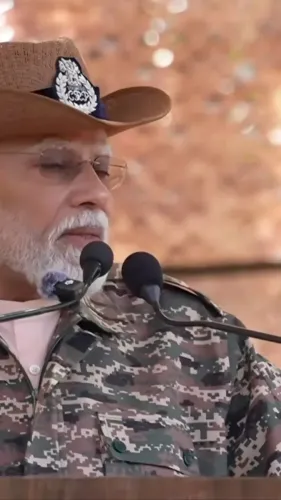
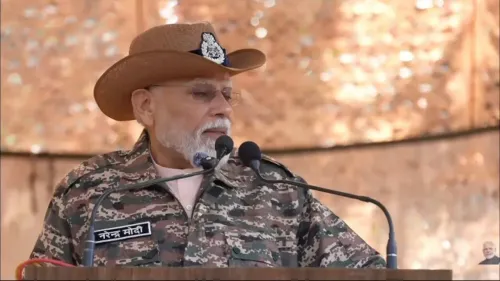
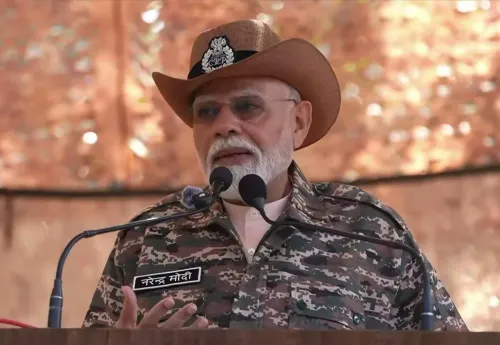
Union Minister Mansukh Mandaviya posted on 8 November 2026 — Diwali — declaring India a 'Naxal-free' nation under PM Narendra Modi .
The Left Wing Extremism insurgency once spanned a 'Red Corridor' across Chhattisgarh, Jharkhand, Odisha, Maharashtra and adjoining states.
Official data over the past decade recorded a steady decline in LWE-related incidents and fatalities as districts were progressively declared free of Naxal presence.
The Modi government pursued a twin-track strategy of intensified Central Armed Police Forces operations combined with accelerated infrastructure and welfare delivery in affected districts.
The declaration carries political and symbolic weight, with parliamentary scrutiny expected on development funding and force deployment plans for formerly affected areas.
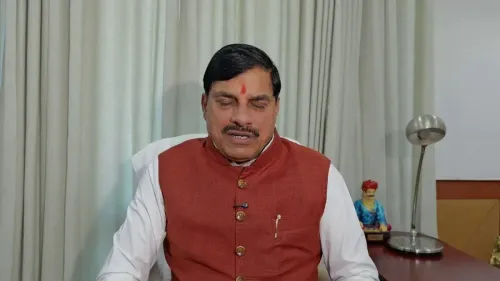
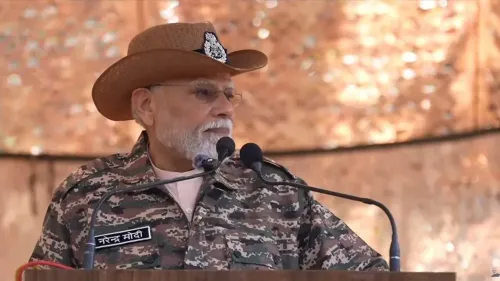
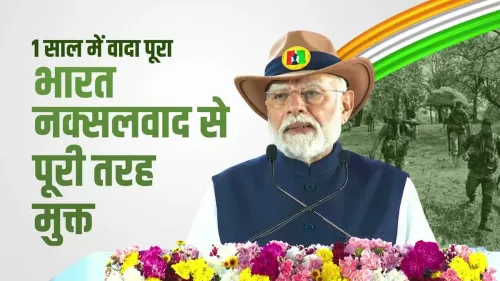
A decades-long shadow over central India's heartland — the Maoist insurgency that claimed thousands of lives across the so-called Red Corridor — is being declared over. On Sunday, 8 November 2026, Union Labour and Sports Minister Mansukh Mandaviya posted on X to mark what the government is calling a historic milestone: a Diwali celebrated as 'Naxal Mukt Bharat' — a Naxal-free India.
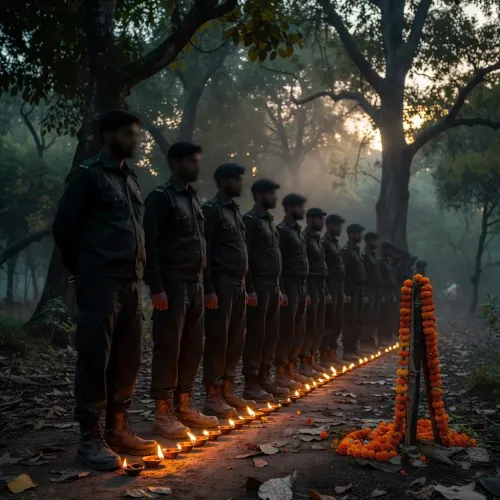
Mandaviya's post, written in Hindi, reads: 'Under the leadership of respected Prime Minister ji, today the entire country is celebrating a glorious Diwali of a Naxal-free India.' The framing is deliberate — Diwali, the festival of lights, cast here as the symbolic end of a long darkness across India's most conflict-scarred districts.
From Red Corridor to this moment
The Left Wing Extremism (LWE) insurgency, rooted in the mid-20th century and peaking in the 2000s, once gripped swathes of Chhattisgarh, Jharkhand, Odisha, Maharashtra and neighbouring states. At its worst, it threatened infrastructure projects, disrupted governance, and kept entire tribal communities trapped between the state and armed cadres. The government labelled the affected belt the 'Red Corridor.'
Successive governments ran coordinated counter-insurgency efforts combining Central Armed Police Forces deployments with development schemes — roads, schools, banking access — in the worst-affected districts. Official data over the last decade showed a steady, documented decline in Naxal-related incidents and fatalities. Individual districts were periodically declared LWE-free as security and governance benchmarks were met.
Modi government's security-plus-development doctrine
Under Prime Minister Narendra Modi, in power since 2014, the approach sharpened into a twin-track doctrine: intensified operations by central forces alongside accelerated welfare and infrastructure delivery in formerly affected areas. The BJP-led government consistently framed LWE elimination as both a security imperative and a development promise to India's tribal heartland — that no citizen should live outside the reach of the Indian state.
Mandaviya's post on Diwali day signals that the government now considers that promise fulfilled at the national level — a declaration that carries enormous political and symbolic weight even as the operational details of remaining affected pockets will face scrutiny in Parliament and on the ground.
What the 'Naxal-free' declaration means for central India
For the residents of districts that lived under LWE violence — farmers, Adivasi communities, local officials, teachers who risked their lives to show up — this Diwali carries a meaning beyond the festival calendar. Central Armed Police Forces personnel who sustained the decade-long campaign are the other stakeholders in this moment.
The government will now face questions on what comes next: sustained development funding for formerly affected areas, rehabilitation of surrendered cadres, and whether the security architecture deployed over decades can be responsibly wound down. Parliamentary sessions ahead will be the arena where those numbers and commitments get tested.
India lit its diyas this Diwali — and for the first time in decades, the government says every corner of the map is in that light.
Point of View
Making this declaration a culmination of that decade-long political promise. The move will invite rigorous scrutiny on verified district-level data and on whether the development investment that is supposed to prevent re-emergence is actually in place. If the numbers hold, it reshapes how successive governments narrate internal security success; if pockets remain contested, the declaration itself becomes a political liability.
NationPress
8 Nov 2026
Frequently Asked Questions
What does 'Naxal-free India' mean?
'Naxal-free India' means the government has declared that Left Wing Extremist (Maoist) groups no longer hold active territorial influence or conduct armed operations in any part of the country, marking the end of the decades-long Red Corridor insurgency.
What is the Red Corridor in India?
The Red Corridor was a belt of districts across central and eastern India — including parts of Chhattisgarh, Jharkhand, Odisha and Maharashtra — where Maoist (Naxalite) groups maintained a strong armed presence and regularly clashed with security forces.
How did India tackle the Naxal insurgency?
India deployed Central Armed Police Forces for security operations while simultaneously running development programmes — building roads, schools, and banking access — in affected districts. This twin-track approach accelerated under the Modi government after 2014.
What did Mansukh Mandaviya say about Naxal-free India on Diwali 2026?
Union Minister Mansukh Mandaviya posted on X on 8 November 2026 that 'under the leadership of respected Prime Minister ji, today the entire country is celebrating a glorious Diwali of a Naxal-free India.'
What happens to formerly Naxal-affected areas now?
The government is expected to face parliamentary scrutiny on sustained development funding, rehabilitation of surrendered cadres, and plans for responsibly scaling back the security infrastructure built over decades in formerly affected districts.