Shekhawat Hails 'Naxal-Free India' Diwali Under PM Modi
Synopsis
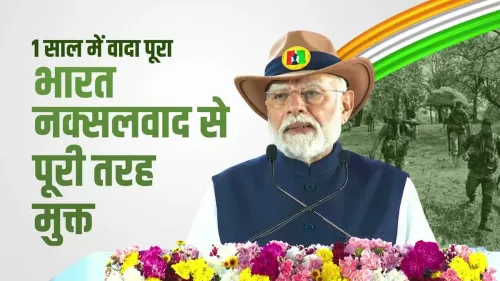
Union Minister Gajendra Singh Shekhawat hailed Diwali 2026 as a 'glorious Naxal-free India' celebration under PM Modi's leadership, marking what the BJP government frames as the culmination of its decades-long campaign against Left-Wing Extremism in central and eastern India.
Key Takeaways
Union Culture and Tourism Minister Gajendra Singh Shekhawat declared Diwali 2026 a 'glorious Naxal-free India' in a post on 8 November 2026 .
The minister attributed the milestone directly to Prime Minister Narendra Modi's leadership.
At its peak, over 100 districts across Chhattisgarh, Jharkhand, Odisha and Bihar were classified as Left-Wing Extremism-affected.
The Modi government pursued a dual strategy of paramilitary counter-insurgency and development schemes in tribal areas to reduce Naxal influence.
A formal update from the Ministry of Home Affairs on the official LWE-affected districts list is now being watched as the next administrative step.
Tribal communities in former Red Corridor districts are the most direct beneficiaries of any genuine end to Maoist violence.
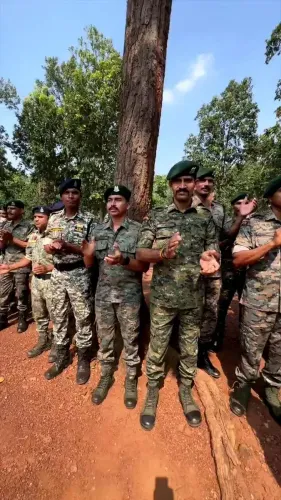
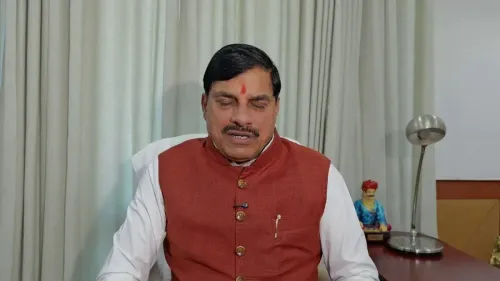
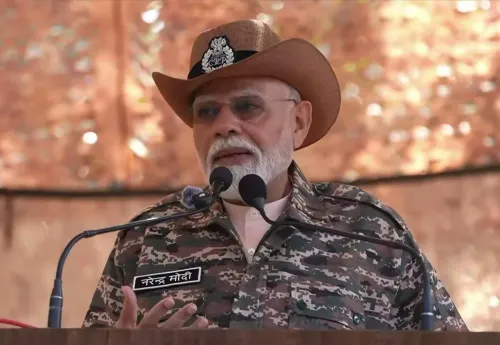
On a Diwali that Union Culture and Tourism Minister Gajendra Singh Shekhawat is calling historic, the cabinet minister declared on Sunday, 8 November 2026 that the entire nation is celebrating a 'glorious Diwali of a Naxal-free India' — a milestone he credited directly to the leadership of Prime Minister Narendra Modi.
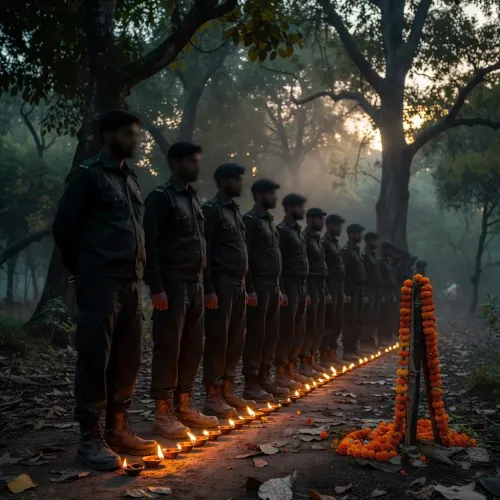
Shekhawat posted in Hindi: 'आदरणीय प्रधानमंत्री जी के नेतृत्व में आज पूरा देश मना रहा है नक्सल मुक्त भारत की गौरवशाली दीपावली' — 'Under the leadership of the respected Prime Minister, the entire country today celebrates the glorious Diwali of a Naxal-free India.' The framing is deliberate: Diwali, the festival of light over darkness, mapped onto the state's long campaign to extinguish Left-Wing Extremism.
Decades of red corridors, now claimed extinguished
For decades, a swath of central and eastern India — spanning Chhattisgarh, Jharkhand, Odisha and parts of Bihar — lived under the shadow of Maoist violence. The so-called 'Red Corridor' saw attacks on security personnel, destruction of infrastructure, and displacement of tribal communities. At its peak, over 100 districts were classified as Left-Wing Extremism-affected by the Ministry of Home Affairs.
Successive central governments combined large-scale paramilitary deployments — CRPF, COBRA battalions, district police forces — with welfare and road-building schemes in the most affected areas. The strategy produced a documented decline in Naxal-related incidents and a steady shrinking of the number of officially 'affected' districts through the 2010s and early 2020s. The Modi government prioritised this dual approach, framing development in tribal belts as inseparable from security.
Why Diwali 2026 is being marked as the turning point
Shekhawat's post signals that the ruling establishment is treating Diwali 2026 as the symbolic moment to declare the mission complete — a powerful optic, given the festival's cultural resonance. The choice of this occasion is not incidental; a 'Naxal-free Diwali' is a claim designed to lodge in public memory the same way a ceremonial last-lamp extinguished signals an end.
The security forces and tribal communities of the former Red Corridor districts stand as the most direct stakeholders in any such declaration. For tribal populations who bore the brunt of both Maoist coercion and counter-insurgency operations, a genuine end to hostilities means freer movement, functioning schools, and uninterrupted welfare delivery. The government's claim will be tested against those lived realities on the ground.
What the Ministry of Home Affairs formally says next — whether it updates its official list of LWE-affected districts and tables a parliamentary statement — will determine how this political declaration gets translated into administrative and legal reality. The festival lights are on. The paperwork is what comes after.
Point of View
The party seeks to cement the achievement in public imagination before any formal MHA paperwork arrives. The claim also reinforces the Modi government's broader 'security plus development' brand in tribal India, a constituency with significant electoral weight in Chhattisgarh, Jharkhand and Odisha. How quickly the Ministry of Home Affairs follows with a formal delisting of affected districts will determine whether the Diwali optic translates into durable policy legacy.
NationPress
8 Nov 2026
Frequently Asked Questions
What does 'Naxal-free India' mean?
'Naxal-free India' refers to the claimed elimination of active Left-Wing Extremism — Maoist insurgency — from all formerly affected districts in central and eastern India, meaning no ongoing armed violence or territorial control by Naxal groups.
Which states were most affected by Naxalism in India?
The worst-affected states were Chhattisgarh, Jharkhand, Odisha and parts of Bihar , collectively forming the so-called 'Red Corridor' where Maoist groups operated for decades.
What strategy did the Modi government use against Naxals?
The government combined large-scale deployments of central paramilitary forces such as CRPF and COBRA battalions with infrastructure development and welfare schemes in tribal areas, aiming to address both the security and socio-economic roots of the insurgency.
Who is Gajendra Singh Shekhawat?
Gajendra Singh Shekhawat is the Union Minister of Culture and Tourism, a senior BJP leader and Lok Sabha MP from Jodhpur, Rajasthan .
Will the government formally declare India Naxal-free?
A formal declaration would require the Ministry of Home Affairs to update its official list of LWE-affected districts and potentially table a parliamentary statement — steps that are being watched as the next administrative milestone following the political claim.