CM Rekha Gupta shares PM Modi's quote on Naxalism and poverty fight
Synopsis
Delhi CM Rekha Gupta shared PM Modi's assertion that India's 'Nation First' approach over 12 years has simultaneously defeated Naxalism and poverty, linking internal security with inclusive development through schemes like the Aspirational Districts Programme.
Key Takeaways
Delhi CM Rekha Gupta shared a quote from PM Narendra Modi on November 8, 2026 , citing 12 years of dual progress against Naxalism and poverty.
PM Modi's framing positions 'Nation First' governance as the common driver of both internal security and welfare inclusion.
The Aspirational Districts Programme (2018) specifically targeted backward and Naxal-affected districts to improve development indicators.
Official data has shown declining Naxal-related violence alongside expansion of welfare schemes like PMAY and direct benefit transfers in central and eastern India.
The Ministry of Home Affairs has periodically cited a shrinking 'red corridor' as validation of the twin-front approach.
Independent assessments of welfare scheme coverage in former insurgency zones remain the key benchmark for verifying the government's claims.
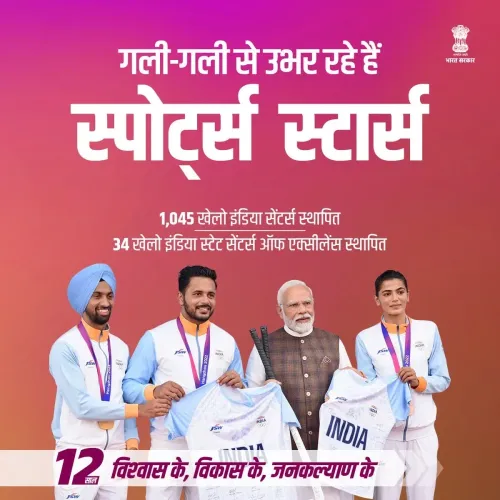
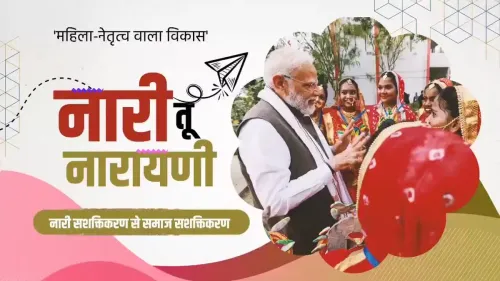
Twelve years of putting the nation first, two battles fought at once — against insurgency and against poverty. Delhi Chief Minister Rekha Gupta on Sunday, November 8, 2026, shared a pointed quote from Prime Minister Narendra Modi on X, framing India's decade-plus governance record as proof that security and inclusive development are inseparable goals.
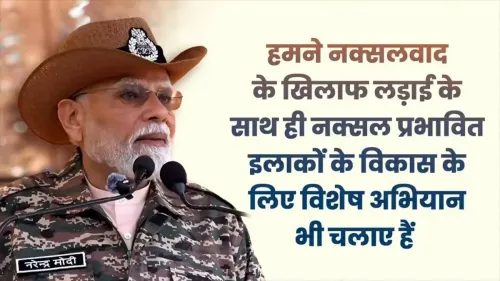
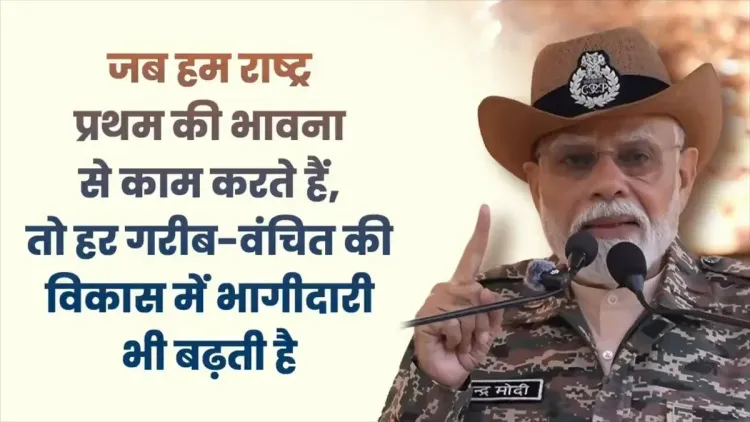
The quote, shared in Hindi, reads: 'जब हम राष्ट्र प्रथम की भावना से काम करते हैं, तो देश की शांति और सुरक्षा भी सुनिश्चित होती है और हर गरीब-वंचित की विकास में भागीदारी भी बढ़ती है।' — 'When we work with the spirit of Nation First, the country's peace and security are ensured and the participation of every poor and marginalised person in development also increases.' The PM then extends the argument: in the last 12 years, India has not merely won the fight against Naxalism and separatism — it has also waged and won a larger war against poverty.
The twin-front strategy: counter-insurgency meets welfare
The logic here is deliberate policy, not just rhetoric. Since 2014, the central government has consistently argued that Naxal insurgency and deep poverty share the same roots in neglected hinterlands, and that addressing one without the other is a half-measure. The Aspirational Districts Programme, launched in 2018, directly targeted backward districts — many of them Naxal-affected — to accelerate progress on health, education, nutrition, and financial inclusion. The idea: drain the grievance pool that extremism feeds on.
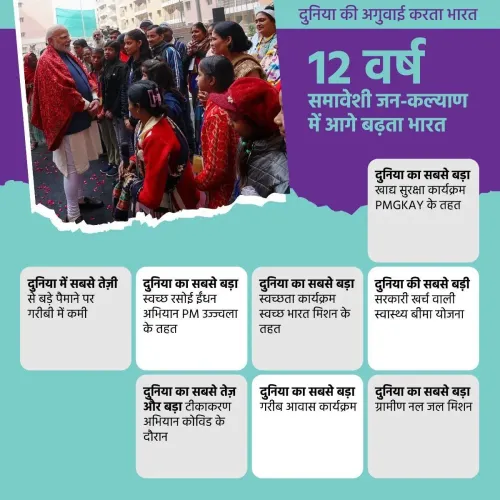
Official data over this period have tracked declining Naxal-related violence incidents alongside expanded reach of welfare schemes — housing under Pradhan Mantri Awas Yojana, sanitation through Swachh Bharat Mission, and direct benefit transfers reaching millions of previously excluded households in central and eastern India. The Ministry of Home Affairs has periodically cited shrinking 'red corridor' geography as evidence that the dual approach is working.
Why CM Gupta is amplifying this message now
Rekha Gupta's decision to circulate the PM's words signals active alignment between Delhi's BJP leadership and the Centre's governance narrative — a consistent pattern ahead of key political moments. The framing serves a broader purpose: repositioning the BJP's internal-security record not as coercion alone, but as development by another name. It is a message aimed squarely at voters in regions that have lived on both sides of that equation.
What makes PM Modi's formulation politically durable is its structure — 'Nation First' as the cause, security and poverty reduction as joint effects. It collapses what critics have often presented as a trade-off into a single, unified claim. Whether independent assessments of welfare coverage in former Naxal strongholds fully validate that claim remains the sharper question for scrutiny.
The Ministry of Home Affairs' next periodic report on left-wing extremism, and third-party audits of scheme saturation in ex-insurgency districts, will be the real ledger this narrative is tested against.
Point of View
Two registers that rarely coexist comfortably in Indian political messaging. By amplifying it, CM Rekha Gupta reinforces Delhi BJP's alignment with the Centre's development narrative at a moment when the party is keen to consolidate its governance record. The 12-year timeframe is pointed: it anchors the claim squarely to the BJP's own tenure, inviting voters to treat the period as an auditable unit. The real test of the narrative lies not in the rhetoric but in whether Ministry of Home Affairs data and independent welfare audits in former red-corridor districts tell the same story.
NationPress
8 Nov 2026
Frequently Asked Questions
What did PM Modi say about Naxalism and poverty that CM Rekha Gupta shared?
PM Modi stated that working with a 'Nation First' spirit ensures both peace and security, and also increases the participation of the poor in development. He claimed India has won battles against Naxalism, separatism, and poverty over the last 12 years.
What is the Aspirational Districts Programme and how does it relate to Naxalism?
The Aspirational Districts Programme, launched in 2018, targeted India's most backward districts — many of which were Naxal-affected — to rapidly improve health, education, and economic indicators, linking counter-insurgency with socio-economic development.
Has Naxal violence actually declined in India in the last 12 years?
Official Ministry of Home Affairs data has shown a decline in Naxal-related incidents and a reduction in the geographical spread of the 'red corridor' since 2014, though independent assessments of the full extent of this decline continue.
Why did Delhi CM Rekha Gupta share PM Modi's quote on Naxalism?
CM Rekha Gupta shared the quote to amplify the BJP's national governance narrative, linking internal security achievements with poverty reduction — a consistent messaging strategy for the party's leadership across states.
Which welfare schemes has the government used in Naxal-affected areas?
Key schemes deployed in Naxal-affected regions include Pradhan Mantri Awas Yojana for housing, Swachh Bharat Mission for sanitation, direct benefit transfers, and the Aspirational Districts Programme targeting overall development indicators.