CM Manik Saha Offers Prayers at Indranagar Kali Bari
Synopsis
Tripura Chief Minister Dr. Manik Saha visited Indranagar Kali Bari in Agartala on November 8, 2026, to offer prayers during Kali Puja, seeking the goddess's blessings for the happiness, peace, and prosperity of every resident of Tripura.
Key Takeaways
Manik Saha attended Kali Puja at Indranagar Kali Bari , Agartala, on November 8, 2026 .
He prayed at the feet of Maa Kali for the well-being, peace, and prosperity of every person in Tripura .
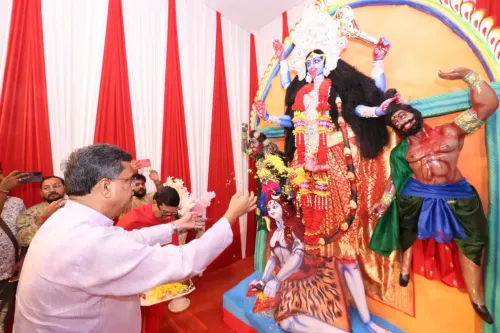
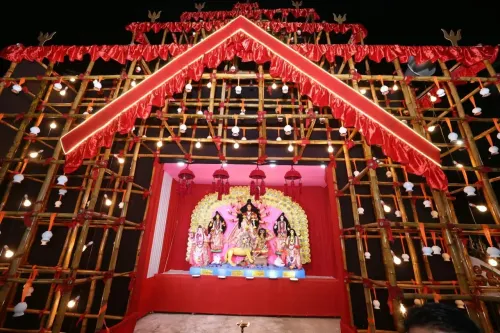
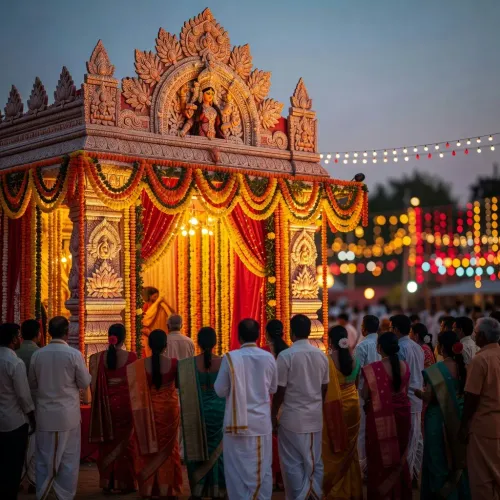
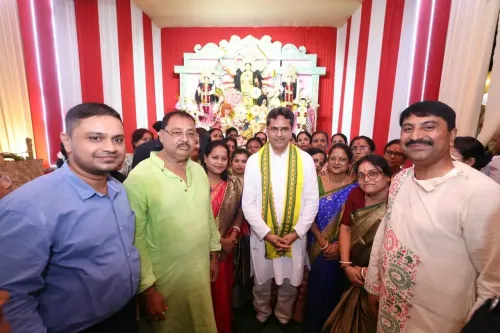
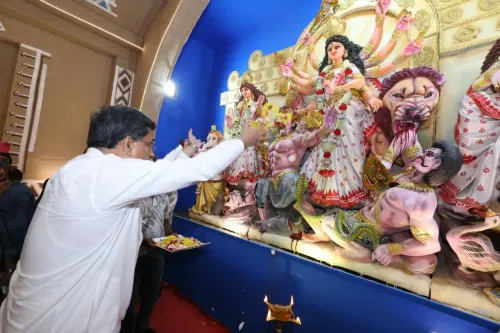
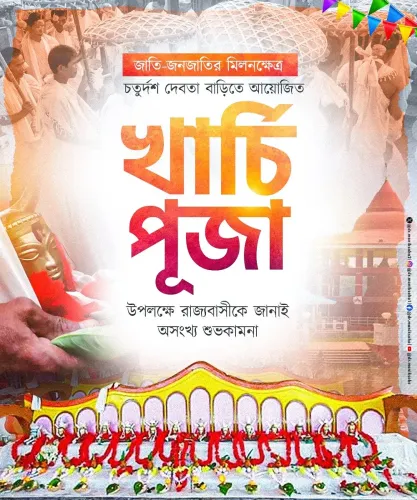
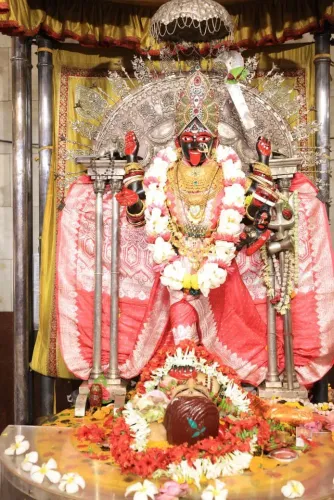
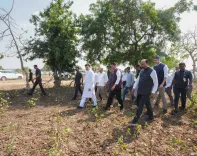
The Chief Minister shared four photographs from the temple visit on X.
Kali Puja is one of the most significant festivals on Tripura 's Bengali Hindu cultural calendar.
The visit reflects Dr.
Saha 's consistent engagement with the state's major religious and cultural observances.
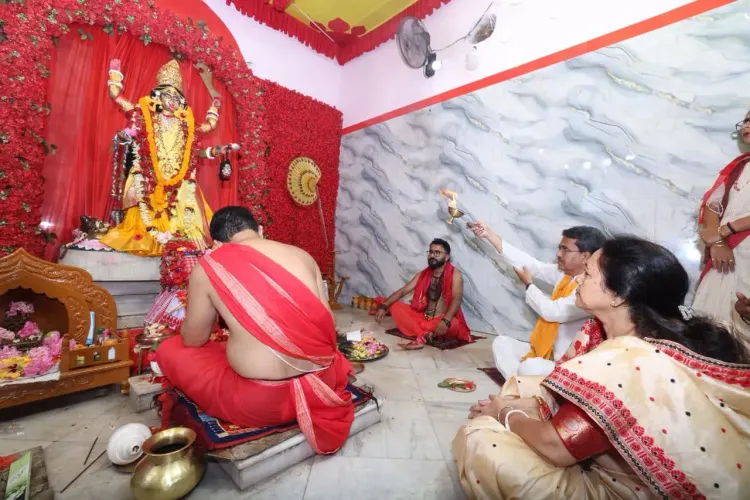
On the occasion of Kali Puja, Tripura Chief Minister Dr. Manik Saha visited the Indranagar Kali Bari in Agartala on Sunday, November 8, 2026, offering prayers at the feet of Maa Kali and seeking her blessings for the welfare of every resident of the state.
Posting on X alongside four photographs from the temple, Dr. Saha wrote in Bengali: 'আজ ইন্দ্রনগর কালী বাড়িতে মা কালীর পূজার্চনায় অংশগ্রহণ করে মায়ের চরণে প্রার্থনা জানাই' — 'Today, participating in the worship of Maa Kali at Indranagar Kali Bari, I pray at the mother's feet that the life of every person in the state be filled with happiness, peace, prosperity, and well-being.'
Indranagar Kali Bari and the Kali Puja tradition in Tripura
The Indranagar Kali Bari is a prominent temple in Agartala that draws devotees each year during the annual Kali Puja observance. The festival, which falls alongside Diwali on the new-moon night of the Hindu month of Kartik, is a cornerstone of Tripura's Bengali Hindu cultural calendar — observed with particular devotion in a state where the festival carries deep community roots.
Kali Puja ranks among the most significant seasonal religious occasions in Tripura, alongside Durga Puja, and draws participation from households and public institutions alike. For a Chief Minister who doubles as the state's most prominent public figure, attending such an event is both a cultural act of faith and a visible affirmation of Tripura's shared traditions.
A Chief Minister's presence in the community calendar
Dr. Manik Saha has consistently engaged with the state's religious and cultural events since taking charge as Chief Minister. His appearance at the Indranagar Kali Bari fits a recognisable pattern among Indian state leaders who mark major festivals publicly — a practice that reinforces community ties while signalling administrative accessibility. The prayer for 'happiness, peace, prosperity, and well-being' across the entire state underscores the inclusive framing typical of such observances.
Point of View
Whose BJP-led government has sought to deepen roots in Tripura's Bengali Hindu majority, visible participation in Kali Puja and similar events forms part of a broader cultural outreach arc. The prayer's explicitly inclusive framing — covering 'every person in the state' — also signals an effort to present such observances as occasions for collective well-being rather than narrow political signalling. As Tripura heads toward future electoral cycles, the Chief Minister's presence at key community events will likely remain a consistent feature of his public calendar.
NationPress
8 Nov 2026
Frequently Asked Questions
Where is Indranagar Kali Bari located?
Indranagar Kali Bari is a Kali temple located in Agartala, the capital of Tripura, known for its annual Kali Puja celebrations.
Why did CM Manik Saha visit Indranagar Kali Bari?
Tripura Chief Minister Dr. Manik Saha visited Indranagar Kali Bari on November 8, 2026, to participate in Kali Puja and offer prayers for the happiness, peace, and prosperity of all residents of Tripura.
When is Kali Puja celebrated in Tripura?
Kali Puja is observed on the new-moon night of the Hindu month of Kartik, coinciding with Diwali. It is one of the most significant festivals in Tripura's Bengali Hindu cultural calendar.
What did Manik Saha pray for at Kali Puja 2026?
Dr. Manik Saha prayed at the feet of Maa Kali that the life of every person in Tripura be filled with happiness, peace, prosperity, and well-being.
Does Manik Saha regularly attend religious festivals in Tripura?
Yes, as Tripura Chief Minister, Dr. Manik Saha regularly participates in the state's major religious and cultural events, including festivals like Kali Puja and Durga Puja.