CM Manik Saha joins Durga Puja parikrama in Tripura
Synopsis
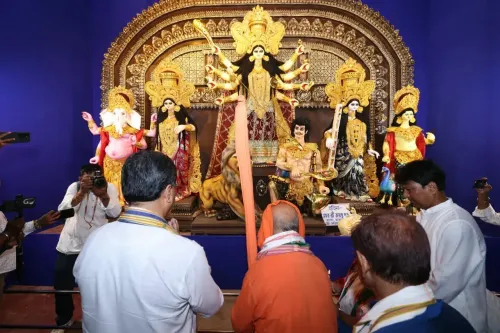
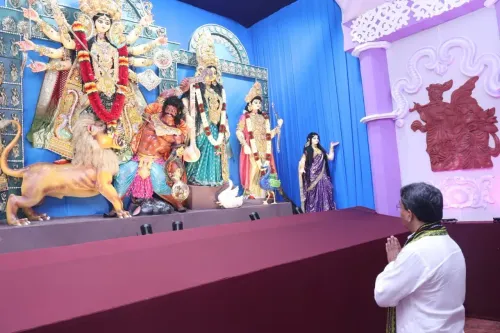
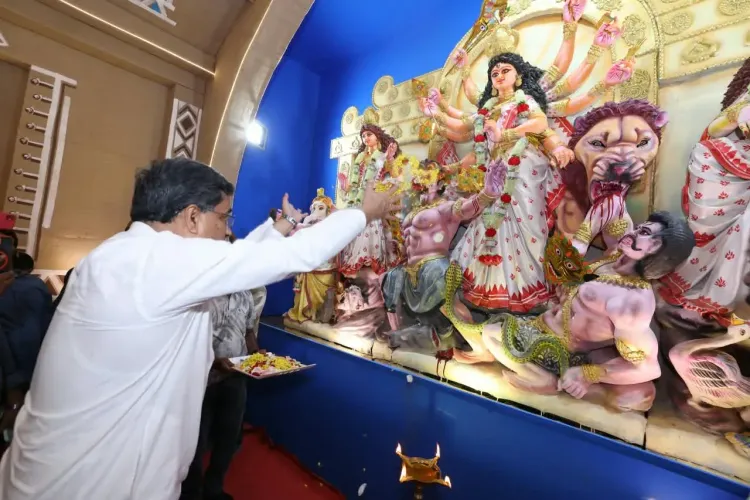
Tripura Chief Minister Dr. Manik Saha visited Mouchak Club and Milan Sangha pandals during his Durga Puja parikrama on 14 October 2026, invoking Maa Durga's blessings for communal harmony and brotherhood across the state.
Key Takeaways
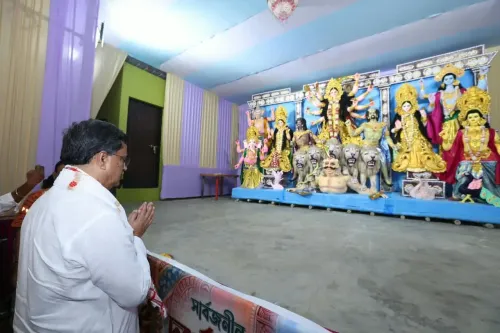
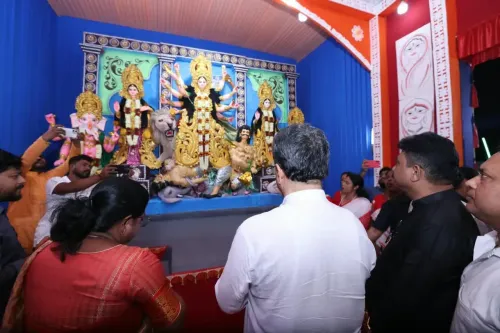
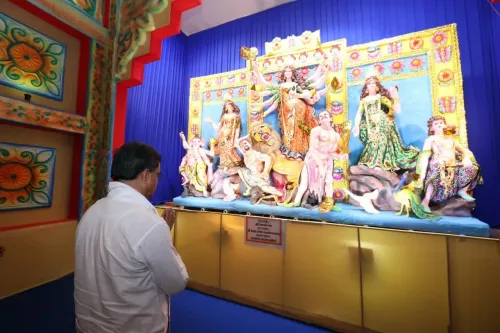
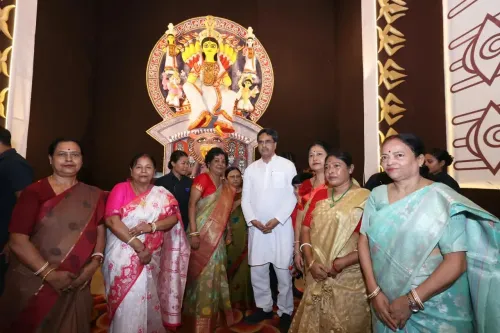
Manik Saha conducted a puja parikrama on 14 October 2026 , visiting Mouchak Club and Milan Sangha pandals.
He described Durga Puja as 'a vibrant expression of our heritage and culture.' The CM prayed for harmony and brotherhood in Tripura's society under Maa Durga's blessings.
Tripura has a large Bengali Hindu population for whom Durga Puja is the state's most significant community festival.
Pandal visits by state leaders are a long-standing tradition that blends devotion with inclusive civic outreach.
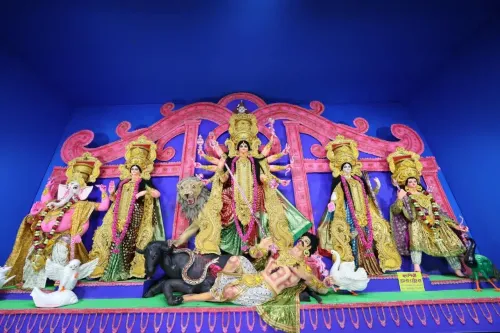
Amid the lights, drums, and throngs of devotees, Tripura Chief Minister Dr. Manik Saha stepped out on Wednesday evening, 14 October 2026, for a puja parikrama — a ritual round of pandal visits — stopping at Mouchak Club and Milan Sangha as the state's most beloved festival reached its celebratory peak.
Posting in Bengali, the Chief Minister reflected on the deeper spirit of the occasion: 'Durga Puja amader oitihya o sanskritir ek pranabanta prakas' — 'Durga Puja is a vibrant expression of our heritage and culture.' He added that the festival's true significance emerges through 'the coming together of people, mutual cooperation, and the sharing of joy.'
He closed with a prayer: that the blessings of Maa Durga keep harmony and brotherhood unbroken in Tripura's society.
Durga Puja as Tripura's great social equaliser
Tripura carries one of the most vibrant Durga Puja cultures in the Northeast, shaped by its large Bengali Hindu population alongside indigenous tribal communities. Community pandals, run by neighbourhood clubs like Mouchak Club and Milan Sangha, are not merely religious sites — they are the state's living public squares, where social barriers blur for five days every year.
The tradition of elected leaders doing a parikrama — personally visiting multiple pandals across constituencies — is a deeply embedded practice in West Bengal and Tripura alike. It is at once devotional, political, and social: a signal that the administration stands with the community in its moments of collective joy.
Communal harmony: the subtext behind every pandal visit
Dr. Saha's emphasis on samprity o soubhratritwa — 'harmony and brotherhood' — carries particular resonance in Tripura. The state's complex demographic tapestry, with Bengali-speaking plains communities and tribal populations across hill districts, makes inclusive festival participation a quietly consequential act of governance, not just ceremonial optics.
State governments in Tripura routinely coordinate crowd management and security arrangements at major pandals during the festival season — the visible scaffolding that allows such large communal gatherings to remain peaceful and celebratory.
For Dr. Saha, walking the lanes between illuminated pandals this October is both an act of faith and a statement: that the state's festivals belong to everyone, and that the government intends to keep it that way.
Point of View
However, the subtext runs deeper — the state's tribal-Bengali demographic balance means that a CM's visible embrace of inclusive celebration carries a governance signal beyond routine optics. His emphasis on 'harmony and brotherhood' echoes a consistent Northeast BJP framing that positions the party as a guarantor of communal peace rather than sectarian division. The visit reinforces Dr. Saha's image as an accessible, community-embedded leader ahead of any future electoral cycle.
NationPress
14 Oct 2026
Frequently Asked Questions
Where did CM Manik Saha visit during Durga Puja 2026?
Tripura Chief Minister Dr. Manik Saha visited the Mouchak Club and Milan Sangha pandals during his Durga Puja parikrama on 14 October 2026.
What did Manik Saha say about Durga Puja?
Dr. Saha called Durga Puja 'a vibrant expression of our heritage and culture,' stating that the festival's true significance lies in people coming together, showing mutual cooperation, and sharing joy.
What is a puja parikrama?
A puja parikrama is the tradition of visiting multiple Durga Puja pandals in succession during the festival, practiced widely by devotees and public figures in West Bengal and Tripura.
Why is Durga Puja important in Tripura?
Tripura has a large Bengali Hindu population for whom Durga Puja is the biggest community festival of the year, celebrated through neighbourhood pandals that serve as centres of social unity and cultural expression.
What message did CM Saha give on Durga Puja 2026?
Dr. Saha prayed that the blessings of Maa Durga keep harmony and brotherhood unbroken in Tripura's society, underscoring the festival as a moment of communal solidarity.