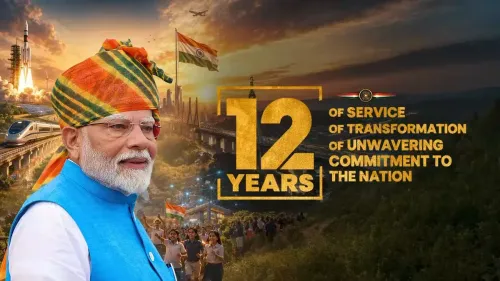
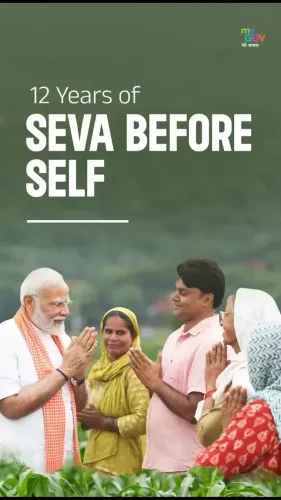
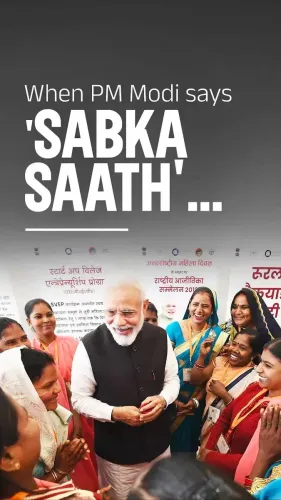
CM Rekha Gupta marks 12 years of Garib Kalyan under PM Modi
Synopsis
Delhi Chief Minister Rekha Gupta on 8 June 2026 marked 12 years of PM Modi's Garib Kalyan initiatives, highlighting how housing, health, clean fuel, and food security schemes have delivered dignity to crores of marginalised citizens from Delhi's slums to remote villages.
Key Takeaways
Delhi CM Rekha Gupta posted on 8 June 2026 marking 12 years of welfare delivery under PM Narendra Modi under the #12YearsOfGaribKalyan hashtag.
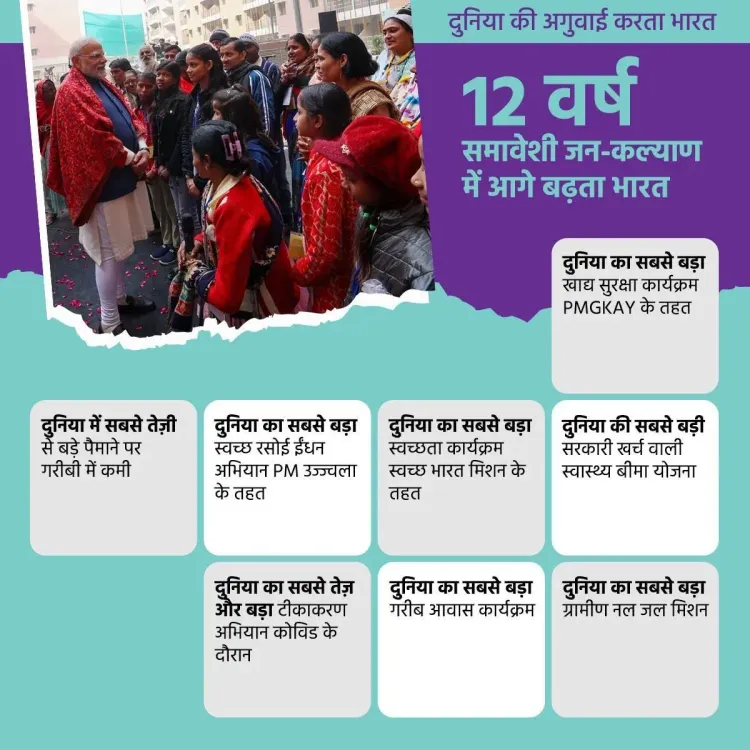
The post references four welfare pillars: permanent housing ( Pradhan Mantri Awas Yojana , 2015), clean cooking fuel ( Pradhan Mantri Ujjwala Yojana , 2016), health cover ( Ayushman Bharat , 2018, up to Rs 5 lakh per family), and free food grain ( PM Garib Kalyan Anna Yojana , 2020).
CM Gupta explicitly links Delhi's jhuggi settlements to the national welfare narrative, framing urban slum dwellers as key beneficiaries.
The statement positions 'last-mile delivery' to the poorest as the foundational strength of the Viksit Bharat 2047 vision.
The messaging reflects a coordinated BJP communication drive marking the anniversary of PM Modi 's first term in office.
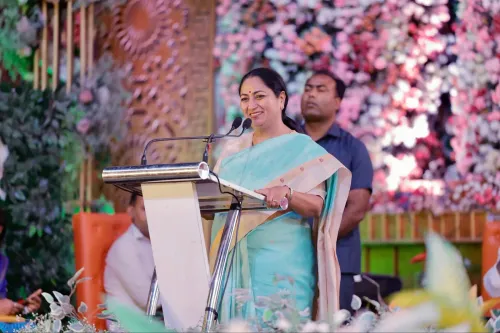
Delhi Chief Minister Rekha Gupta on Monday, 8 June 2026, took to X to mark 12 years of welfare initiatives under Prime Minister Narendra Modi, saying the decade-plus of Garib Kalyan (welfare for the poor) has brought security, dignity, and self-respect to crores of deprived citizens across India.
Context
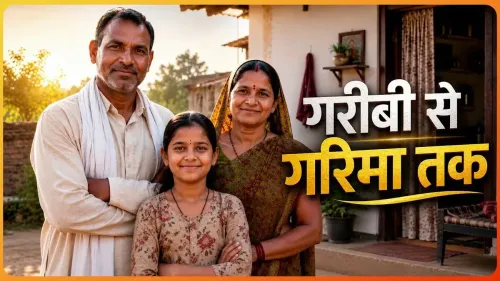
Posting under the hashtag #12YearsOfGaribKalyan, CM Gupta invoked vivid ground-level imagery — a mother receiving a pucca (permanent) home, an elderly person freed from medical anxiety, a woman liberated from cooking smoke, and a family receiving food grain — to illustrate how central welfare programmes have reached the last mile. In her words, 'अंतिम पंक्ति में खड़े व्यक्ति तक सम्मान और सुरक्षा पहुंचाने का यह संकल्प' ('the resolve to deliver dignity and security to the person standing in the last row') is the greatest strength of a Viksit Bharat (Developed India).
The post spans Delhi's slum settlements to remote villages across the country, framing welfare delivery as a national achievement that transcends geography.
Policy Backdrop
The four welfare pillars referenced in CM Gupta's post correspond to flagship central schemes. The Pradhan Mantri Awas Yojana, launched in 2015, has provided pucca homes to urban and rural poor households and has been extended beyond its original 2022 target. The Pradhan Mantri Ujjwala Yojana, introduced in 2016, replaced traditional biomass fuels with LPG connections for women in below-poverty-line families — directly addressing the 'freedom from smoke' imagery in the post.
On healthcare, the Ayushman Bharat Pradhan Mantri Jan Arogya Yojana, rolled out in 2018, offers up to Rs 5 lakh health insurance cover per family for secondary and tertiary care, providing the relief from medical worry that CM Gupta highlighted. Food security is anchored by the Pradhan Mantri Garib Kalyan Anna Yojana, launched in March 2020 and extended through multiple phases to supply free food grain to eligible households.
Stakeholders and Impact
The primary beneficiaries of the schemes cited are urban slum dwellers — including those in Delhi's jhuggi (slum) clusters — rural poor households, women in low-income families, and elderly citizens dependent on public health infrastructure. By invoking Delhi's slums alongside distant villages, CM Gupta positions the national capital's marginalised population as co-beneficiaries of central welfare, a framing that carries political weight in a city where urban poverty and housing remain live issues.
The message also reinforces the BJP's broader narrative of 'saturation' — ensuring every eligible household is covered — as the operational metric of inclusive growth. This framing has been consistently deployed across both NDA-governed and opposition-governed states.
What's Next
The #12YearsOfGaribKalyan campaign signals coordinated BJP communications around the anniversary of PM Modi's first term, with state leaders amplifying the central message. In Delhi, attention will turn to state-level coordination on urban housing and health coverage, including progress on jhuggi rehabilitation under Pradhan Mantri Awas Yojana. Nationally, any announcements on scheme extensions or fresh targets in the next Union Budget and parliamentary discussions will test whether the Viksit Bharat 2047 welfare arc translates into new programmatic commitments.
Point of View
Designed to attach the ruling party's brand to tangible welfare outcomes. By anchoring the message in human vignettes — the mother, the elder, the woman at the stove, the hungry family — the communication sidesteps abstract statistics and makes welfare feel personal and verifiable. The explicit inclusion of Delhi's slums is strategically significant: it signals that the national capital, long associated with urban deprivation and housing disputes, is being woven into the Garib Kalyan success story ahead of any future electoral cycle. Taken together, the post advances the BJP's saturation-and-convergence narrative, where overlapping schemes are presented as a unified safety net rather than isolated interventions.
NationPress
26 Sept 2026
Frequently Asked Questions
What is the Garib Kalyan initiative and how long has it been running?
Garib Kalyan refers to a cluster of central welfare schemes launched after 2014 under PM Narendra Modi aimed at housing, health, food, and clean energy for the poor. The #12YearsOfGaribKalyan campaign in June 2026 marks 12 years since the Modi government took office in May 2014.
Which schemes did Delhi CM Rekha Gupta reference in her post?
CM Gupta's post implicitly references Pradhan Mantri Awas Yojana (housing), Pradhan Mantri Ujjwala Yojana (LPG connections for women), Ayushman Bharat (health insurance up to Rs 5 lakh), and Pradhan Mantri Garib Kalyan Anna Yojana (free food grain).
What is Viksit Bharat and how does welfare connect to it?
Viksit Bharat (Developed India) is the government's vision for India to become a developed nation by 2047. CM Gupta's post argues that inclusive welfare delivery to the last mile is the strongest foundation for achieving this goal.
How does Pradhan Mantri Ujjwala Yojana help women?
Launched in 2016, Pradhan Mantri Ujjwala Yojana provides free LPG connections to women in below-poverty-line households, replacing traditional biomass cooking that causes indoor air pollution and serious health hazards.
What is the Pradhan Mantri Garib Kalyan Anna Yojana?
It is a free food grain distribution programme launched in March 2020 and extended through multiple phases to supply rations to eligible poor households, ensuring food security for crores of families across India.