CM Rekha Gupta Hails 12 Years of Modi Welfare Schemes
Synopsis
Delhi Chief Minister Rekha Gupta on June 8 lauded PM Narendra Modi's twelve-year governance record, citing Jan Dhan, Ayushman Bharat, PM Awas, DBT, and PM SVANidhi as proof that welfare benefits have reached India's poorest citizens under the Antyodaya-to-Viksit Bharat framework.
Key Takeaways
Delhi CM Rekha Gupta posted on June 8, 2026 marking 12 years of the Modi government under the hashtag #12YearsOfGaribKalyan .
She cited Jan Dhan Yojana (launched August 2014 ) as the foundation of the Direct Benefit Transfer architecture that reduced subsidy leakages.
Ayushman Bharat provides health cover of up to Rs 5 lakh per year to economically vulnerable families.
PM SVANidhi , launched in 2020 , offered collateral-free micro-credit to street vendors hit by pandemic restrictions.
The post frames the welfare record as a journey from Antyodaya (uplift of the poorest) to Rashtrodyaya (national resurgence), anchored in the Viksit Bharat 2047 vision.
Five beneficiary groups were specifically named: the poor, the marginalised, farmers, women, and youth.
Delhi Chief Minister Rekha Gupta on Monday, June 8, 2026, paid tribute to Prime Minister Narendra Modi's twelve-year governance record, highlighting flagship welfare programmes that she said have transformed the lives of crores of Indians by delivering development to the last person in line.
Posting on X in Hindi, CM Gupta wrote: 'बीते 12 वर्ष उस भारत की यात्रा हैं, जिसने संकल्पों को सिद्धि में बदलते देखा है' — 'The past 12 years are the journey of an India that has seen resolve transformed into achievement.' She specifically named Jan Dhan, Ayushman Bharat, Pradhan Mantri Awas Yojana, DBT, PM SVANidhi, and several other public welfare initiatives as instruments of this transformation. The post carried the hashtag #12YearsOfGaribKalyan.
Context
June 2026 marks roughly twelve years since the BJP-led National Democratic Alliance government assumed office under Prime Minister Narendra Modi in May 2014. Senior BJP leaders and chief ministers across states have been marking the occasion with social media tributes cataloguing the central government's welfare achievements. CM Gupta's post is part of this coordinated commemoration, framing the period as a journey from Antyodaya (uplift of the poorest) to Rashtrodyaya (national resurgence).
Policy Backdrop
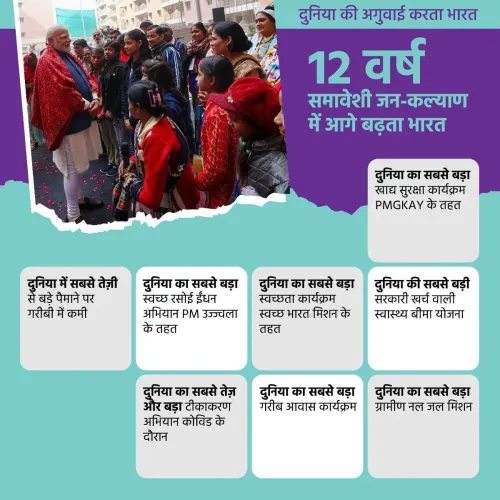
The schemes cited by CM Gupta represent the backbone of the Modi government's social-policy architecture. Pradhan Mantri Jan Dhan Yojana, launched in August 2014, opened bank accounts for previously unbanked households and laid the rails for Direct Benefit Transfer (DBT) — a mechanism designed to eliminate leakages by routing subsidies directly to beneficiary accounts. Ayushman Bharat, announced in the Union Budget 2018, provides health insurance cover of up to Rs 5 lakh per year to economically vulnerable families, making it one of the world's largest government-funded health protection programmes.
Pradhan Mantri Awas Yojana, launched in 2015, targets housing for the rural and urban poor under the 'Housing for All' mission. PM SVANidhi, introduced in 2020, extended collateral-free micro-credit to street vendors displaced by pandemic-era restrictions. Together, these programmes reflect the BJP's stated Antyodaya principle — prioritising the poorest citizen in welfare delivery — that has guided successive Union Budgets since 2014.
Stakeholders and Impact
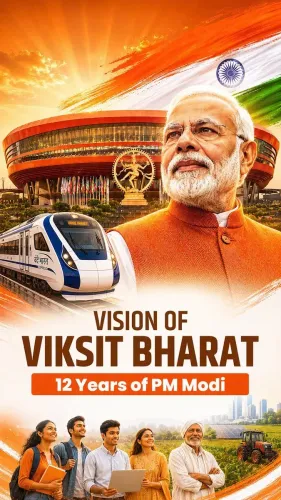
CM Gupta specifically named five beneficiary groups: the poor, the marginalised, farmers, women, and youth — categories that together constitute the core electoral and social constituency of the BJP's welfare outreach. She described the expansion of 'security, dignity, convenience and new opportunities' (सुरक्षा, सम्मान, सुविधा और नए अवसरों का विस्तार) into crores of households as the foundation of the Viksit Bharat vision — the government's roadmap for a developed India by 2047. The DBT architecture and Aadhaar linkage have been credited by the government with reducing duplication and improving last-mile delivery across multiple ministries.
What's Next
The Viksit Bharat agenda will face its next major legislative test in the forthcoming Union Budget, where parliamentary debates on welfare allocations and mid-term reviews of scheme targets are expected. Any revision of coverage benchmarks under Ayushman Bharat or Pradhan Mantri Awas Yojana will be closely watched by opposition parties and civil-society groups assessing whether delivery has matched the political narrative. CM Gupta's post underscores that Delhi's BJP government intends to keep the twelve-year welfare record at the centre of its political messaging.
Point of View
She connects grassroots scheme delivery to a larger civilisational ambition, reinforcing a message that resonates with the party's core voter base. The enumeration of specific schemes — rather than broad praise — signals an attempt to make the tribute feel substantive and policy-grounded. As Delhi's Chief Minister, her endorsement also carries intra-party significance, signalling alignment between the state BJP unit and the central leadership's political calendar.
NationPress
22 Sept 2026
Frequently Asked Questions
What is #12YearsOfGaribKalyan about?
#12YearsOfGaribKalyan is a BJP social media campaign marking twelve years of the Narendra Modi government, highlighting welfare schemes such as Jan Dhan, Ayushman Bharat, and PM SVANidhi that targeted poor, marginalised, and vulnerable communities.
What did Delhi CM Rekha Gupta say about PM Modi's welfare schemes?
CM Rekha Gupta said the past 12 years represent India's journey of turning resolve into achievement, crediting schemes like Jan Dhan, Ayushman Bharat, PM Awas Yojana, DBT, and PM SVANidhi for ensuring development reaches the last person in line.
What is Ayushman Bharat and how much cover does it provide?
Ayushman Bharat is a government-funded health insurance scheme announced in 2018 that provides up to Rs 5 lakh per year in health cover to economically vulnerable families, making it one of the world's largest such programmes.
What is PM SVANidhi scheme?
PM SVANidhi is a micro-credit scheme launched in 2020 that provides collateral-free loans to street vendors who lost livelihoods due to pandemic-related restrictions, helping them restart small businesses.
What is the Viksit Bharat vision mentioned by CM Rekha Gupta?
Viksit Bharat is the Indian government's vision for a fully developed India by 2047, built around inclusive growth, last-mile welfare delivery, and the Antyodaya principle of prioritising the poorest citizens in all government programmes.