CM Rekha Gupta Hails Modi's 12 Years of Women-Led Development
Synopsis
Delhi Chief Minister Rekha Gupta on 12 June 2026 lauded PM Narendra Modi's 12 years in power for advancing women-led development, highlighting Ujjwala, Jan Dhan, Mudra, and Lakhpati Didi schemes as evidence of a transformative shift in India's gender-welfare policy architecture.
Key Takeaways
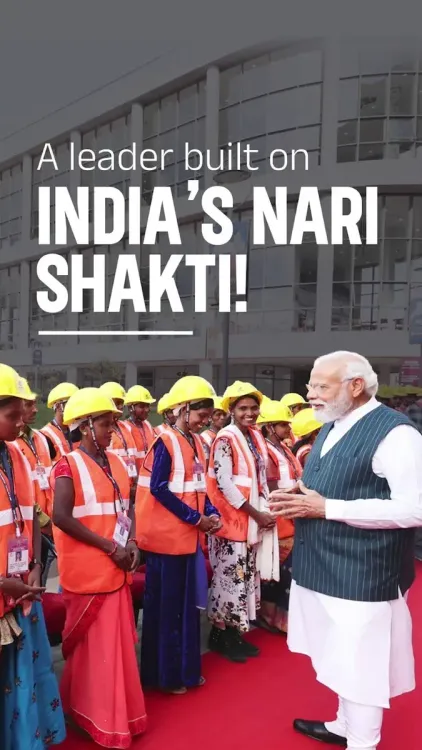
Delhi CM Rekha Gupta posted on 12 June 2026 praising PM Modi's 12-year record on women's empowerment under #12YearsOfNariShakti .
The Pradhan Mantri Ujjwala Yojana (launched 2016 ) and Swachh Bharat Mission (launched 2014 ) are cited for improving dignity and health of rural women.
Pradhan Mantri Jan Dhan Yojana linked crores of previously unbanked women to the formal financial system from 2014 onwards.
Mudra Yojana (from 2015 ) and Lakhpati Didi under DAY-NRLM are highlighted as key drivers of women's entrepreneurship and rural income growth.
CM Gupta noted women's growing presence at forward defence positions as a marker of policy-driven security and opportunity.
The Nari Shakti Vandan Adhiniyam (2023) — promising 33% reservation for women in legislatures — remains the key upcoming implementation milestone.
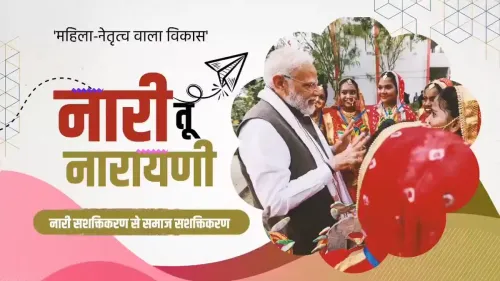
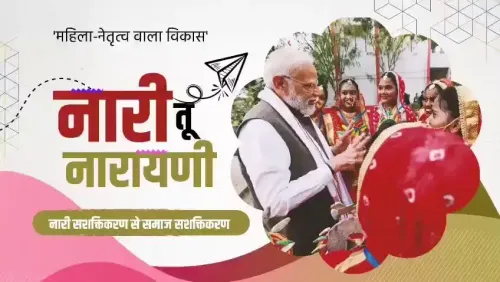
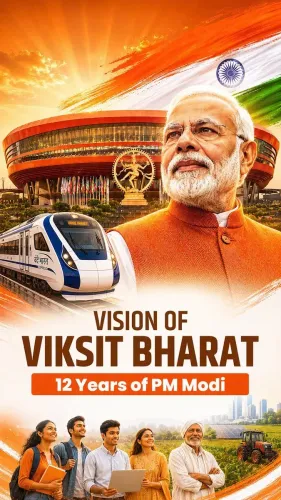
Delhi Chief Minister Rekha Gupta on Friday, 12 June 2026, credited Prime Minister Narendra Modi's 12 years in office with ushering in a 'new golden era' of women-led development in India, citing a sweep of flagship welfare and financial-inclusion programmes that she says have transformed the lives of crores of women across the country.
Context
Posting under the hashtag #12YearsOfNariShakti, CM Gupta wrote that when policies are designed with women's safety, dignity, and self-reliance in mind, they do not merely change lives — they awaken a new confidence within the nation's Nari Shakti (women power). She added that such policies give women the strength to fulfil their own dreams.
The post arrives as the BJP-led central government marks a political milestone — 12 years of continuous rule at the Centre — and as the party seeks to consolidate its record on gender-welfare schemes ahead of upcoming electoral cycles.
Policy Backdrop
CM Gupta specifically highlighted the Pradhan Mantri Ujjwala Yojana, launched in May 2016, which provided LPG connections to below-poverty-line households, freeing millions of women from the hazards of indoor cooking smoke. Alongside it, the Swachh Bharat Mission, inaugurated in October 2014, constructed household toilets that she described as izzatghar (houses of dignity), restoring safety and self-respect to mothers and sisters.
On financial inclusion, she pointed to the Pradhan Mantri Jan Dhan Yojana — announced in August 2014 — which linked women directly to the formal banking system through zero-balance accounts. The Pradhan Mantri Mudra Yojana, institutionalised in April 2015, she noted, gave 'new wings' to women's entrepreneurial aspirations through collateral-free micro-credit.
Perhaps the most vivid image in her post was that of crores of rural women joining Self-Help Groups (SHGs) under the Lakhpati Didi initiative — a scheme under DAY-NRLM that targets annual household incomes of at least one lakh rupees — and writing, in her words, 'a new story of self-reliance.'
Stakeholders and Impact
CM Gupta also noted that a policy environment of sensitivity and security has enabled India's daughters to serve at forward positions in the defence forces — a reference to the progressive induction of women in combat and frontline military roles in recent years. She described this participation, from startups to policymaking, as proof that today's woman is the 'most empowered cornerstone' of a self-reliant and developed India.
The schemes cited touch multiple stakeholder groups: rural women benefiting from clean fuel and sanitation, women entrepreneurs accessing Mudra credit and SHG networks, and female defence personnel reaching roles previously closed to them. Together they form the policy architecture the BJP has branded under the Nari Shakti umbrella since 2014.
What's Next
Attention will now turn to implementation milestones of the Nari Shakti Vandan Adhiniyam — the Women's Reservation Bill passed in 2023 — which promises 33 per cent reservation for women in the Lok Sabha and state assemblies once delimitation is complete. State budgets are also expected to carry updated Lakhpati Didi coverage targets, providing measurable benchmarks against the political narrative CM Gupta has amplified.
If the government translates this political momentum into accelerated implementation of the reservation legislation, the #12YearsOfNariShakti campaign could serve as a launchpad for a broader electoral pitch centred on women voters — a demographic that has shown rising turnout in successive general elections.
Point of View
Framing economic and social schemes as a unified ideological project rather than discrete policy measures. By invoking a spectrum from rural sanitation to combat-role induction, the post signals that the party intends to contest the 'women's issues' space on its own terms ahead of the next electoral cycle. The shout-out to the Nari Shakti Vandan Adhiniyam — still pending delimitation for activation — serves as a subtle reminder of a promise yet to be redeemed, which could cut both ways depending on implementation pace. Overall, the post reinforces a pattern where BJP chief ministers amplify the Centre's welfare narrative to consolidate the party's standing among women voters, a demographic whose electoral weight has grown measurably since 2014.
NationPress
26 Sept 2026
Frequently Asked Questions
What is the #12YearsOfNariShakti campaign about?
The #12YearsOfNariShakti campaign marks 12 years of the Modi government and highlights key women-centric schemes — including Ujjwala Yojana, Jan Dhan, Mudra , and Lakhpati Didi — as evidence of a sustained policy focus on women's safety, dignity, and economic empowerment.
What is the Lakhpati Didi scheme?
Lakhpati Didi is an initiative under the DAY-NRLM (Deendayal Antyodaya Yojana – National Rural Livelihoods Mission) that encourages women in Self-Help Groups (SHGs) to achieve an annual household income of at least one lakh rupees , promoting rural self-reliance.
What did Delhi CM Rekha Gupta say about PM Modi and women's development?
Delhi CM Rekha Gupta said that under PM Modi's leadership, policies designed around women's security, dignity, and self-reliance have not merely changed lives but have awakened new confidence within India's Nari Shakti , enabling women to pursue their dreams.
What is the Nari Shakti Vandan Adhiniyam?
The Nari Shakti Vandan Adhiniyam , passed in 2023 , is a constitutional amendment that provides 33 per cent reservation for women in the Lok Sabha and state legislative assemblies. It will come into force after the next delimitation exercise is completed.
How has the Pradhan Mantri Ujjwala Yojana helped women in India?
Pradhan Mantri Ujjwala Yojana , launched in May 2016 , provided free or subsidised LPG cooking gas connections to below-poverty-line households, reducing indoor air pollution from traditional biomass cooking and improving the health and dignity of rural women.