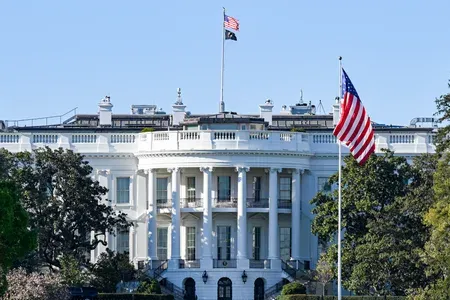
White House Names Stephen Miller as New Chief of Staff

Synopsis
The White House has named Stephen Miller as its new Chief of Staff, with Miller vowing to 'fight with all of our soul' to support the President. Miller, a veteran senior advisor and speechwriter, moves from policy architect to the most powerful operational role in the executive branch.
Key Takeaways
Stephen Miller has been named the new White House Chief of Staff , announced on November 7, 2026 .
Miller quoted his own mission statement: 'Fight with all of our soul to support our President and defend this magnificent Republic.' Miller previously served as a senior advisor and speechwriter in the White House from 2017 , with major influence over immigration policy.
The Chief of Staff is the most powerful unelected position in the US government, controlling presidential access and agenda execution.
The appointment signals ideological continuity and deepened loyalty at the apex of White House operations.
A new power centre has taken shape inside the West Wing. The White House officially announced on Saturday, November 7, 2026, that Stephen Miller has been appointed as White House Chief of Staff — one of the most consequential staff positions in the American executive branch, and the nerve centre through which a president's agenda moves from intention to action.
The announcement came through the official White House account on X, quoting Miller directly: 'The mission now is more clear than ever: Fight with all of our soul to support our President and defend this magnificent Republic.' Short. Declarative. A statement of total alignment.
From Policy Architect to Operational Commander
Stephen Miller is no stranger to the corridors of executive power. He first entered the White House in 2017 as a senior policy advisor and speechwriter — a role that made him one of the most influential behind-the-scenes architects of the Trump administration's first term, particularly on immigration policy. His elevation to Chief of Staff marks a significant shift: from idea-maker to operational commander of the entire White House staff.
The Chief of Staff role controls access to the President, coordinates policy across federal agencies, and sets the internal rhythm of an administration. Whoever holds the job shapes what the President sees, who gets into the Oval Office, and which priorities get turned into action. It is, in practice, the most powerful unelected position in the United States government.
A Signal of Loyalty and Ideological Continuity
The language of Miller's quoted statement — 'fight with all of our soul,' 'magnificent Republic' — is not bureaucratic. It is the vocabulary of a true believer, and that is precisely the signal the appointment sends. White House Chief of Staff transitions almost always carry a message about where an administration is headed, whose voice will carry more weight, and what the internal culture of the West Wing will feel like.
Appointing a figure with Miller's ideological profile and longstanding personal loyalty to the President signals a doubling-down on the administration's core agenda rather than a pivot toward the centre. The flag emoji that accompanied the post underscores the nationalist register in which this transition is being framed.
Washington will be watching to see which policy files land first on the new Chief of Staff's desk — and how quickly that famous fighting spirit translates into executive action.
Point of View
The administration is signalling that the second term's agenda will be pursued with the same uncompromising energy as the first. The Chief of Staff role historically determines which policies gain momentum and which stall; Miller's track record suggests immigration, executive power, and nationalist economic themes will dominate the West Wing's bandwidth. For observers tracking US foreign and domestic policy from New Delhi, this appointment points toward a Washington that is likely to remain assertive, transactional, and deeply resistant to multilateral consensus-building.
NationPress
7 Nov 2026
Frequently Asked Questions
Who is Stephen Miller and why is he significant?
Stephen Miller is a veteran political operative who served as a senior advisor and speechwriter in the White House from 2017, where he wielded major influence over immigration policy. His appointment as Chief of Staff elevates him to the most powerful unelected position in the US executive branch.
What does the White House Chief of Staff actually do?
The White House Chief of Staff manages the operations of the entire executive office, controls access to the President, coordinates policy across federal agencies, and ensures the administration's agenda is translated into action. The role is widely considered the nerve centre of presidential governance.
When was Stephen Miller named White House Chief of Staff?
The White House officially announced Stephen Miller as the new Chief of Staff on Saturday, November 7, 2026, through a post on X.
What did Stephen Miller say after being named Chief of Staff?
Miller was quoted as saying: 'The mission now is more clear than ever: Fight with all of our soul to support our President and defend this magnificent Republic.'
What does Miller's appointment signal about the administration's direction?
Appointing a figure with Miller's strong ideological alignment and long record of personal loyalty signals that the administration intends to pursue its core agenda with intensity, rather than moderating its positions. White House Chief of Staff appointments are widely read as a signal of internal power dynamics and future policy priorities.