Saudi nuclear deal tied to Israel normalisation, White House confirms
Synopsis
The White House has made it explicit: Saudi Arabia's proposed civil nuclear deal with the US comes attached to a demand for Israel normalisation and Abraham Accords membership. With Deputy Chief of Staff Stephen Miller invoking Trump's 'unmatched understanding of Saudi psychology,' the administration is betting that nuclear access is the lever that finally moves Riyadh toward the most consequential diplomatic shift in the Middle East since the original accords.
Key Takeaways
The White House confirmed on 25 July that a proposed civil nuclear deal with Saudi Arabia is linked to Riyadh normalising relations with Israel .
Deputy White House Chief of Staff Stephen Miller said President Trump has communicated this expectation to Saudi leaders across multiple years and terms.
The Abraham Accords previously secured normalisation between Israel and the UAE , Bahrain , Morocco , and Sudan .
Miller cited Trump's 2017 Riyadh speech as the foundation of the US-Saudi strategic relationship.
Energy Secretary Chris Wright had separately announced details of the nuclear negotiations, prompting questions over the sequencing of the normalisation condition.
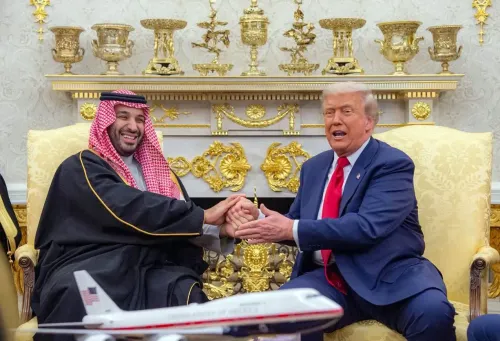
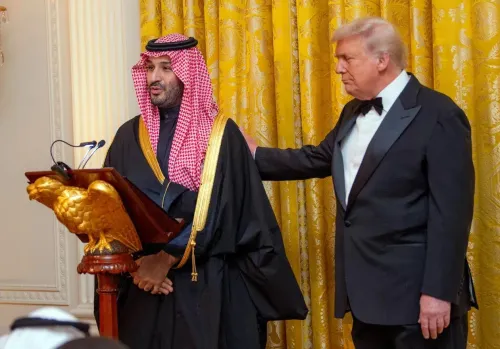
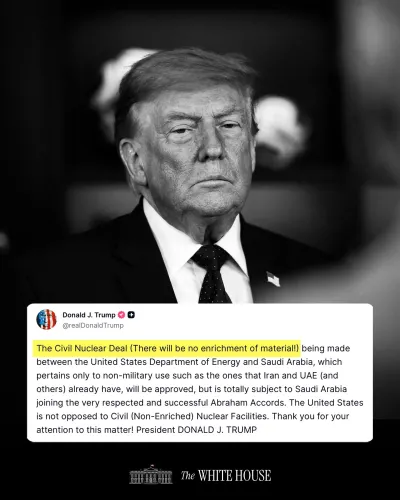
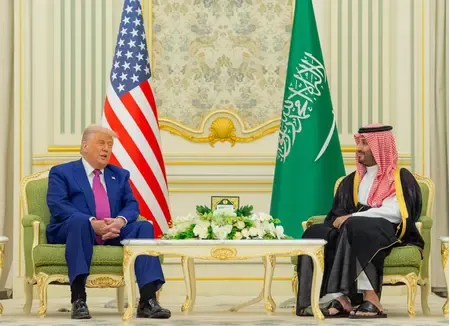
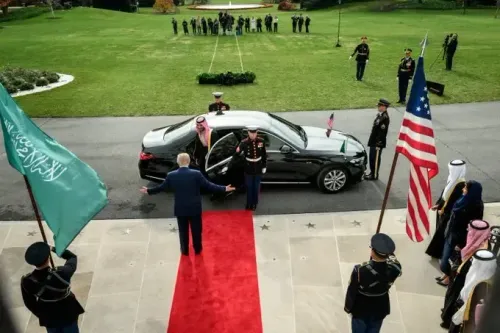
The White House on Friday, 25 July reaffirmed that President Donald Trump expects Saudi Arabia to normalise relations with Israel and formally join the Abraham Accords as a condition linked to a proposed civil nuclear agreement with the kingdom. The administration signalled that this linkage is central to its broader Middle East strategy.
What the White House Said
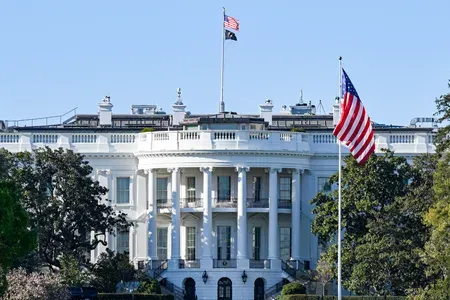
Deputy White House Chief of Staff Stephen Miller made the remarks to reporters outside the White House ahead of the White House Correspondents' Dinner. Miller stated that Trump had consistently communicated his expectations to Saudi leadership — not only during the current term but across several years of engagement.
'The president has been very clear with Saudi Arabia since, not just this term, but going back, his expectations, timelines, and commitments on their normalisation of relations with Israel and their entering the Abraham Accords,' Miller said.
His comments followed questions over why the normalisation condition had been highlighted separately from an announcement made by Energy Secretary Chris Wright regarding the nuclear negotiations. Miller did not directly address the sequencing but insisted Trump held an unparalleled understanding of Saudi leadership and the kingdom's long-term strategic direction.
Trump's Saudi Engagement: The Backstory
Miller traced Trump's engagement with Riyadh to his landmark 2017 speech in the Saudi capital, crediting the president with reinforcing the kingdom's regional role. 'When you think about where Saudi Arabia is today, going back to the Riyadh speech in 2017 and leaning on them to be a bulwark against violent terrorism in the region, President Trump has helped work with Saudi Arabia to become one of the foremost pillars of stability in the area,' he said.
Miller added that Trump fully understood 'Saudi psychology' and the country's future plans, describing a potential deal as 'a watershed moment in a region that's been filled with watershed moments.'
Why the Saudi-Israel Link Matters
The Abraham Accords, brokered during Trump's first term, led to the normalisation of relations between Israel and the United Arab Emirates, Bahrain, Morocco, and Sudan, reshaping regional diplomacy. Successive US administrations have viewed Saudi recognition of Israel as the most consequential remaining expansion of the accords. A Saudi civil nuclear agreement — potentially granting access to uranium enrichment technology — has emerged as one of the most closely watched elements of Trump's current Middle East diplomacy.
Miller on Nicaragua and Latin America
During the same exchange, Miller also criticised Nicaragua after President Daniel Ortega's government moved to eliminate competitive elections. 'You can vote your way into socialism or communism, but you can't vote your way out of it,' Miller said, calling the development 'an illustration of that point.'
He said Secretary of State Marco Rubio had already outlined Washington's policy on Nicaragua and argued that the administration's 'Shield of the Americas' strategy reflected a broader geopolitical realignment across Latin America toward the US and the West.
Domestic Politics and the SAVE America Act
On domestic matters, Miller declined to detail legislative negotiations over the SAVE America Act, deferring to the White House Office of Legislative Affairs. He nonetheless reiterated Trump's position: 'He's been absolutely, unequivocally, unmistakably clear on his expectations for the passage of the Save America Act, one way or another.'
As the diplomatic pressure on Riyadh intensifies, the coming weeks will test whether the nuclear incentive is sufficient to move Saudi Arabia toward a historic normalisation with Israel — a step that would fundamentally redraw the Middle East's political map.
Point of View
And that calculus has not changed. By framing nuclear access as the incentive, the Trump administration is essentially betting that Riyadh's strategic and economic interests will override its longstanding Arab consensus position. Miller's invocation of Trump's 'Saudi psychology' expertise is notable: it shifts accountability for the outcome entirely onto the president's personal relationship with the kingdom's leadership, bypassing institutional diplomacy. If the deal stalls, there is no multilateral framework to absorb the failure — only a bilateral impasse at the centre of the region's most consequential unresolved alignment.
NationPress
23 Oct 2026
Frequently Asked Questions
What is the US-Saudi civil nuclear deal?
The proposed agreement would give Saudi Arabia access to civil nuclear technology, potentially including uranium enrichment capabilities. The White House has confirmed that the deal is contingent on Saudi Arabia normalising relations with Israel and joining the Abraham Accords.
Why is Saudi-Israel normalisation significant?
Saudi Arabia is the Arab world's largest economy and home to Islam's two holiest sites. Its formal recognition of Israel would represent the most consequential expansion of the Abraham Accords since the UAE, Bahrain, Morocco, and Sudan normalised ties with Israel during Trump's first term.
What are the Abraham Accords?
The Abraham Accords are a series of normalisation agreements brokered by the Trump administration in 2020, under which Israel established formal diplomatic relations with the UAE, Bahrain, Morocco, and Sudan. Saudi Arabia has not yet joined.
Who is Stephen Miller and why did he make this statement?
Stephen Miller is the Deputy White House Chief of Staff. He made the remarks to reporters outside the White House on 25 July, clarifying the administration's position after questions arose over why the normalisation condition had been announced separately from Energy Secretary Chris Wright's nuclear deal announcement.
What happens next in the Saudi-Israel-US negotiations?
No formal timeline has been announced. The administration has indicated it expects Saudi Arabia to move toward normalisation as part of any nuclear agreement, but the sequencing and conditions remain under negotiation. The outcome is widely seen as a defining test of Trump's second-term Middle East strategy.