CM Sai: President Murmu's Bastar Dussehra Visit Strengthens Tribal Push
Synopsis
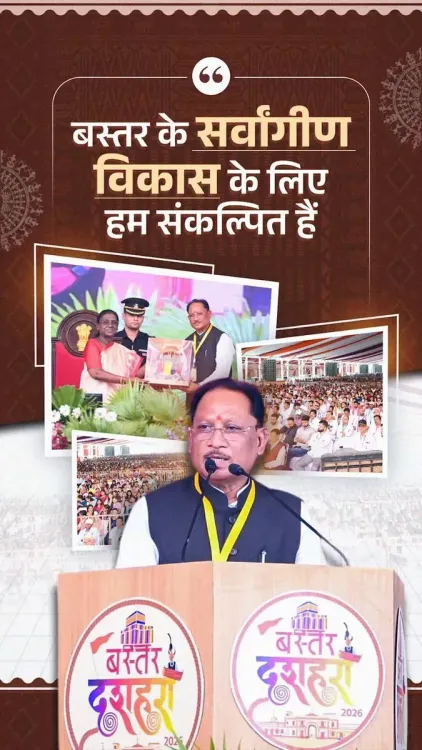
Chief Minister Vishnu Deo Sai says President Draupadi Murmu's attendance at Bastar Dussehra 2026 and the Muriya Darbar has energised Chhattisgarh's plan to expand roads, railways, health, and education in the tribal division.
Key Takeaways
CM Vishnu Deo Sai reaffirmed the Chhattisgarh government's commitment to all-round development of Bastar division.
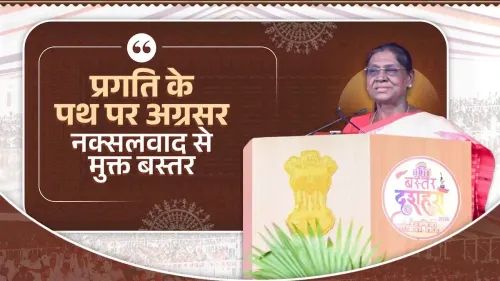
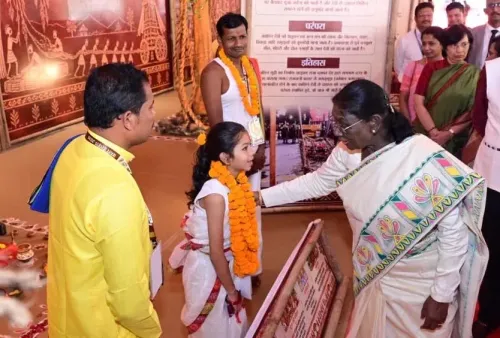
President Draupadi Murmu — India's first tribal head of state — attended Bastar Dussehra 2026 and the traditional Muriya Darbar assembly.
The state is expanding roads, railways, health facilities, and education infrastructure in Bastar under a stated development roadmap.
The BJP government under Sai has prioritised Bastar as a catch-up zone since taking office in December 2023 .
Presidential participation in Bastar Dussehra is seen as elevating the tribal region's national profile and signalling constitutional recognition.
Analysts will watch for central scheme linkages and budget allocations to test whether the infrastructure push moves from announcement to delivery.
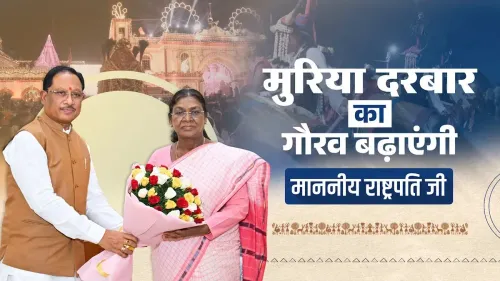
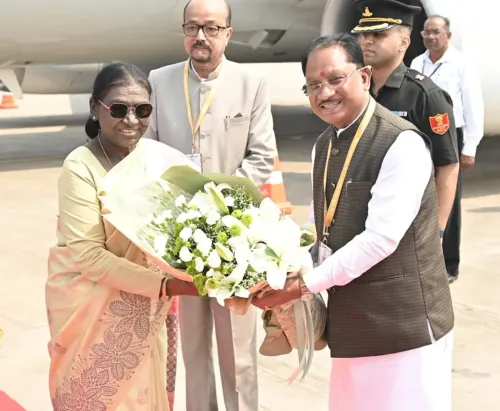
When President Draupadi Murmu arrived at Bastar Dussehra — one of India's oldest and most distinctive tribal festivals — she brought with her more than ceremonial presence. Chhattisgarh Chief Minister Vishnu Deo Sai says the visit has given fresh momentum to the state's ambition of making Bastar the country's foremost tribal division.
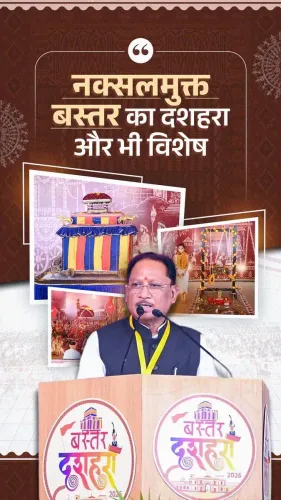
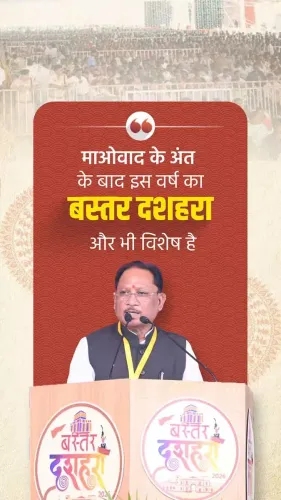
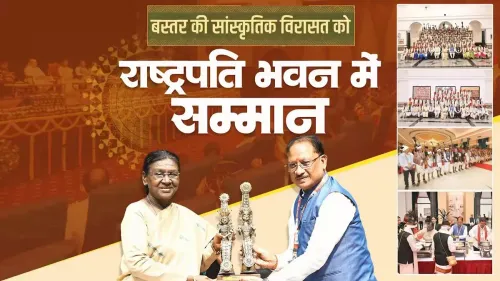
In a post on X on Friday, October 23, 2026, CM Sai wrote: 'बस्तर की समृद्धि और सर्वांगीण विकास के लिए हम निरंतर प्रतिबद्ध हैं' — 'We are continuously committed to the prosperity and all-round development of Bastar.' He pointed to an ongoing expansion of roads, railways, health facilities, and educational infrastructure in the division, and noted that President Murmu's presence at Bastar Dussehra 2026 and the traditional Muriya Darbar assembly had reinforced the government's resolve.
Why Bastar Dussehra Carries Political Weight
Bastar Dussehra is not the ten-day festival celebrated across much of India. It is a 75-day-plus tribal tradition rooted in the customs of the Gondi and Muria communities of southern Chhattisgarh, anchored in Jagdalpur and centred on the goddess Danteshwari. The Muriya Darbar — a traditional assembly of tribal representatives — is a forum where governance and cultural identity visibly converge. When a sitting President attends, the symbolism is layered: it signals national recognition of a region that spent decades associated more with Maoist conflict than with mainstream development.
President Murmu — herself India's first tribal head of state, from the Santali community of Odisha — carries particular weight in such settings. Her presence is not routine protocol; it is read by tribal communities as a statement of belonging at the highest constitutional level.
Bastar's Infrastructure Gap and the BJP's Roadmap
Since the BJP government under CM Sai took office in December 2023, Bastar has been positioned as a priority zone for catch-up infrastructure. The division — comprising seven districts across the southern tip of Chhattisgarh — historically lagged behind the state average on road connectivity, health access, and school retention rates, compounded by decades of left-wing extremist activity that deterred private investment and state presence.
CM Sai's post explicitly names the four pillars the government is expanding: roads, railways, health, and education. Rail connectivity, in particular, has long been a gap in Bastar — linking remote tribal blocks to urban centres matters as much for evacuating medical emergencies as for transporting forest produce. The framing of a 'roadmap' suggests project timelines have been set, though specifics are yet to be publicly detailed.
A Pattern Worth Watching Across Central India
Bastar is not alone in this playbook. Across Madhya Pradesh, Jharkhand, and Odisha, state governments have increasingly used high-profile cultural moments — festivals, tribal conclaves, heritage designations — to anchor development messaging in regions where standard political communication has historically failed to penetrate. The logic is straightforward: trust is built through presence, not just policy announcements.
Presidential participation raises that ceiling further. It transforms a state-government initiative into a national commitment — useful both for securing central scheme linkages and for signalling to tribal electorates that their concerns register at the very top of the constitutional order.
The real test will come in the budget cycle: whether road and rail projects attract central funding, and whether health and education targets translate into on-ground timelines. Bastar's tribal communities have heard development promises before. This time, the President watched from the front row.
Point of View
Which swept Chhattisgarh in late 2023 partly on a promise of bringing Bastar into the mainstream, keeping this narrative alive matters ahead of future electoral cycles. The choice to tag the Rashtrapati Bhavan handle also nudges the Centre to stay visibly associated with Bastar's development arc — useful when lobbying for central funds. Whether the roadmap translates into verifiable project milestones will determine whether this moment reads as genuine inflection or well-staged optics.
NationPress
23 Oct 2026
Frequently Asked Questions
Why did President Draupadi Murmu attend Bastar Dussehra 2026?
President Murmu attended Bastar Dussehra 2026 and the Muriya Darbar tribal assembly as a gesture of national recognition for Bastar's tribal communities. As India's first tribal head of state, her participation carries symbolic weight that goes beyond ceremonial protocol.
What is the Muriya Darbar at Bastar Dussehra?
The Muriya Darbar is a traditional tribal assembly held as part of the Bastar Dussehra festival in Jagdalpur, Chhattisgarh. It is a platform where tribal representatives gather, blending cultural identity with a forum for community concerns.
What infrastructure projects is the Chhattisgarh government building in Bastar?
CM Vishnu Deo Sai has stated that roads, railways, health facilities, and educational infrastructure are being continuously expanded in Bastar under a government roadmap. Specific project timelines and budget allocations are yet to be publicly detailed.
When did Vishnu Deo Sai become Chief Minister of Chhattisgarh?
Vishnu Deo Sai took office as Chief Minister of Chhattisgarh in December 2023 after the BJP won the state assembly elections.
What is the significance of Bastar Dussehra compared to the regular Dussehra festival?
Bastar Dussehra is a distinct tribal tradition spanning over 75 days, rooted in the customs of the Gondi and Muria communities and centred on the goddess Danteshwari in Jagdalpur. It is separate from the ten-day Dussehra observed across most of India.