CM Sai Marks Bastar Dussehra as President Murmu Views Tribal Exhibition
Synopsis
Chhattisgarh CM Vishnu Deo Sai marked Bastar Dussehra 2026 by noting President Draupadi Murmu's visit to a tribal traditions exhibition, calling the preservation of Bastar's indigenous heritage a duty to ancestors and future generations.
Key Takeaways
Chhattisgarh CM Vishnu Deo Sai posted on 23 October 2026 to mark the historic Bastar Dussehra festival.
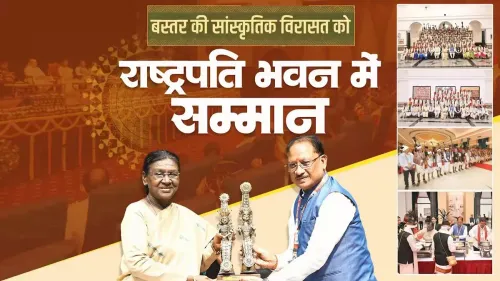
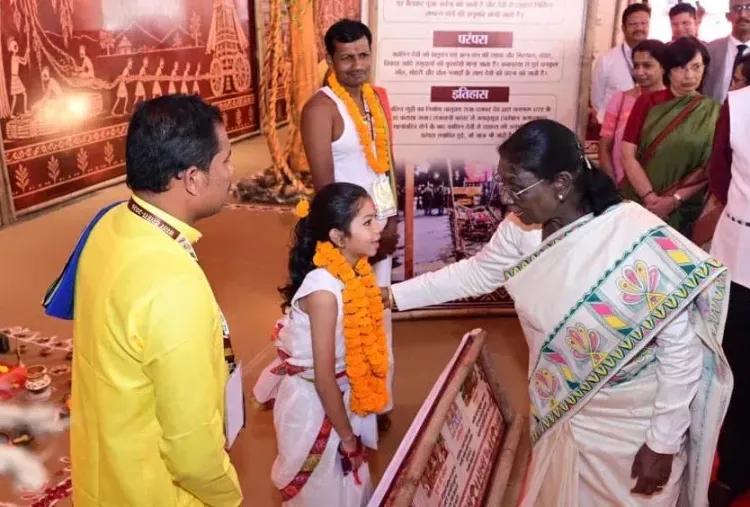
President Draupadi Murmu visited an exhibition showcasing Bastar's tribal traditions during the festival.
The Muriya Darbar — a traditional tribal court convened during Bastar Dussehra — features prominently in this year's celebrations.
Bastar Dussehra is a multi-week indigenous festival centred on goddess Danteshwari, distinct from mainstream Dussehra celebrations.
CM Sai framed heritage preservation as both gratitude to ancestors and a responsibility to future generations.
President Murmu's tribal background lends additional significance to her engagement with Bastar's indigenous cultural events.
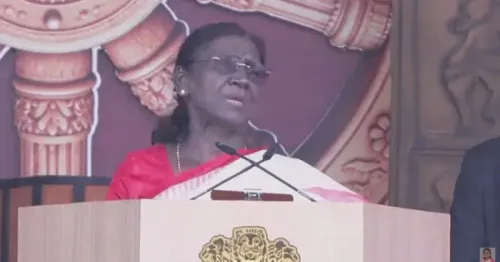
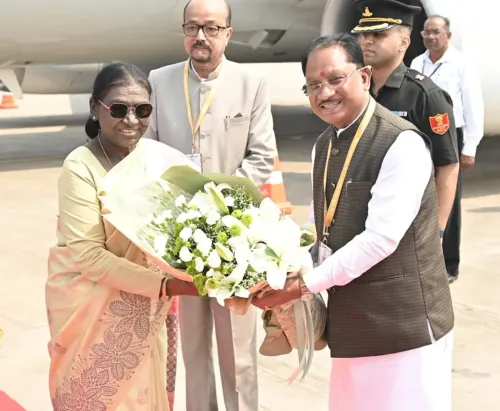
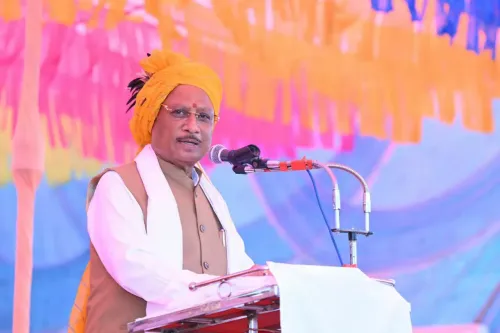
In the forested heartland of southern Chhattisgarh, a festival unlike any other in India is underway — and this year, it drew the nation's highest constitutional authority. Chhattisgarh Chief Minister Vishnu Deo Sai on Friday, 23 October 2026, marked the occasion of the historic Bastar Dussehra by highlighting President Draupadi Murmu's visit to an exhibition rooted in the region's tribal traditions.
Posting on X, CM Sai wrote: 'बस्तर की हर परंपरा में हमारे पुरखों की स्मृतियाँ हैं' — 'In every tradition of Bastar lie the memories of our ancestors; in every artefact, the devotion of generations and an immeasurable love for one's soil.' He noted that President Murmu visited an exhibition showcasing tribal traditions on the auspicious occasion of the historic Bastar Dussehra, adding that preserving this heritage is both a debt owed to ancestors and a responsibility to generations yet to come.
Bastar Dussehra: A Festival Built on Different Foundations
Bastar Dussehra is not the Ramayana-centred celebration most Indians recognise. Held in Jagdalpur, the district headquarters of Bastar, it is a multi-week festival rooted in the region's indigenous Gondi and Halbi traditions, centred on the goddess Danteshwari rather than the defeat of Ravana. It is widely considered one of the longest-running tribal festivals in India, with rituals, processions, and a distinct social architecture built over centuries.
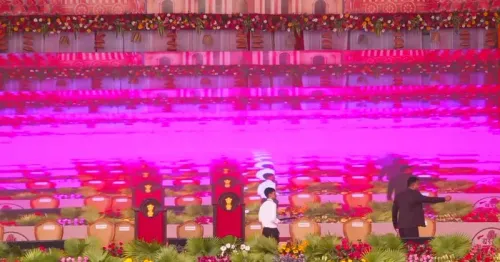
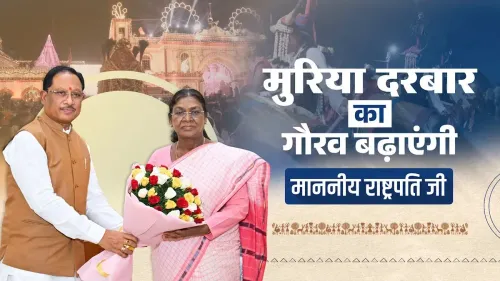
Central to this year's edition is the Muriya Darbar — a traditional tribal court convened during the festival period where community leaders and headmen gather to address local customs and concerns. The hashtag #मुरिया_दरबार alongside #बस्तर_दशहरा_2026 in CM Sai's post signals the Darbar's prominence this season.
President Murmu's Presence and What It Signals
President Draupadi Murmu, herself from a Santali tribal background in Odisha, has made the visibility of indigenous communities a consistent thread through her tenure. Her attendance at a Bastar Dussehra tribal exhibition carries particular resonance — it is a sitting President from a tribal community engaging directly with tribal heritage at a grassroots level, not a ceremonial stage in Delhi.
For Chhattisgarh, home to significant Scheduled Tribe populations across its southern and central districts, such high-profile participation reinforces a pattern both the state government and the Centre have cultivated: using presidential and chief ministerial engagement at tribal festivals to affirm cultural identity and signal institutional respect for indigenous traditions.
Bastar's Heritage as a Living Obligation
CM Sai's framing was notably intergenerational. He described Bastar's heritage not as a relic to be preserved behind glass, but as a living thread connecting the present to its roots — and future generations to both. 'This invaluable heritage connects us to our roots and teaches us pride in our identity,' he wrote. 'Preserving it is our gratitude to our ancestors and our duty to the generations to come.'
The state has annually backed Bastar Dussehra as a platform for showcasing tribal customs, with local artisans, performers, and community leaders taking centre stage. The festival serves as a recurring focal point for outreach into a region that has historically navigated complex pressures on its cultural and social fabric.
When the President of India walks through an exhibition of Bastar's artefacts and the Chief Minister frames it as a national duty to preserve them, the message is unmistakable: Bastar's traditions are not a footnote — they are a foundation.
Point of View
The optics reinforce its positioning as a steward of tribal identity in a state where Scheduled Tribes form a significant electoral and social constituency. The framing by CM Sai — heritage as intergenerational duty rather than nostalgic sentiment — also gestures toward a longer-term narrative: that protecting Bastar's culture is governance, not just ceremony. Whether this translates into concrete funding for tribal heritage documentation or infrastructure remains the question to track.
NationPress
23 Oct 2026
Frequently Asked Questions
What is Bastar Dussehra and how is it different from regular Dussehra?
Bastar Dussehra is a multi-week tribal festival held in Jagdalpur, Chhattisgarh, rooted in indigenous Gondi and Halbi traditions and centred on the goddess Danteshwari — not the Ramayana narrative of mainstream Dussehra. It is one of India's longest-running indigenous festivals.
Why did President Draupadi Murmu visit the Bastar Dussehra exhibition?
President Murmu visited a tribal traditions exhibition held during Bastar Dussehra 2026, as noted by CM Vishnu Deo Sai. Murmu, herself from a tribal background, has consistently engaged with indigenous cultural events during her presidency.
What is the Muriya Darbar at Bastar Dussehra?
The Muriya Darbar is a traditional tribal court convened during Bastar Dussehra where community leaders and headmen gather to discuss local customs and concerns. It is one of the defining social rituals of the festival.
What did CM Vishnu Deo Sai say about Bastar's heritage?
CM Sai wrote that every tradition of Bastar carries the memories of ancestors and that preserving this heritage is both gratitude to those who came before and a responsibility to future generations.
Where is Bastar and why is it culturally significant?
Bastar is a region in southern Chhattisgarh with a substantial tribal population and some of India's most distinct indigenous traditions. It is significant for its unique cultural practices, tribal governance structures like the Muriya Darbar, and its annual Dussehra festival.