CM Vishnu Deo Sai Says Bastar Changing Fast After Bijapur, Dantewada Visit
Synopsis
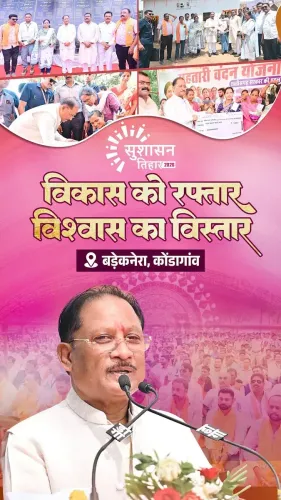
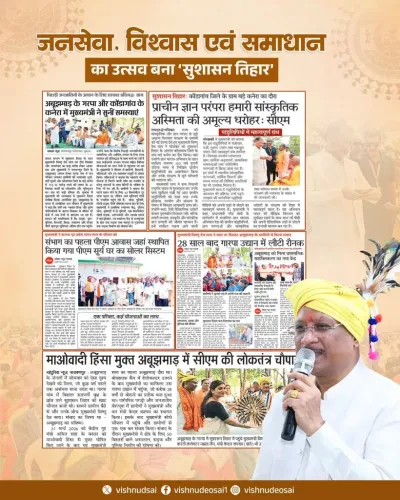
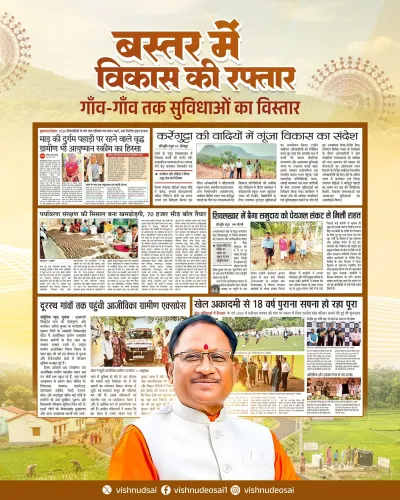
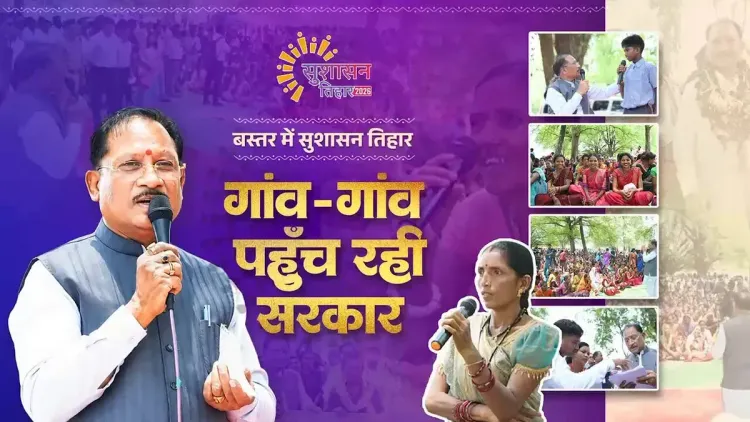
Chhattisgarh Chief Minister Vishnu Deo Sai, posting after his Bijapur and Dantewada tour under Sushasan Tihar 2026, said Bastar's villages, youth and women are driving a visible shift toward development and self-reliance, with the region emerging as an identity of peace, prosperity and new possibilities.
Key Takeaways
CM Vishnu Deo Sai posted on X after visiting Bijapur and Dantewada under Sushasan Tihar 2026.
He said development is reaching villages, youth are getting opportunities and women are advancing self-reliance.
Bastar is being projected as a symbol of peace, prosperity and positive change.
Both districts are part of the central Aspirational Districts Programme launched in 2018.
The 'Sushasan' theme dates back to the Raman Singh era and has been revived since December 2023.
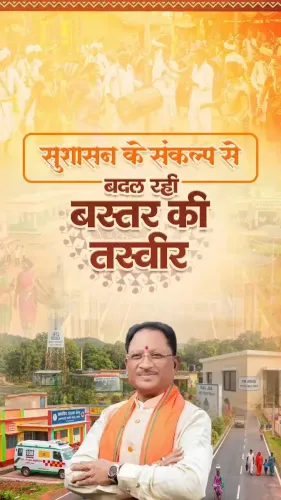
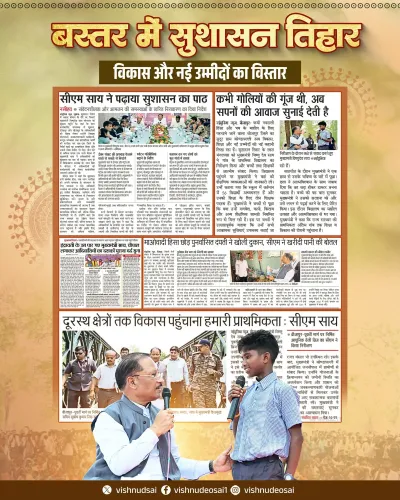
Chhattisgarh Chief Minister Vishnu Deo Sai on Tuesday said Bastar's social and economic landscape is transforming rapidly, sharing his impressions after touring Bijapur and Dantewada districts as part of the state government's Sushasan Tihar 2026 outreach. In a post on X accompanied by a video, the Chief Minister described Bastar as emerging as an identity of 'peace, prosperity and new possibilities'.
Writing in Hindi, Mr Sai said it was a sukhad anubhav (pleasant experience) to see that 'development is reaching the villages, youth are getting new opportunities, and mothers and sisters are writing a new story of self-reliance'. He added that Bastar today is becoming a 'symbol of positive change'. The post carried the hashtags #SushasanTihar2026 and its Hindi equivalent.
Context
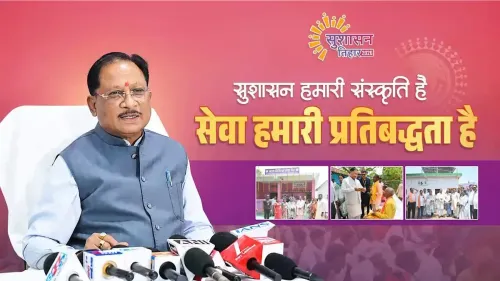
Sushasan Tihar, or the 'good governance festival', is the Chhattisgarh government's annual grassroots outreach exercise in which ministers and senior officials travel to districts to publicise welfare schemes and receive citizen grievances. Bijapur and Dantewada, both in the Bastar division of southern Chhattisgarh, have for years been at the heart of the state's Left-Wing Extremism challenge and are also priority districts for development spending.
The Chief Minister's visit fits a pattern his administration has cultivated since taking office in December 2023, of pairing high-visibility security operations in interior Bastar with on-the-ground reviews of welfare delivery. The post does not name specific schemes or announcements, focusing instead on the broader narrative of change.
Policy backdrop
Both Dantewada and Bijapur were included in the central Aspirational Districts Programme launched in 2018, which tracks performance on health, education, agriculture, financial inclusion and basic infrastructure in some of the country's most underserved areas. The Bastar division comprises seven districts and has a tribal-majority population.
The 'Sushasan' branding itself has a longer lineage in Chhattisgarh, dating back to the administrative reforms phase under former Chief Minister Raman Singh between 2003 and 2018. The current BJP government, which returned to power after the 2023 assembly election, has revived the theme as the organising idea of its outreach calendar.
Stakeholders and impact
The constituencies Mr Sai highlighted — village residents, rural youth and women — map closely to the target groups of livelihood, skilling and self-help group programmes that the state and central governments run in Bastar. His reference to 'mothers and sisters writing a new story of self-reliance' signals continued political emphasis on women-led enterprise as a measure of governance success in the region.
For tribal communities in interior Bastar, the visible presence of the Chief Minister in districts such as Bijapur carries symbolic weight, given that several pockets remained out of routine administrative reach for long stretches of the past two decades. The framing of Bastar as a zone of 'peace and prosperity' also serves a wider political message about the trajectory of anti-Maoist operations.
What's next
Attention will turn to specific scheme roll-outs, infrastructure sanctions and livelihood allocations that emerge from the Sushasan Tihar district visits, and how these are reflected in the 2026-27 state budget cycle. With the Chief Minister personally taking stock in Bijapur and Dantewada, follow-through on grievances collected during such visits is likely to be a benchmark by which the government's 'good governance' pitch is judged in Bastar.
Frequently Asked Questions
What is Sushasan Tihar 2026 in Chhattisgarh?
Sushasan Tihar is the Chhattisgarh government's annual 'good governance festival' under which ministers and officials tour districts to publicise welfare schemes and collect citizen grievances. The 2026 edition is currently underway across the state.
Which districts did CM Vishnu Deo Sai visit under Sushasan Tihar?
Chief Minister Vishnu Deo Sai recently visited Bijapur and Dantewada districts in the Bastar division as part of Sushasan Tihar 2026.
Why are Bijapur and Dantewada important for Chhattisgarh's governance push?
Both districts lie in the Bastar division and have historically been affected by Left-Wing Extremism. They are also part of the central Aspirational Districts Programme launched in 2018, making them priority areas for development indicators.
What did Vishnu Deo Sai say about Bastar in his X post?
He said Bastar's social fabric is changing rapidly, with development reaching villages, new opportunities for youth and women advancing self-reliance, and described the region as a symbol of peace, prosperity and positive change.
When did Vishnu Deo Sai become Chief Minister of Chhattisgarh?
Vishnu Deo Sai took charge as Chief Minister of Chhattisgarh in December 2023 after the BJP's victory in the state assembly election.