CM Vishnu Deo Sai Says Bastar Moving From Fear to Development
Synopsis
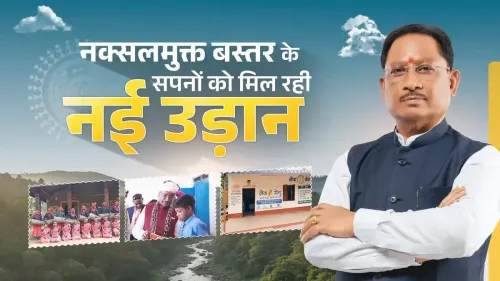
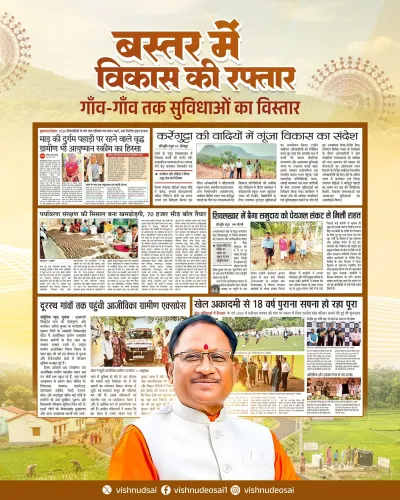
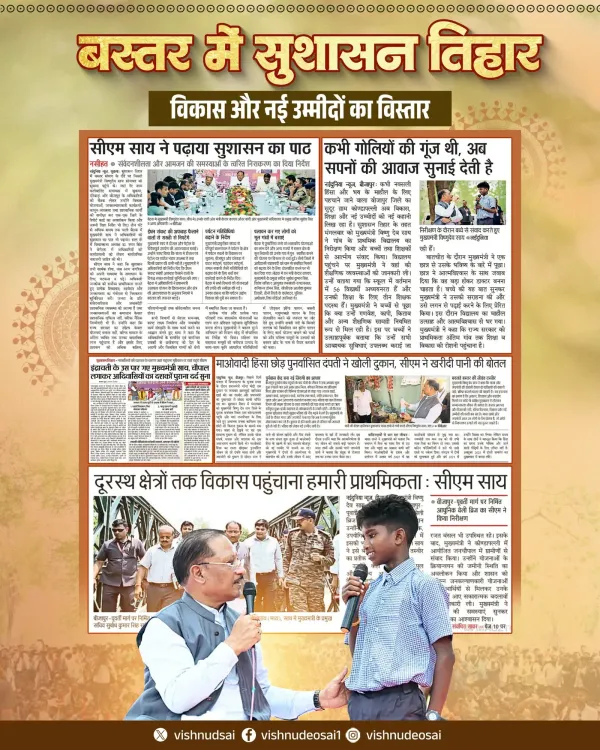
Chhattisgarh Chief Minister Vishnu Deo Sai said the Bastar division has moved out of the shadow of fear and is advancing on a path of development, trust and prosperity. Posting on X after touring Bastar districts under Sushasan Tihar 2026, he said areas once marked by gunfire were now writing a new chapter of progress.
Key Takeaways
Chhattisgarh CM Vishnu Deo Sai said Bastar has moved beyond the 'shadow of fear' towards development.
The remarks came after district visits under Sushasan Tihar 2026 , the state's good-governance outreach.
He credited 'good governance, public participation and public trust' for Bastar's trajectory.
The framing reflects the BJP government's twin-track security-plus-welfare approach in tribal regions since December 2023 .
Focus now shifts to district-level grievance redressal outcomes and budgetary commitments for Bastar.
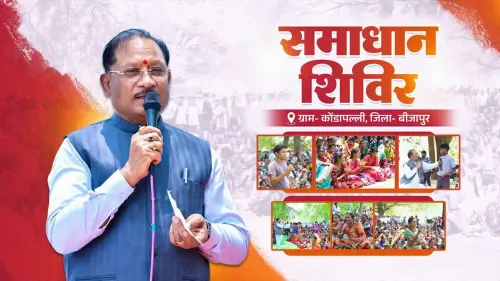
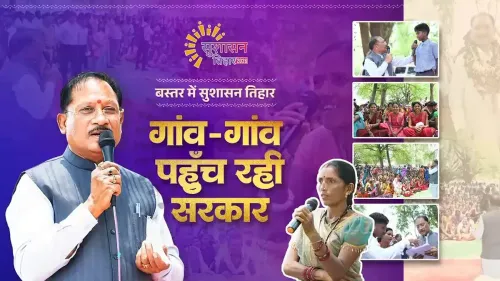
Chhattisgarh Chief Minister Vishnu Deo Sai on Wednesday said the Bastar division had moved out of the 'shadow of fear' and was advancing on a path of development, trust and prosperity. Posting on X after touring multiple districts of the southern division under the state's Sushasan Tihar 2026 outreach, the Chief Minister said areas that once echoed with gunfire were now witnessing a 'new chapter of development'.
Context
In his post, written in Hindi, the Chief Minister said, 'The Bastar division has now emerged from the shadow of fear and is steadily advancing on the path of development, trust and happiness.' He added that during his visits to various districts of Bastar under Sushasan Tihar (Good Governance Festival), it was a 'pleasant experience' to see that the region where gunshots were once heard was today writing a new script of progress.
Vishnu Deo Sai, a tribal leader from the Jashpur belt, took office as Chief Minister in December 2023 after the BJP returned to power in Chhattisgarh. His administration has placed tribal-region governance and the security-development link at the centre of its public messaging.
Policy backdrop
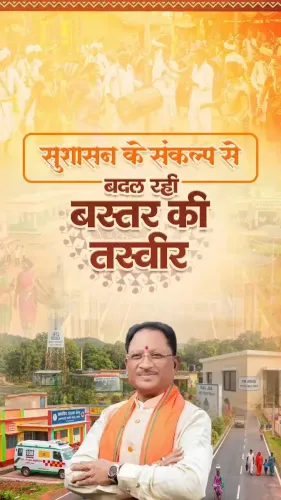
The Chief Minister's remarks come under the umbrella of Sushasan Tihar, a statewide outreach programme that combines district tours by ministers and officials with public grievance redressal camps. The initiative is positioned as the operational face of the BJP government's Sushasan (good governance) agenda adopted after the 2023 assembly elections.
Since taking office, the state government has pursued a twin-track approach in Bastar — pairing intensified security operations against Left-wing extremists with accelerated rollout of welfare schemes, road connectivity, schools and health facilities. The Chief Minister's framing of Bastar's transition draws directly on this template.
Stakeholders and impact
The Bastar division covers several districts with a predominantly tribal population and has long been one of India's most prominent theatres of Left-wing extremism. Residents, especially in interior pockets, have historically faced limited access to public services owing to the security situation.
The Chief Minister said Bastar was moving towards a 'bright future' on the strength of 'good governance, public participation and public trust'. The message is aimed at both local tribal communities — signalling continued state investment — and a wider national audience that has tracked the region's security trajectory.
The approach mirrors a broader pattern across central and eastern India, where state governments in regions such as Jharkhand and Odisha have similarly framed counter-insurgency as a phased transition from kinetic operations to development once territorial control is consolidated.
What's next
Attention will now turn to district-level outcomes under Sushasan Tihar 2026, including grievance disposal numbers and any fresh infrastructure or livelihood announcements for Bastar. The forthcoming state budget cycle will be a key marker of how far the government is prepared to back its development messaging with fiscal commitments in the division.
For the Chief Minister, sustaining the Bastar narrative — that security gains are being converted into tangible welfare delivery — is likely to remain a defining theme of his government's communications through the remainder of its term.
Point of View
The state ties a political brand to a measurable outreach exercise, inviting scrutiny of grievance-disposal numbers. The framing also echoes a wider central-India template seen in Jharkhand and Odisha, where governments cast counter-insurgency as a phased journey from arms to amenities. The political payoff depends on whether tribal residents experience that shift on the ground.
NationPress
18 Oct 2026
Frequently Asked Questions
What did Chhattisgarh CM Vishnu Deo Sai say about Bastar?
Chief Minister Vishnu Deo Sai said the Bastar division has emerged from the shadow of fear and is advancing on a path of development, trust and prosperity. He shared the message on X after touring Bastar districts under Sushasan Tihar 2026.
What is Sushasan Tihar 2026?
Sushasan Tihar is the Chhattisgarh government's statewide good-governance outreach programme. It involves district tours by officials and public grievance redressal camps, and is positioned as the operational face of the state's Sushasan agenda.
Why is Bastar significant in Chhattisgarh's politics?
Bastar is a tribal-majority division in southern Chhattisgarh that has long been a major theatre of Left-wing extremism. Its security and development trajectory is a defining political and policy issue for the state government.
When did Vishnu Deo Sai become Chief Minister of Chhattisgarh?
Vishnu Deo Sai took office as Chief Minister of Chhattisgarh in December 2023 after the BJP returned to power following the assembly elections that year.
What is the BJP government's approach in Bastar?
The BJP government has pursued a twin-track approach in Bastar combining intensified security operations against Left-wing extremists with accelerated rollout of welfare schemes, connectivity, schools and health facilities.