CM Sai Hails Bastar Governance Camp at Kondapalli in Bijapur
Synopsis
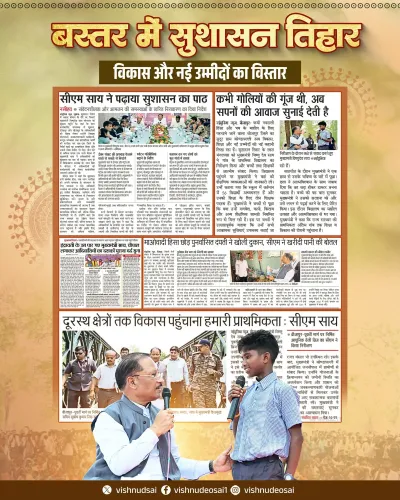
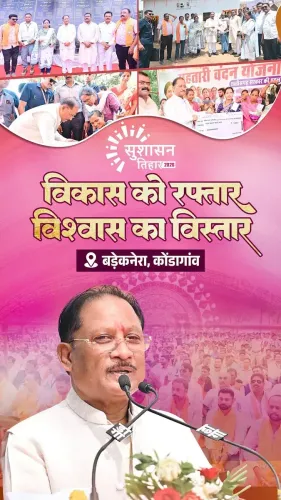
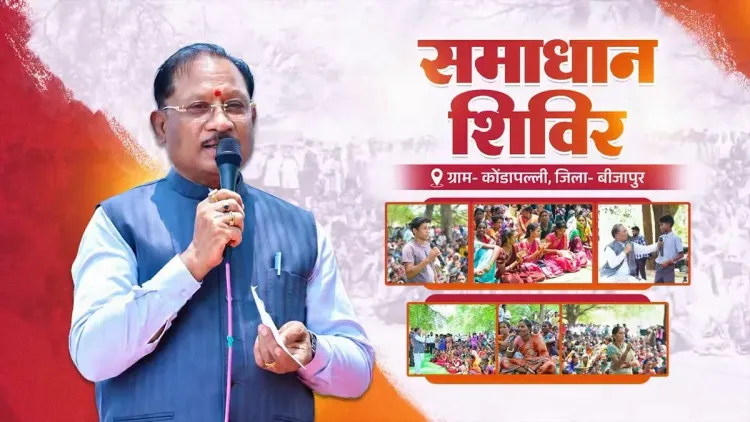
Chhattisgarh Chief Minister Vishnu Deo Sai used an X post to spotlight a Sushasan Tihar 2026 governance camp at Kondapalli village in Bijapur, describing it as a sunrise of good governance reaching deep into Bastar and as evidence of administrative outreach in a region long shaped by left-wing extremism.
Key Takeaways
CM Vishnu Deo Sai highlighted a Sushasan Tihar 2026 camp at Kondapalli village, Bijapur district.
He described the event as a camp of dialogue, good governance and public trust.
The post frames the camp as a governance milestone for the Bastar region.
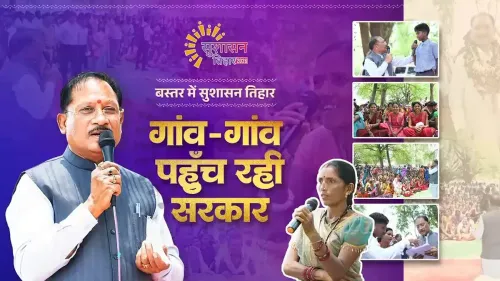
Sushasan Tihar is the state government's outreach programme for rural and tribal areas.
The initiative builds on security gains in southern Chhattisgarh since 2019.
Further camps are expected across Bastar division blocks.
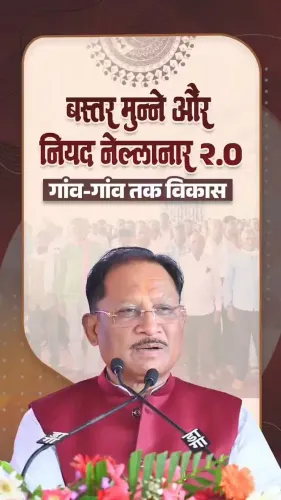
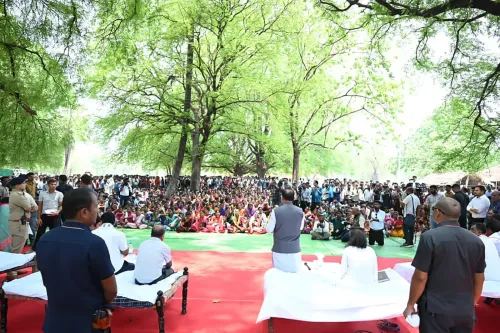
Chhattisgarh Chief Minister Vishnu Deo Sai on 3 June 2026 showcased a governance outreach camp held at Kondapalli village in Bijapur district, framing it as evidence of administrative revival deep inside the Bastar region. In a post on X tied to the ongoing Sushasan Tihar 2026 campaign, the Chief Minister described the event as a 'camp of dialogue, good governance and public trust'.
Translating his message from Hindi, Sai wrote that the camp represented 'samvad, sushasan aur janvishwas ka shivir' (a camp of dialogue, good governance and public trust), adding that 'the sunrise of good governance has come to Bastar after decades, and the light of development is now reaching every individual'. The post carried a short video and the hashtags #सुशासन_तिहार_2026 and #SushasanTihar2026.
Context
Kondapalli sits in Bijapur, one of the seven districts that make up the Bastar division in southern Chhattisgarh. The district has long been associated with dense sal forests, a predominantly tribal population and a decades-long left-wing extremism challenge that kept large stretches of the interior out of regular administrative reach.
Holding a public-facing governance camp in such a village is itself the message the Chief Minister is foregrounding. The post positions the state machinery as physically present in places that, until recently, were difficult to access for routine welfare delivery.
Policy backdrop
'Sushasan', or good governance, has been a recurring theme of Bharatiya Janata Party administrations in Chhattisgarh since the 2003-2018 tenure under former Chief Minister Raman Singh, when the slogan was attached to anti-corruption and welfare-delivery messaging. Sai, who took office in December 2023, has revived that vocabulary under the Sushasan Tihar banner.
The festival-style campaign uses block- and village-level camps to combine grievance redressal, scheme enrolment and direct dialogue with citizens. Locating the latest edition in Bijapur aligns the programme with the state's parallel push to consolidate security gains made through central and state anti-Naxal operations in recent years.
Stakeholders and impact
The primary audience is the tribal population of Bastar, including residents of remote panchayats in Bijapur and neighbouring Sukma and Dantewada. For these households, on-the-spot access to officials handling land records, pensions, ration cards and housing benefits can substantially shorten the distance between villager and state.
For the state government, camps such as the one at Kondapalli serve a dual purpose: extending welfare delivery into former conflict pockets, and signalling political ownership of the security-and-development narrative in Bastar. Local administration, security forces and line-department officials are typically co-located at these events.
What's next
The Chief Minister's post suggests further Sushasan Tihar 2026 stops are likely across Bastar's interior blocks. Attention will focus on whether the camps expand to additional villages in Bijapur and Sukma, and on how scheme uptake and grievance closure rates evolve in panchayats where state presence has been thin.
If sustained, the model could reshape how the state is experienced in southern Chhattisgarh, moving the relationship from one defined largely by security deployments to one anchored in routine civilian administration.
Point of View
Sai is consciously linking his tenure to an older governance brand. The political wager is that routine, photographed presence of officials in former Naxal pockets will, over time, count for more with tribal voters than any single welfare announcement.
NationPress
16 Oct 2026
Frequently Asked Questions
What is Sushasan Tihar 2026?
Sushasan Tihar 2026 is the Chhattisgarh government's good-governance outreach campaign, featuring village-level camps for public dialogue, grievance redressal and scheme delivery, particularly in rural and tribal blocks.
Where was the Sushasan Tihar camp highlighted by CM Sai held?
The camp highlighted in the Chief Minister's post was held at Kondapalli village in Bijapur district, within the Bastar division of southern Chhattisgarh.
Why is Bijapur significant for governance outreach?
Bijapur is a tribal-majority district in Bastar that has historically faced left-wing extremism, which limited routine administrative access; outreach camps there signal a deepening civilian presence of the state.
Who is Vishnu Deo Sai?
Vishnu Deo Sai is the Chief Minister of Chhattisgarh and a senior BJP leader who took office in December 2023, with prior roles as state party president and union minister.
How does Sushasan Tihar connect to past BJP governance in Chhattisgarh?
The campaign revives the 'Sushasan' branding used by the earlier BJP government in Chhattisgarh between 2003 and 2018, with renewed focus on camp-based welfare delivery and grievance redressal.