CM Sai Takes Sushasan Tihar to Bijapur's Kondapalli
Synopsis
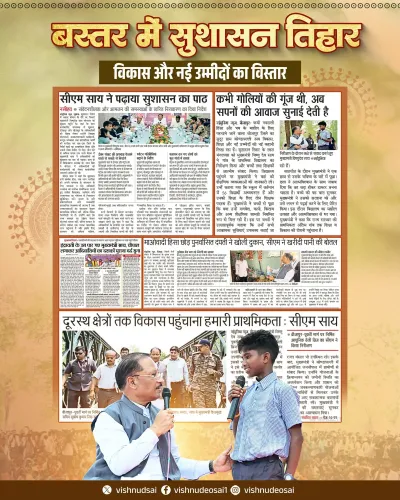
Chhattisgarh CM Vishnu Deo Sai took the Sushasan Tihar 2026 governance outreach to Kondapalli in Bijapur, one of the state's most insurgency-affected districts, holding a public chaupal to bring administration directly to tribal villagers on 2 June 2026.
Key Takeaways
Chief Minister Vishnu Deo Sai announced the arrival of Sushasan Tihar 2026 at Kondapalli, Bijapur on 2 June 2026 .
Bijapur is part of the Bastar region, historically affected by left-wing extremism, making the public chaupal symbolically and strategically significant.
The Sushasan Tihar format revives a governance-festival model used in Chhattisgarh since at least 2015 under the earlier BJP administration.
Such camps typically offer grievance hearings, welfare scheme enrolments, and infrastructure reviews to residents of remote tribal blocks.
The programme is part of a wider calendar of district-level events under the Sushasan Tihar 2026 series, with further districts expected to follow.
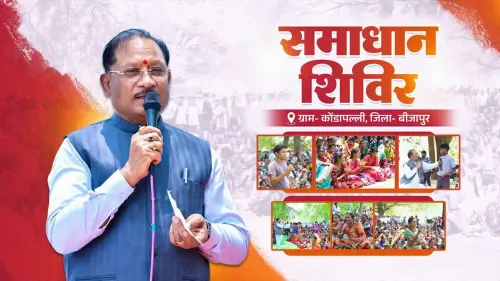
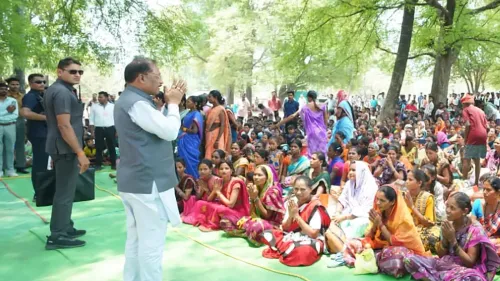
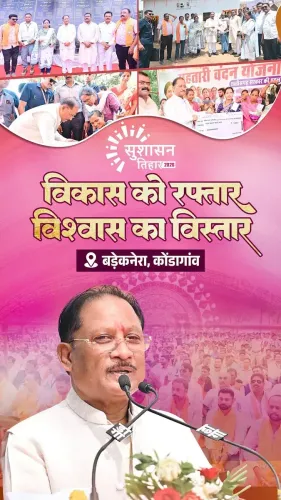
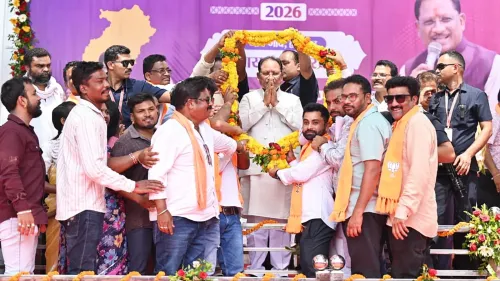
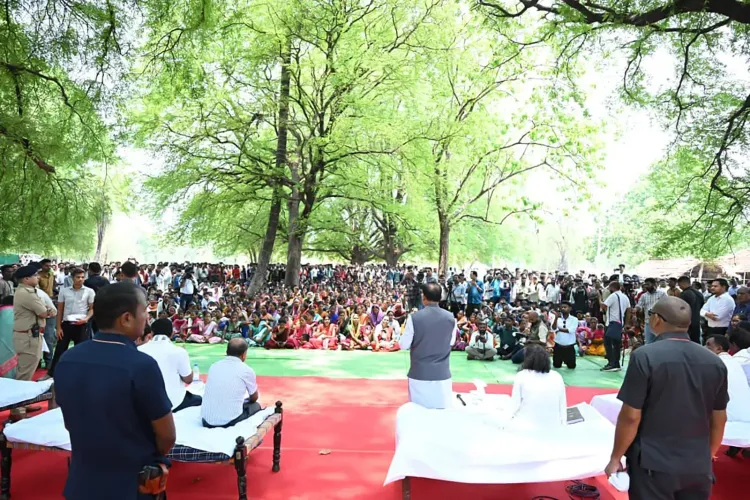
Chhattisgarh Chief Minister Vishnu Deo Sai on Tuesday, 2 June 2026, flagged the arrival of the state's flagship good-governance outreach at Kondapalli village in Bijapur district, posting on X that the 'Sushasan Tihar 2026' had reached the locality with a traditional chaupal (open public assembly).
The Hindi-language post — 'Aaya Sushasan — Saji Chaupal' ('Good governance has arrived — the chaupal is set') — was accompanied by a location tag for Kondapalli, Bijapur and a single image, signalling an on-ground administrative camp in one of Chhattisgarh's most remote southern districts.
Context
Bijapur is part of the Bastar region, a cluster of districts in southern Chhattisgarh that has for decades been the epicentre of left-wing extremism. Holding a public chaupal in a village such as Kondapalli carries symbolic weight: it asserts the presence of elected government and district administration in terrain where state authority has historically been contested.
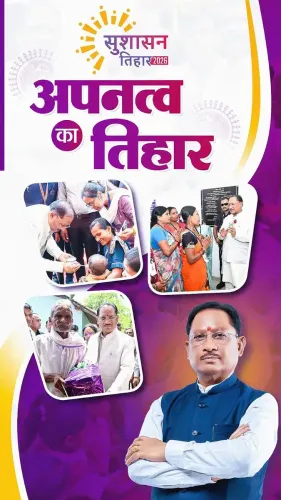
The Sushasan Tihar 2026 hashtag indicates this is part of a wider, calendar-driven series of district-level events rather than a standalone visit. The word tihar — meaning festival in the local Chhattisgarhi dialect — frames the governance drive as a celebratory public engagement rather than a routine inspection.
Policy Backdrop
Governance festivals and grievance-redressal camps have been a recurring feature of Chhattisgarh's administrative calendar since at least 2015, when the previous BJP government under Raman Singh used similar formats to reach tribal blocks. The current administration of Chief Minister Sai, which took office in December 2023, has revived and rebranded the model under the 'Sushasan Tihar' label.
Such camps typically combine on-the-spot grievance hearings, enrolment drives for central and state welfare schemes, and reviews of local infrastructure projects. For BJP-governed states in central and eastern India, the 'sushasan' (good governance) framing also serves as a political counter-narrative — both to Maoist influence in tribal belts and to Congress-era governance critiques.
Stakeholders and Impact
The primary beneficiaries of a chaupal in Kondapalli are tribal villagers in Bijapur district, many of whom face significant barriers to accessing district headquarters for administrative services. Direct outreach events allow residents to register complaints, obtain documents, and enrol in schemes without travelling long distances on poor roads.
The district administration and state-level departments deputed for such camps are the key implementing stakeholders. Security forces operating in the region also have an indirect stake, as improved civilian-government contact is considered part of the broader counter-insurgency strategy in Bastar.
What's Next
The Sushasan Tihar 2026 calendar is expected to cover multiple districts across Chhattisgarh through the coming weeks. Bijapur's inclusion suggests the programme is prioritising conflict-affected and underserved blocks this year. Observers will watch for specific scheme-enrolment numbers, infrastructure commitments, and whether the series extends to other Bastar districts such as Sukma and Dantewada. The reach and regularity of these camps will be a measure of how effectively the administration is translating the 'sushasan' pledge into ground-level delivery.
Point of View
Ground-level camps to outflank opposition narratives on tribal welfare and to complement security-led counter-insurgency with civilian engagement. The durability of this strategy will ultimately depend on whether the camps produce measurable outcomes — scheme enrolments, resolved grievances, visible infrastructure — or remain primarily symbolic exercises.
NationPress
20 Sept 2026
Frequently Asked Questions
What is Sushasan Tihar 2026 in Chhattisgarh?
Sushasan Tihar 2026 is a state-government outreach programme in Chhattisgarh that organises public chaupals and administrative camps across districts to deliver grievance redressal, welfare scheme enrolments, and infrastructure reviews directly to villagers, particularly in remote and tribal areas.
Why did CM Vishnu Deo Sai visit Kondapalli in Bijapur?
CM Vishnu Deo Sai flagged the Sushasan Tihar 2026 camp at Kondapalli, Bijapur, as part of the programme's push to extend good-governance outreach into Bastar, one of Chhattisgarh's most remote and insurgency-affected regions.
What is the significance of holding a chaupal in Bijapur?
Bijapur is part of the Bastar region, which has been affected by Maoist insurgency for decades. A public chaupal there signals the state government's effort to assert civilian administrative presence in areas where government access has historically been limited.
Who is Vishnu Deo Sai?
Vishnu Deo Sai is a BJP leader who became Chief Minister of Chhattisgarh in December 2023. He is among the prominent tribal leaders in the party and represents the Kunkuri constituency in the state.
What happens at a Sushasan Tihar camp?
Sushasan Tihar camps typically include on-the-spot grievance hearings, enrolment drives for central and state welfare schemes, and reviews of local infrastructure, allowing villagers to access government services without travelling to district headquarters.