CM Sai Holds Chaupal in Bijapur's Kondapalli Under Sushasan Tihar
Synopsis
Chhattisgarh Chief Minister Vishnu Deo Sai held a community chaupal in Kondapalli, Bijapur — once a Naxal stronghold — under the Sushasan Tihar 2026 outreach drive, gathering direct feedback on welfare scheme delivery from tribal and rural residents.
Key Takeaways
CM Vishnu Deo Sai conducted a chaupal at Kondapalli village, Bijapur district on 2 June 2026 under the Sushasan Tihar programme.
Bijapur is part of the Bastar region, historically one of India's most Naxal-affected zones.
The outreach focused on collecting villager feedback on the implementation of state and central welfare schemes.
Beneficiaries highlighted include farmers, women, youth, and economically vulnerable families in the region.
The initiative aligns with the SAMADHAN doctrine of pairing security operations with development to reduce insurgency support.
The #SushasanTihar2026 hashtag signals a continuing series of similar engagements planned across Chhattisgarh.
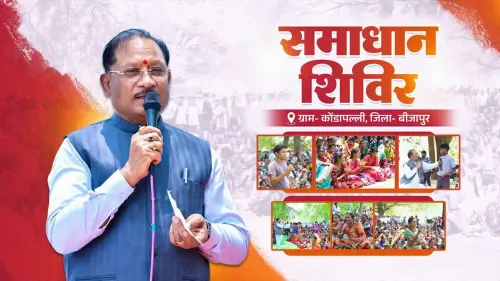
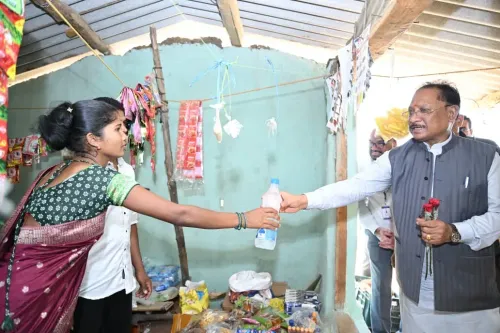
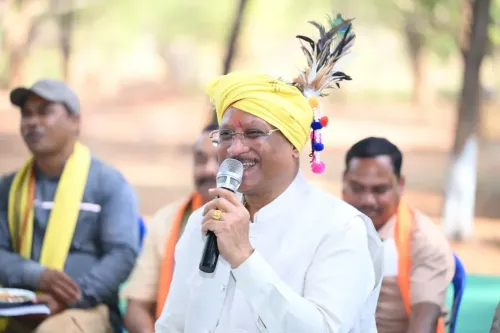
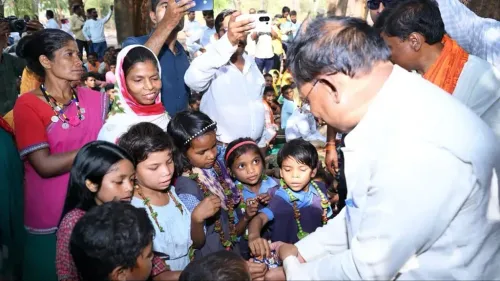
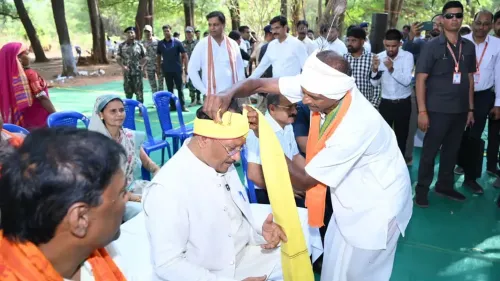
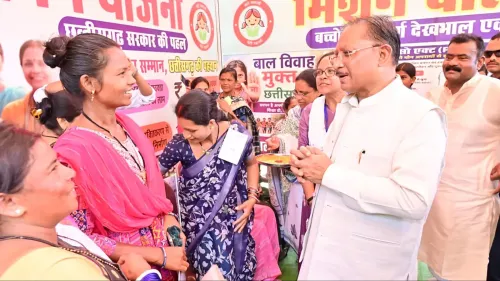
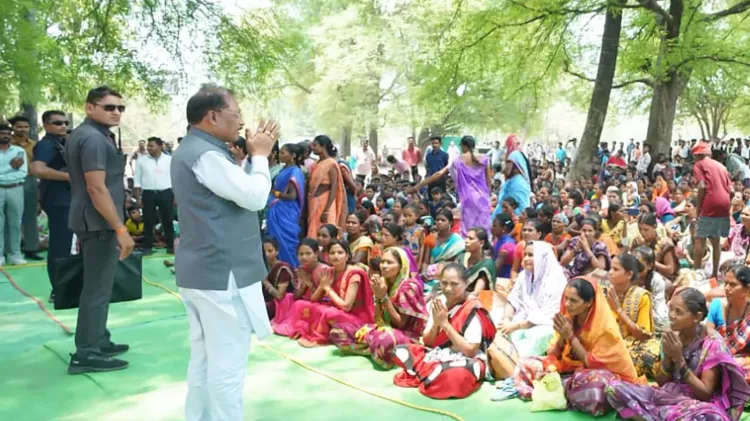
Chhattisgarh Chief Minister Vishnu Deo Sai held an open chaupal at Kondapalli village in Bijapur district on 2 June 2026 under the state government's Sushasan Tihar outreach programme, engaging directly with villagers to assess the on-ground impact of welfare schemes in a region long dominated by Left-Wing Extremism.
Context
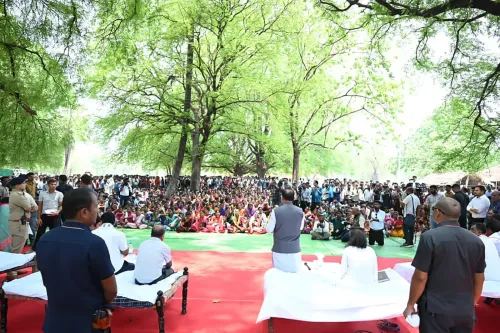
Posting in Hindi on X, CM Sai wrote: 'जहां कभी नक्सलवाद का अंधियारा था, वहां आज सुशासन का उजियारा पहुंच रहा है' ('Where once the darkness of Naxalism prevailed, today the light of good governance is reaching'). He described sitting under the shade of a tree to hold a community dialogue — a traditional chaupal format — and collecting feedback on the implementation of public welfare schemes.
The Chief Minister noted that Bijapur, once a stronghold of Naxal activity, is now being identified with 'development, trust, and good governance.' He said positive change was visible in the lives of farmers, women, youth, and families in need as welfare scheme benefits reach them more effectively.
Policy Backdrop
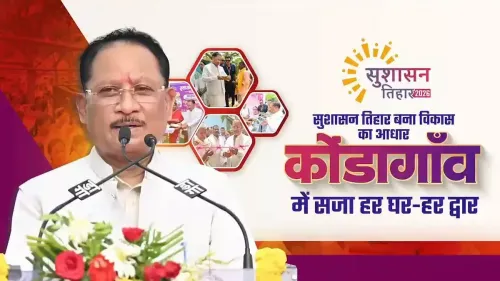
Sushasan Tihar — loosely translated as the 'Festival of Good Governance' — is a structured outreach initiative by the Chhattisgarh government under which officials and elected representatives visit remote and historically underserved areas to hold public dialogues and gauge scheme delivery. The hashtag #SushasanTihar2026 accompanying the post signals a continuing series of such events across the state in 2026.
Bijapur district falls in the Bastar region of southern Chhattisgarh, which has been among the most severely Naxal-affected zones in India for decades. Since the December 2023 assembly elections, the BJP government led by Sai has pursued a dual-track approach: intensified security operations alongside accelerated delivery of central and state welfare programmes — including direct benefit transfers, agricultural support, and health and education infrastructure — into these pockets.
This approach aligns with the national SAMADHAN doctrine, which pairs counter-insurgency operations with development investment to reduce local support for Maoist networks. Road connectivity, school construction, and scheme saturation in former Maoist-controlled villages have been consistent planks of this strategy across successive administrations.
Stakeholders and Impact
The primary beneficiaries highlighted by the Chief Minister are tribal and rural communities in Bijapur — farmers dependent on agricultural support schemes, women accessing health and livelihood programmes, and youth seeking employment opportunities. These groups have historically been the most isolated from state services due to the security situation and poor connectivity.
The chaupal format is significant: by holding the interaction in Kondapalli under a tree rather than in a government office, the administration signals a deliberate effort to bring governance physically closer to communities that have long been outside its effective reach. Feedback collected at such events is intended to feed back into scheme implementation reviews at the district level.
What's Next
The #SushasanTihar2026 tag suggests further rounds of such engagements are planned across southern Chhattisgarh's districts. Official data on scheme saturation levels in Bijapur and neighbouring LWE-affected districts would be the next measurable indicator of whether the outreach is translating into verifiable delivery gains. The Chhattisgarh government's resolve, as stated by CM Sai, is that 'the light of development must reach every section of society and bring visible positive change to every life' — a benchmark against which future progress in the Bastar region will be assessed.
Point of View
By placing the Chief Minister under a tree in a remote village, is as much a symbolic act of reclaiming political space as it is an administrative exercise. It fits a broader national pattern where development delivery is used as a counter-insurgency tool, with welfare scheme saturation serving as a metric of governance reach. The durability of this approach will ultimately depend on whether the feedback loop from such chaupals produces measurable improvements in scheme outcomes on the ground.
NationPress
23 Sept 2026
Frequently Asked Questions
What is Sushasan Tihar in Chhattisgarh?
Sushasan Tihar, or the 'Festival of Good Governance,' is a Chhattisgarh government outreach programme where officials and leaders visit remote communities to hold public dialogues and gather feedback on welfare scheme delivery. The 2026 edition has been tagged as #SushasanTihar2026 on social media.
Why did CM Vishnu Deo Sai visit Bijapur?
CM Vishnu Deo Sai visited Bijapur district's Kondapalli village on 2 June 2026 as part of Sushasan Tihar 2026 to hold a community chaupal and collect direct feedback from villagers on the implementation and impact of government welfare schemes in the formerly Naxal-affected area.
Is Bijapur district still Naxal-affected?
Bijapur district in Chhattisgarh's Bastar region has historically been one of India's most severely Naxal-affected areas. The Chhattisgarh government has been pursuing intensified security operations alongside development programmes since 2023, and CM Sai's post describes the region as now advancing with 'development, trust, and good governance.'
What is the SAMADHAN doctrine?
SAMADHAN is a national policy framework for addressing Left-Wing Extremism that combines security operations with development investment — including road connectivity, welfare scheme delivery, and infrastructure — to reduce local community support for Maoist insurgent networks. Chhattisgarh's dual-track approach in Bastar aligns with this doctrine.
Who benefits from Chhattisgarh's welfare schemes in Naxal-affected areas?
According to CM Sai's statement, the primary beneficiaries of welfare scheme outreach in areas like Bijapur include tribal farmers, women, youth, and economically vulnerable families who have historically been isolated from state services due to the security situation and poor connectivity.