CM Karnataka Acts on Ambulance Crisis in Hassan's Hill Towns
Synopsis
The Chief Minister's Office of Karnataka acted on media reports of acute ambulance shortages in Hassan district's Sakleshpur, Belur, and Alur taluks, ordering a site inspection and proposing at least 4 additional ambulances and a dedicated Nagu-Magu maternity vehicle for Alur Public Hospital.
Key Takeaways
Hassan district's Sakleshpur, Belur, and Alur taluks faced an acute shortage of emergency ambulances, leaving pregnant women and patients without timely care.
The Chief Minister's Office of Karnataka responded to media reports on 7 November 2026 , ordering an immediate ground inspection by the District Health and Family Welfare Department .
A formal proposal has been submitted to the state government for at least 4 additional ambulances across the three taluks.
A dedicated Nagu-Magu vehicle for postnatal and newborn transport has been proposed specifically for Alur Public Hospital .
Strict measures have been ordered to address staff shortages and ensure 24-hour ambulance service availability in the region.
The CMO framed the response as a 'permanent solution' for every village in the Malnad interior, not a temporary fix.
When pregnant women and sick patients in Hassan district's hilly taluks of Sakleshpur, Belur, and Alur could not access emergency ambulances, the story reached the media — and the Chief Minister's Office of Karnataka responded the same day. On Saturday, 7 November 2026, the CMO announced a site inspection, a staffing overhaul, and a formal proposal to deploy at least four additional ambulances across the three taluks, alongside a dedicated Nagu-Magu (mother-and-newborn) vehicle for Alur Public Hospital.
What media reports triggered the CMO's response
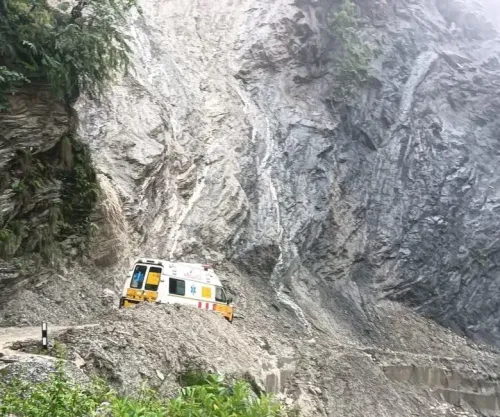
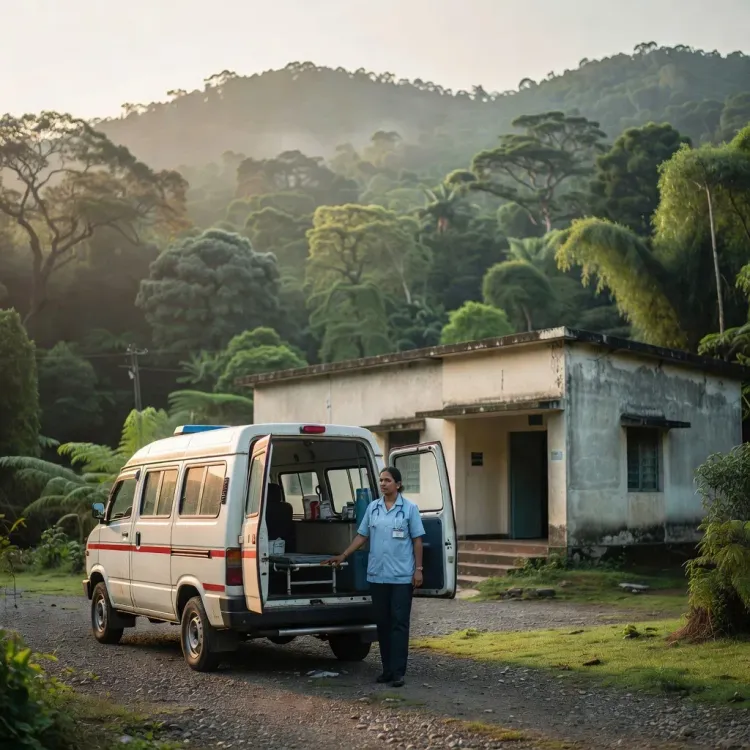
Reports circulating in local media flagged a critical gap: emergency ambulances were simply not available when needed in the Malnad interior — the dense, forested Western Ghats terrain that makes road access slow and alternatives scarce. The hardest-hit were pregnant women seeking institutional delivery and patients with acute emergencies, groups for whom a delayed ambulance can be the difference between life and death.
The District Health and Family Welfare Department was directed to conduct a ground inspection immediately. That inspection formed the basis of a formal proposal now submitted to the state government.
Four new ambulances and a dedicated maternity vehicle for Alur
The proposal has two concrete asks. First, a minimum of 4 additional ambulances to supplement the existing fleet across Sakleshpur, Belur, and Alur — enough to cover the most acute coverage gaps without waiting for a full fleet review. Second, a dedicated Nagu-Magu vehicle for Alur Public Hospital, designed specifically for the safe transport of postnatal mothers and newborns — a service that standard 108 ambulances are not always equipped or staffed to provide.
Karnataka introduced the Nagu-Magu concept under its maternal transport initiatives aligned with the National Rural Health Mission framework, which from the mid-2000s onward pushed states to build dedicated mother-and-child transport alongside the broader 108 emergency network. The proposal now on the government's desk would extend that coverage deeper into Hassan's hills.
24/7 staffing orders and the state's pledge to Malnad's villages
Beyond vehicles, the CMO flagged a staff shortage as a parallel problem — and said strict measures have already been initiated to plug it. The goal: round-the-clock, 24-hour service availability across all three taluks, not intermittent coverage dependent on shift overlap.
The official statement closed with an explicit commitment: 'ಕಟ್ಟಕಡೆಯ ಮಲೆನಾಡಿನ ಹಳ್ಳಿಯ ಪ್ರತಿಯೊಂದು ಜೀವವನ್ನೂ ರಕ್ಷಿಸಲು ಸರ್ಕಾರ ಬದ್ಧವಾಗಿದೆ' — 'the government is committed to protecting every life in the last village of the Malnad.'
That phrase matters. It is not framed as a temporary patch but as a 'permanent solution' (ಶಾಶ್ವತ ಪರಿಹಾರ) — a signal that the administration intends structural follow-through, not just a press-cycle fix. Whether the sanction order arrives quickly, and whether the vehicles are on the ground before the next monsoon isolates these roads again, is now the test to watch.
Point of View
Media-triggered response fits a pattern of reactive incrementalism that has characterised Karnataka's rural health governance — gaps surface publicly, vehicles get added, but structural staffing deficits recur. The explicit 'permanent solution' framing and the 24/7 staffing order suggest this administration is trying to move beyond the patch-and-move-on cycle. The real test is whether sanction orders translate into deployed vehicles before the next crisis in the Western Ghats — terrain that consistently exposes the limits of urban-centric fleet planning. The Nagu-Magu addition, if approved, would extend a proven maternal-transport model into one of Karnataka's most underserved NRHM zones.
NationPress
7 Nov 2026
Frequently Asked Questions
Why are ambulances hard to access in Sakleshpur, Belur and Alur?
These taluks lie in Karnataka's Malnad region — dense, hilly Western Ghats terrain where road distances are long, road quality is uneven, and the existing ambulance fleet has not kept pace with demand, leaving gaps especially for pregnant women and emergency patients.
What is a Nagu-Magu vehicle?
The Nagu-Magu vehicle is a dedicated mother-and-newborn transport service under Karnataka's health programme, designed specifically to safely ferry postnatal mothers and newborns — functions that standard emergency ambulances are not always equipped to handle.
How many extra ambulances has Karnataka proposed for Hassan district?
The Chief Minister's Office has proposed a minimum of 4 additional ambulances for Sakleshpur, Belur, and Alur taluks, in addition to a separate Nagu-Magu vehicle for Alur Public Hospital.
What action did the Karnataka CMO take on the ambulance shortage?
The CMO directed the District Health and Family Welfare Department to conduct an on-ground inspection, submitted a formal proposal to the state government for additional vehicles, and ordered immediate steps to address staff shortages to ensure 24-hour service.
What is Karnataka's 108 ambulance service?
The 108 emergency ambulance network is a free, toll-free service Karnataka expanded under the National Rural Health Mission framework from the mid-2000s onward, providing emergency medical transport across the state including rural districts like Hassan.