CM Siddaramaiah Highlights 108 Ambulance Shift to State Control
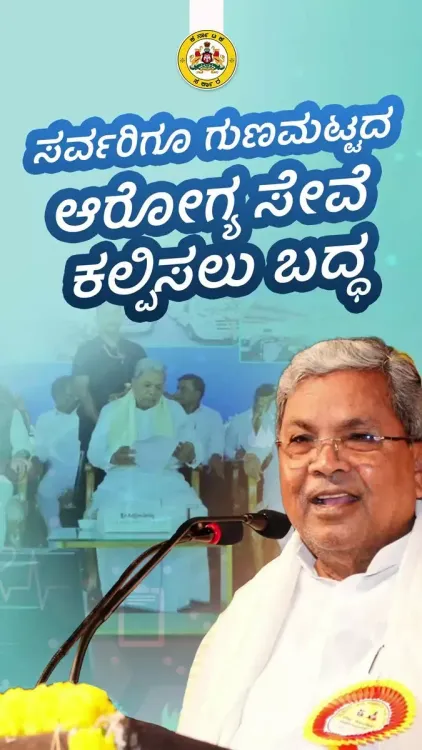
Synopsis
Karnataka Chief Minister Siddaramaiah has highlighted that roughly 80 per cent of patients treated within the golden hour survive, and credited the state's takeover of the 108 ambulance service from private operators as a key step in improving emergency healthcare accountability across Karnataka.
Key Takeaways
Karnataka CM Siddaramaiah stated that approximately 80 per cent of patients who receive treatment within the golden hour survive critical emergencies.
Bengaluru city currently operates between 65 and 70 ambulances under the emergency response network.
The 108 ambulance service has been brought under direct government control, replacing earlier private-operator management.
Government ownership is said to have increased accountability for emergency medical services compared to the previous public-private model.
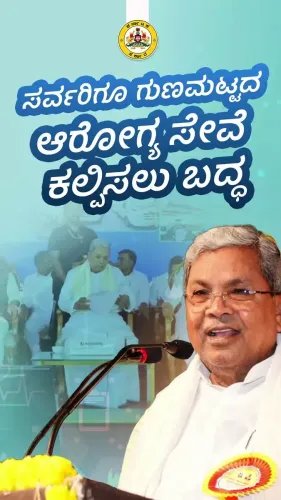
The Karnataka government has reaffirmed its commitment to developing health infrastructure and providing quality care to ordinary citizens.
The policy focus is expected to extend emergency response improvements beyond Bengaluru to other districts in Karnataka .
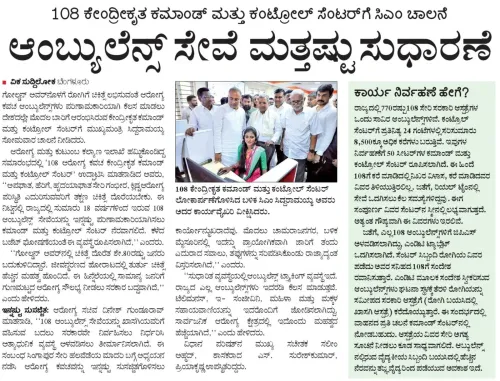
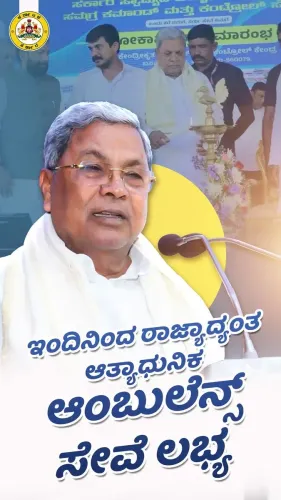
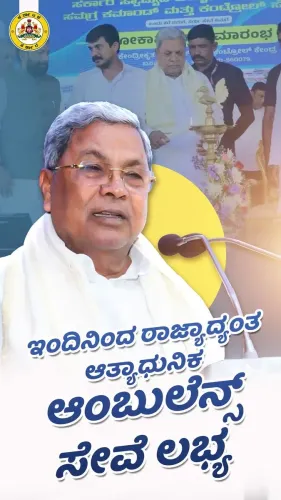
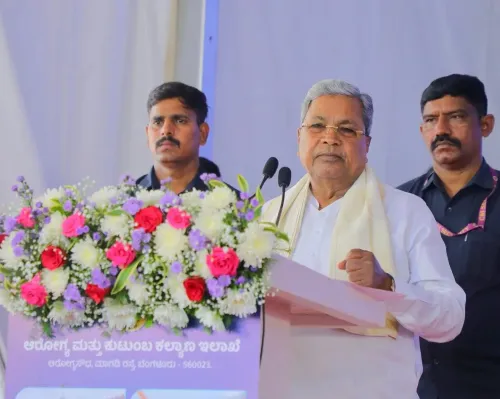
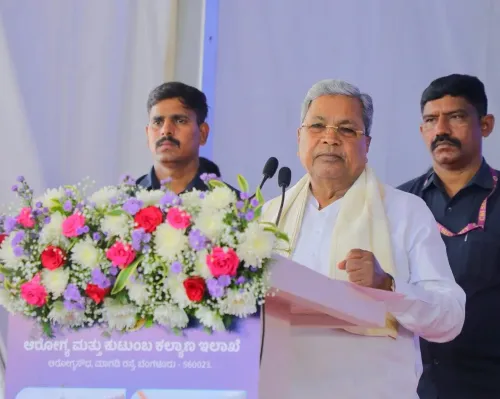
Karnataka Chief Minister Siddaramaiah on Monday, 25 May 2026 underscored the critical role of emergency medical response in saving lives, highlighting that the 108 ambulance service in the state has been brought under direct government management to strengthen accountability and improve outcomes for patients in time-critical situations.
Context
Posting in Kannada on X, Siddaramaiah stated that in emergencies such as road accidents, childbirth complications, and cardiac events, treatment within the 'golden hour' is decisive. 'ಗೋಲ್ಡನ್ ಅವರ್ ನಲ್ಲಿ ದೊರೆತ ಚಿಕಿತ್ಸೆಯಲ್ಲಿ ಸುಮಾರು ಶೇ.80 ರಷ್ಟು ಜನರು ಬದುಕುಳಿದಿದ್ದಾರೆ' [Roughly 80 per cent of people who received treatment within the golden hour survived], he wrote, citing the survival rate as justification for the state's investment in emergency infrastructure.
The Chief Minister noted that Bengaluru city currently has between 65 and 70 ambulances serving emergency needs. He emphasised that when the 108 ambulance system was operated by private parties, accountability was difficult to enforce, but now that it operates under government oversight, that accountability has increased significantly.
Policy Backdrop
The 108 emergency ambulance service was introduced in Karnataka in the mid-2000s under a public-private partnership model, mirroring similar arrangements in other Indian states. The service covers medical, police, and fire emergencies and has become a primary first-response mechanism for urban and rural populations alike.
Several Indian states have progressively moved ambulance operations from private contractors to direct state management, driven by concerns over response times, service quality, and the difficulty of holding private operators accountable. Karnataka's move aligns with this broader national trend of strengthening public health delivery at the grassroots level.
The golden hour principle — the window during which emergency medical intervention most dramatically improves survival odds — is a globally recognised standard in emergency medicine and has increasingly shaped Indian public health planning, particularly for trauma and cardiac care.
Stakeholders and Impact
The most direct beneficiaries of a strengthened ambulance network are Bengaluru's residents, who face acute emergency response challenges owing to high traffic density and a large urban population. Road accident victims and patients experiencing cardiac events stand to gain the most from faster, accountable government-run ambulances.
The shift to state control also has implications for the Karnataka Health Department, which now bears direct responsibility for fleet maintenance, staffing, and response-time benchmarks. Government ownership removes the contractual buffer that previously complicated grievance redressal for ordinary citizens.
What's Next
Siddaramaiah reaffirmed the government's commitment to developing the health sector and providing quality healthcare to ordinary citizens. His post signals continued policy focus on expanding emergency infrastructure beyond Bengaluru to other districts across Karnataka.
Observers will watch for announcements on scaling up the ambulance fleet and integrating the 108 service more closely with trauma centres and district hospitals, moves that would extend the golden-hour benefit to populations in smaller towns and rural areas.
Point of View
The communication targets both urban voters in Bengaluru and the broader electorate sensitive to public health delivery. The move fits a wider pattern among Congress-governed states of reclaiming public services from private contractors as a visible marker of pro-people governance. Whether the accountability gains translate into measurable improvements in response times will be the real test of this policy shift.
NationPress
15 Oct 2026
Frequently Asked Questions
What is the 108 ambulance service in Karnataka?
The 108 ambulance service is Karnataka's primary emergency medical response system, handling medical, police, and fire emergencies. It was originally run under a public-private partnership and has since been brought under direct state government control.
What is the golden hour in medical emergencies?
The golden hour refers to the critical window immediately after a traumatic injury or medical emergency during which prompt treatment significantly increases the patient's chances of survival. CM Siddaramaiah cited an approximately 80 per cent survival rate for patients treated within this period.
How many ambulances does Bengaluru have?
According to CM Siddaramaiah's post, Bengaluru city currently has between 65 and 70 ambulances serving emergency medical needs.
Why did Karnataka take the 108 ambulance service away from private operators?
The Karnataka government took over the 108 ambulance service from private operators to increase accountability. CM Siddaramaiah noted that when the service was privately managed, it was difficult to question or enforce the operators' responsibilities.
What is Karnataka's plan for expanding emergency health services?
CM Siddaramaiah has signalled that the government is committed to developing the health sector statewide. Observers expect future announcements on expanding the ambulance fleet and linking services with trauma centres in districts beyond Bengaluru.