CM Siddaramaiah launches 108 Arogya Kavacha Command Centre in Karnataka
Synopsis
Chief Minister Siddaramaiah on 25 May 2026 inaugurated the 108 Arogya Kavacha Centralised Command and Control Centre in Karnataka, rolling out tech-upgraded ambulance services statewide. The move brings the 18-year-old emergency network under full government control, with the golden-hour survival rate cited at 80 per cent.
Key Takeaways
CM Siddaramaiah inaugurated the 108 Arogya Kavacha Centralised Command and Control Centre on 25 May 2026 .
State-of-the-art ambulance services are now being extended to all districts of Karnataka .
Karnataka's 108 ambulance service has been operational for approximately 18 years ; it has now been brought under full government management as announced in the 2025-26 budget .
The CM cited a 80 per cent survival rate for patients treated within the golden hour in emergencies including road accidents, childbirth, and cardiac events.
Bengaluru city has between 65 and 70 ambulances currently serving emergency needs.
The government urged citizens to use public hospitals directly rather than seeking reimbursement from the Chief Minister's Relief Fund after private treatment.
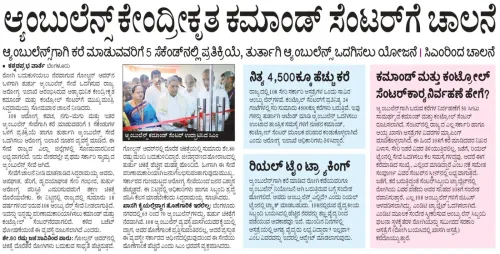
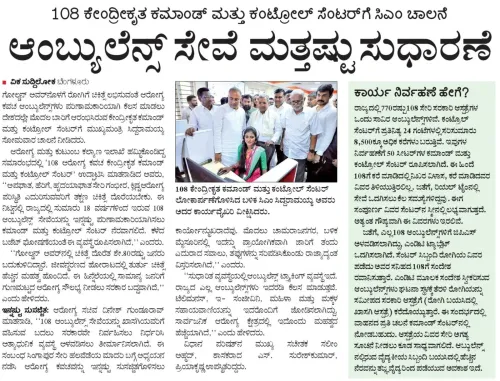
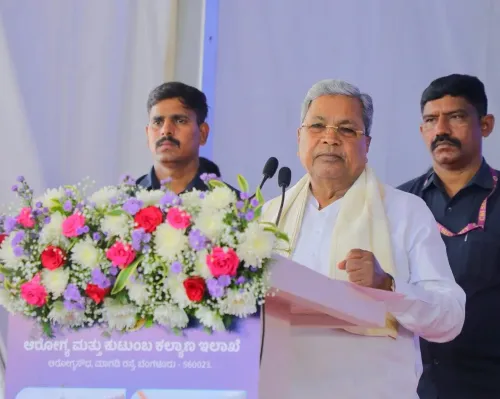
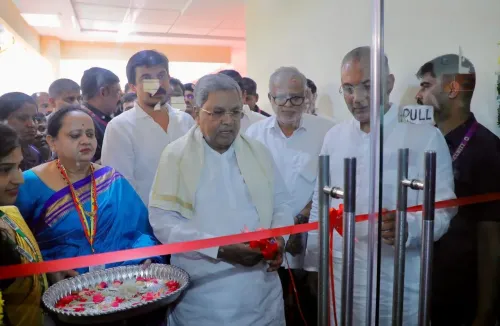
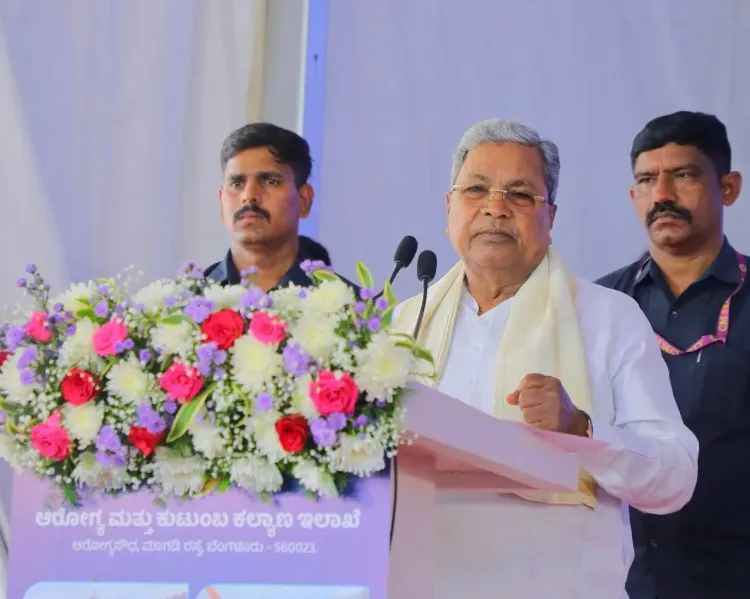
The Chief Minister's Office of Karnataka announced on Monday, 25 May 2026 that Chief Minister Siddaramaiah inaugurated the 108 Arogya Kavacha Centralised Command and Control Centre under the Health and Family Welfare Department, marking the rollout of state-of-the-art ambulance services across all districts of Karnataka.
Context
Speaking at the inauguration, CM Siddaramaiah stated that the new centre is being launched for the first time in the country, describing it as a milestone for emergency healthcare in Karnataka. He expressed his hope that the service 'reaches people effectively,' emphasising that the 'golden hour' — the critical window after a medical emergency — is decisive for patient survival. According to the Chief Minister, roughly 80 per cent of patients who receive treatment within the golden hour survive.
The CM noted that the 108 ambulance service has been operational in the state for approximately 18 years. He pointed out that emergencies including road accidents, childbirth complications, and cardiac events demand immediate response, and the centralised command infrastructure is designed to ensure that speed and quality of care.
Policy Backdrop
The launch follows a commitment made in the 2025-26 state budget, which earmarked a dedicated management structure for the 108 emergency ambulance services. A significant shift in governance accompanied this: the ambulance network, previously managed under a public-private arrangement, has now been brought fully under government control. CM Siddaramaiah underscored this transition, noting that when the system was in private hands, accountability was difficult to enforce, whereas government oversight now raises the standard of responsibility.
Several Indian states have moved emergency response systems toward government-controlled command centres to improve accountability and integration with public hospitals. Karnataka's centralised model aligns with this wider pattern, aimed at strengthening trauma, cardiac, and obstetric emergency response through technology upgrades.
Stakeholders and Impact
Bengaluru city alone currently has between 65 and 70 ambulances serving emergency needs. The new command centre is intended to coordinate the fleet across all districts of the state, ensuring faster dispatch and better resource allocation. Rural populations, road accident victims, maternity cases, and cardiac patients stand to benefit most directly from improved response times.
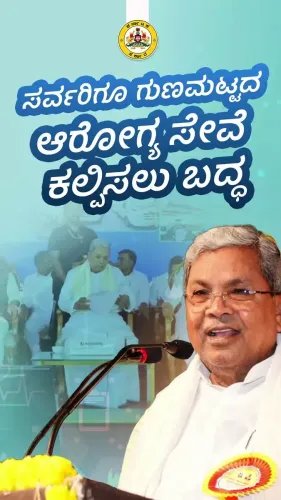
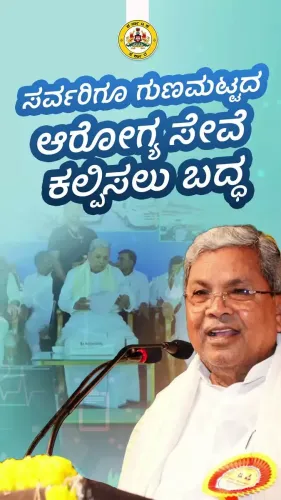
The Chief Minister also used the occasion to encourage citizens to use government hospitals rather than seeking financial assistance from the Chief Minister's Relief Fund after visiting private facilities. He noted that for conditions including cancer, private hospital treatment is expensive, while quality care is available at government hospitals. 'The government is committed to developing the health sector to provide quality healthcare to ordinary people,' he said.
What's Next
The immediate priority will be monitoring district-level rollout of the upgraded ambulance service and measuring improvements in response times. Performance audits and any further budget allocations in the 2026-27 fiscal year are expected to determine how effectively the centralised command model translates into on-ground outcomes. The government's stated goal is to build public trust through measurable improvements in the quality of state-run health services.
Point of View
A move that simultaneously addresses accountability gaps left by the earlier public-private model. By anchoring the launch to the 2025-26 budget promise, the Siddaramaiah government is signalling fiscal follow-through ahead of what is likely to be a politically charged health-policy cycle. The golden-hour framing — and the 80 per cent survival statistic — shifts the public conversation from administrative restructuring to life-and-death outcomes, raising the political stakes for measurable delivery. If district-level response times improve verifiably, this could become a template other Congress-governed states reference; if the rollout stalls, it hands the opposition a ready target.
NationPress
10 Oct 2026
Frequently Asked Questions
What is the 108 Arogya Kavacha Centralised Command and Control Centre in Karnataka?
It is a newly inaugurated emergency ambulance coordination hub under Karnataka's Health and Family Welfare Department that manages the state's 108 ambulance fleet from a single command centre, enabling faster dispatch and real-time monitoring across all districts.
Who inaugurated the 108 Arogya Kavacha Command Centre?
Chief Minister Siddaramaiah inaugurated the centre on 25 May 2026 .
How long has the 108 ambulance service been running in Karnataka?
The 108 ambulance service has been operational in Karnataka for approximately 18 years , though it has now been restructured under full government management as part of the 2025-26 budget commitment.
What is the significance of the golden hour in emergency treatment?
The golden hour is the critical period immediately after a medical emergency — such as a road accident, cardiac event, or complicated childbirth — during which prompt treatment dramatically improves survival chances. CM Siddaramaiah cited a 80 per cent survival rate for patients treated within this window.
How many ambulances does Bengaluru city have under the 108 service?
Bengaluru city currently has between 65 and 70 ambulances deployed under the 108 emergency service.