White House Says Gov. Walz Pardoned Child Abuser Later Deported by ICE
Synopsis
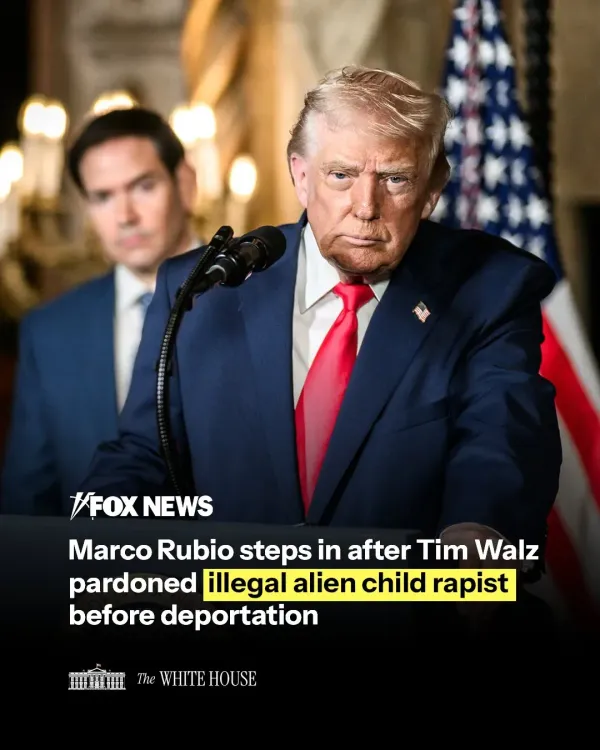
The White House accused Minnesota Governor Tim Walz of pardoning a Laotian national convicted of sexually abusing a child, stating that Secretary of State Marco Rubio revoked the individual's status and ICE deported him. The Trump administration framed the action as proof of its zero-tolerance stance on criminal noncitizens.
Key Takeaways
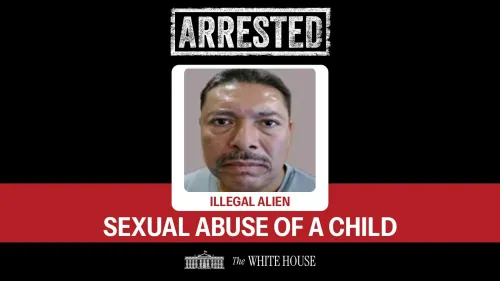
The White House publicly accused Governor Tim Walz of pardoning a Laotian national convicted of sexually abusing a 10-year-old girl .
Secretary of State Marco Rubio is said to have revoked the individual's immigration status following the pardon.
ICE subsequently arrested and deported the individual, whom the White House labelled a 'child rapist.' Under U.S. federal law, a state pardon does not automatically remove deportability stemming from a criminal conviction.
The post is part of a broader Trump administration pattern of publicising criminal deportation cases to underscore immigration enforcement resolve.
The specific case details, including the pardon date and the individual's identity, have not been independently verified by NationPress.
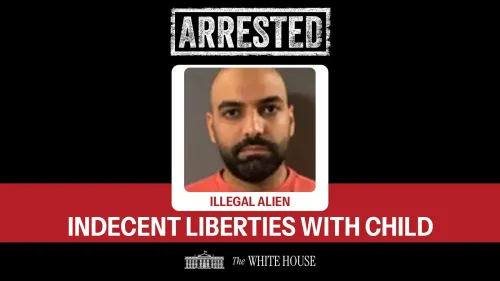
The White House posted on X on Friday, 10 July 2026, alleging that Minnesota Governor Tim Walz had pardoned a Laotian national convicted of sexually abusing a 10-year-old girl, and that the Trump administration subsequently revoked the individual's immigration status and deported him.
Context
The White House post states that the individual — described as a convicted child rapist — was pardoned by Governor Walz, who has led Minnesota since 2019 and served as the Democratic vice-presidential nominee in 2024. The post alleges that Secretary of State Marco Rubio 'quickly revoked his status,' after which U.S. Immigration and Customs Enforcement (ICE) arrested and deported the individual. The post ends with the declaration: 'The Trump Admin will never let these monsters prey on Americans.'
The post does not name the individual, specify the date of the pardon, or detail the legal mechanism by which Secretary Rubio revoked the person's immigration status. NationPress could not independently verify the specific case from available public records.
Policy Backdrop
The episode highlights a long-running tension between state executive clemency powers and federal immigration enforcement authority. Under settled federal law, a state pardon does not automatically extinguish federal immigration consequences — deportability based on a criminal conviction can persist even after a pardon is granted by a state governor.
During the first Trump administration (2017–2021), the Department of Homeland Security and ICE directed enforcement resources specifically toward noncitizens convicted of aggravated felonies and crimes involving moral turpitude, a category that includes sexual offenses. The current administration appears to be continuing and publicly amplifying that posture.
Stakeholders and Impact
Governor Walz, now a prominent national Democratic figure following the 2024 campaign, becomes the direct political target of the White House's messaging. The post frames his clemency decision as enabling danger to American children, a framing likely to intensify scrutiny of gubernatorial pardon powers when beneficiaries are noncitizens facing immigration consequences.
ICE, which operates under the Department of Homeland Security, has broad authority to detain and remove noncitizens deemed removable under the Immigration and Nationality Act. Secretary Rubio, previously a U.S. Senator from Florida with a record on immigration and national security, is identified in the post as having acted swiftly to strip the individual's status before ICE moved in.
What's Next
Legal observers will watch whether cases of this kind generate litigation testing the limits of state pardons against federal removal orders — a question that has not been definitively resolved by the U.S. Supreme Court. The White House's decision to publicise this case suggests the administration intends to use such episodes as recurring proof points in its immigration enforcement narrative ahead of the 2026 midterm elections.
Governor Walz's office has not publicly responded to the White House's post as of the time of publication. Future ICE announcements of similar removals are widely expected as the administration continues to spotlight cases involving convicted noncitizens.
Point of View
The administration is testing whether governors' pardon powers can be weaponised as a campaign liability. The episode also underscores a durable constitutional fault line: the federal government's insistence that immigration consequences survive state pardons has never been fully litigated to a definitive conclusion. With midterms approaching, expect this case to be cited repeatedly as a template for the administration's 'criminal alien' messaging architecture.
NationPress
10 Oct 2026
Frequently Asked Questions
Did Governor Tim Walz really pardon a child sex offender?
The White House posted on 10 July 2026 alleging that Governor Walz pardoned a Laotian national convicted of sexually abusing a 10-year-old girl. NationPress could not independently verify the specific pardon from available public records, and Governor Walz's office had not responded publicly at the time of publication.
Can a U.S. state governor's pardon stop deportation?
No. Under federal immigration law, a state pardon does not automatically eliminate deportability. The federal government can still remove a noncitizen based on the underlying criminal conviction even after a state executive pardon has been granted.
What role did Marco Rubio play in this case?
The White House post states that Secretary of State Marco Rubio 'quickly revoked' the individual's immigration status after the pardon, paving the way for ICE to arrest and deport him. The specific legal mechanism used was not detailed in the post.
What is ICE and what authority does it have to deport people?
U.S. Immigration and Customs Enforcement is the federal agency responsible for identifying, detaining, and removing noncitizens who are present in violation of immigration law. It operates under the Department of Homeland Security and derives its removal authority from the Immigration and Nationality Act.
Why is the White House publicising individual deportation cases?
The Trump administration has consistently used high-profile deportation announcements — particularly those involving violent or sex-related convictions — to reinforce its immigration enforcement narrative and draw contrasts with Democratic officials. Analysts expect this messaging to intensify ahead of the 2026 midterm elections.