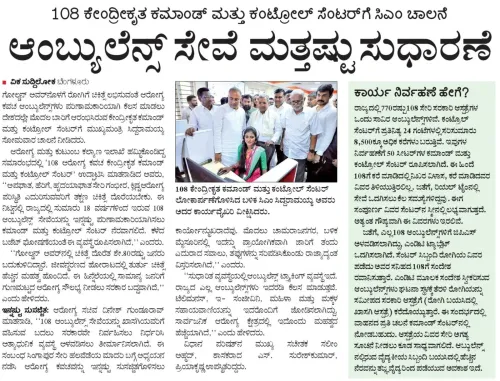
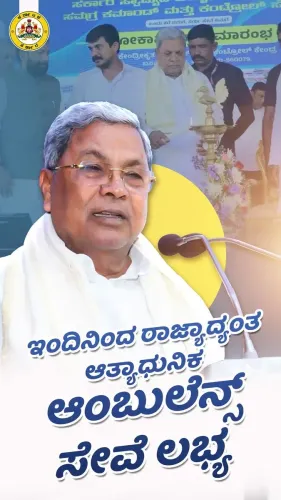
CM Siddaramaiah: Govt takes charge of 108 ambulance service
Synopsis
Chief Minister Siddaramaiah announced that Karnataka has brought the 108 ambulance service under direct government control, replacing a private-operator model. With 65 to 70 ambulances in Bengaluru, the state says golden-hour treatment has saved roughly 80 per cent of critical patients, and accountability has sharply improved.
Key Takeaways
The 108 ambulance service in Bengaluru has been brought under direct Karnataka government control, replacing a private-operator arrangement.
CM Siddaramaiah cited a ~80% survival rate among patients who receive treatment within the critical 'golden hour.' Bengaluru city currently operates between 65 and 70 ambulances for emergency medical response.
The Chief Minister argued that government control increases accountability in ways the previous private model did not allow.
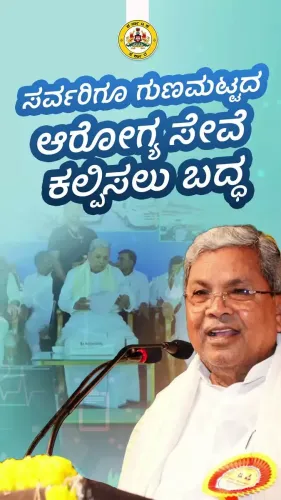
The state has reaffirmed its commitment to developing the health sector and providing quality care to ordinary citizens.
Road accident victims, pregnant women, and cardiac patients are the primary beneficiaries of improved emergency response.
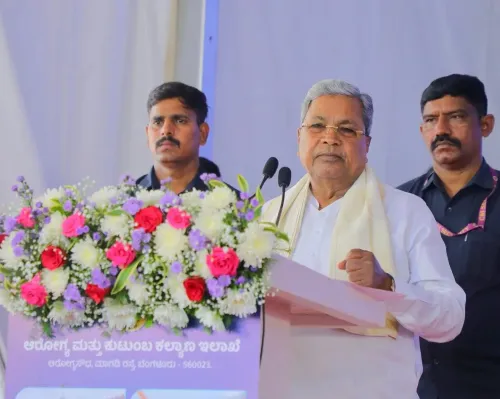
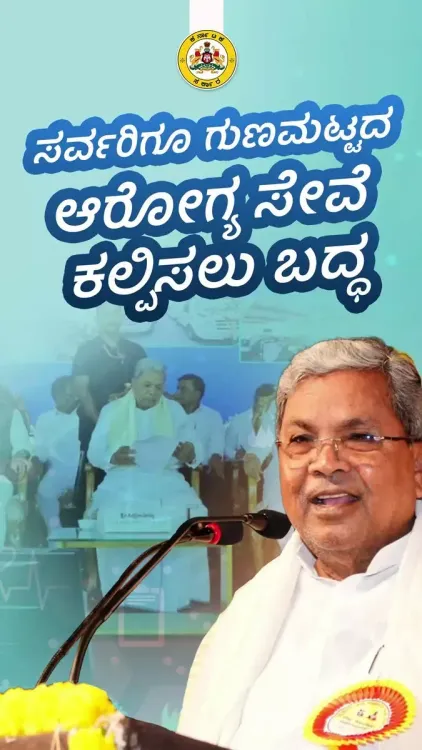
The Chief Minister's Office of Karnataka on Monday, 25 May 2026, shared a statement from Chief Minister Siddaramaiah underscoring the state government's direct takeover of the 108 ambulance service in Bengaluru, citing improved accountability and the critical importance of emergency care during the 'golden hour.'
Context
In the post, CM Siddaramaiah stated that emergency treatment during the 'golden hour' — the first critical window after a medical crisis — significantly raises survival odds, with approximately 80 per cent of patients who receive timely care surviving critical situations including road accidents, childbirth complications, and cardiac emergencies. He noted that Bengaluru city currently has 65 to 70 ambulances supporting emergency medical response.
The Chief Minister drew a sharp contrast between the earlier arrangement and the present one: '108 ಆ್ಯಂಬುಲೆನ್ಸ್ ವ್ಯವಸ್ಥೆ ಖಾಸಗಿಯವರ ಕೈಯಲ್ಲಿದ್ದಾಗ, ಅವರ ಹೊಣೆಗಾರಿಕೆಯನ್ನು ಪ್ರಶ್ನಿಸುವಂತಿರಲಿಲ್ಲ' ('When the 108 ambulance system was in private hands, their accountability could not be questioned'). He added that with the system now under government control, accountability for the service has increased.
Policy Backdrop
The 108 emergency ambulance service was rolled out across several Indian states from 2005 onward, originally through public-private partnership models where private operators managed day-to-day operations under state contracts. Critics of that model long argued that oversight gaps and profit motives compromised response times and service quality, particularly in high-density urban areas.
Karnataka's move to bring the service directly under state management reflects a wider trend across Indian states, which have increasingly reasserted public control over emergency medical transport to close accountability gaps. For a city like Bengaluru — with its dense traffic, high road-accident rates, and a rapidly growing population — the reliability of pre-hospital emergency care carries outsized public-health consequences.
Stakeholders and Impact
The most immediate beneficiaries are Bengaluru's residents, particularly road accident victims, pregnant women, and cardiac patients — groups for whom minutes can determine survival. The shift to government oversight means citizens and elected representatives can now formally demand performance data, response-time records, and service audits in ways that were structurally difficult under private contracts.
CM Siddaramaiah reaffirmed that the Karnataka government is committed to the development of the health sector to provide quality healthcare to ordinary citizens. This positions the ambulance takeover as one plank in a broader public-health agenda rather than an isolated administrative change.
What's Next
The government's stated commitment to healthcare development raises expectations around further fleet expansion beyond the current 65 to 70 ambulances in Bengaluru, as well as the possible publication of response-time benchmarks and integration with existing state health schemes. Observers will watch whether the accountability gains from direct government management translate into measurable improvements in emergency response times across the city and eventually the wider state.
Point of View
The Chief Minister is building a healthcare-governance narrative ahead of future electoral cycles. The move fits a broader pattern of Indian state governments reclaiming direct control of essential services to shore up public trust and create visible accountability chains. Whether the rhetoric translates into published response-time data and measurable fleet expansion will determine how durable the political dividend proves to be.
NationPress
9 Oct 2026
Frequently Asked Questions
What is the 108 ambulance service in Karnataka?
The 108 ambulance service is Karnataka's free emergency medical response system, reachable by dialling 108. It dispatches ambulances for medical emergencies including road accidents, cardiac events, and obstetric crises. The service was previously managed by private operators under a public-private partnership and has now been brought under direct state government control.
What is the 'golden hour' in emergency medicine?
The 'golden hour' refers to the critical window immediately following a traumatic injury or medical emergency during which prompt treatment dramatically improves the patient's chances of survival. CM Siddaramaiah cited data suggesting roughly 80 per cent of patients who receive care within this window survive critical conditions.
How many ambulances does Bengaluru have under the 108 service?
According to CM Siddaramaiah's statement on 25 May 2026, Bengaluru city has between 65 and 70 ambulances currently supporting emergency medical response under the 108 service.
Why did Karnataka take the 108 ambulance service away from private operators?
CM Siddaramaiah stated that when the 108 service was managed privately, its accountability could not be questioned. By bringing it under government control, the state can now be held directly responsible for service quality, response times, and overall performance.
What is Karnataka's broader plan for public healthcare?
The Karnataka government has stated it is committed to the development of the health sector to provide quality healthcare to ordinary citizens. The ambulance takeover is presented as part of this wider agenda, with observers watching for fleet expansion and possible integration with existing state health programmes.