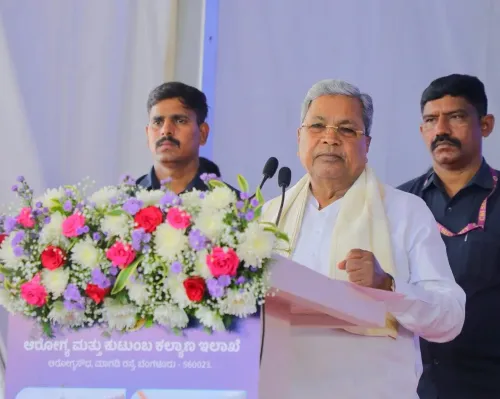
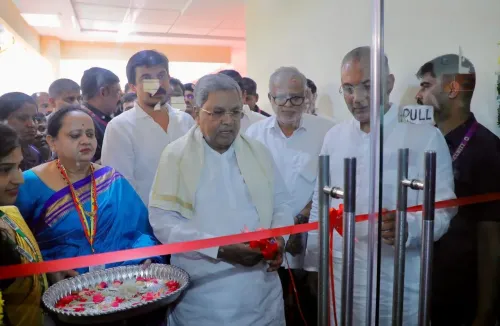
CM Siddaramaiah Launches 108 Arogya Kavacha Command Centre
Synopsis
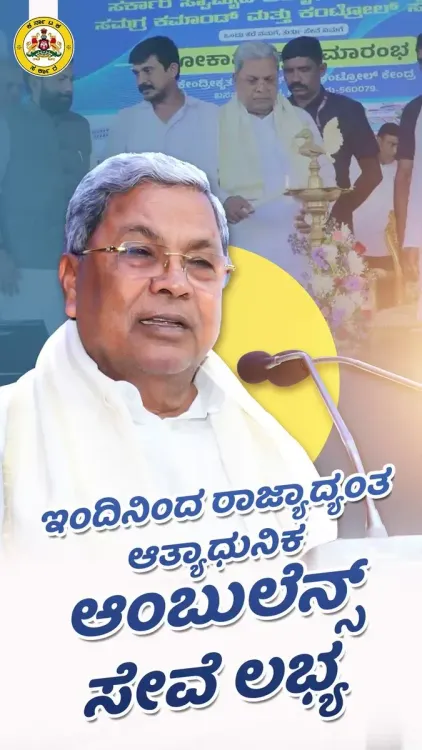
Karnataka has launched what the state government claims is India's first centralised Command and Control Centre for its 108 Arogya Kavacha emergency service. Chief Minister Siddaramaiah announced that advanced ambulances will now cover all districts, aiming to cut emergency response times across the state.
Key Takeaways
Karnataka launched a centralised Command and Control Centre for the 108 Arogya Kavacha emergency health service on 25 May 2026 .
The state government claims this is the first such centralised centre in the entire country.
Advanced-technology ambulances are now available across all districts of Karnataka from the launch date.
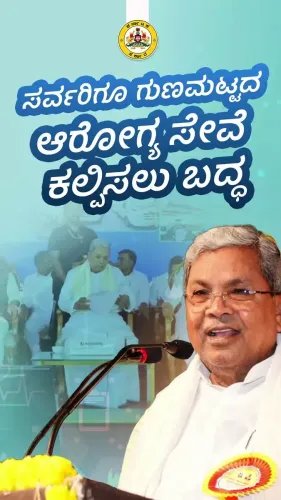
Chief Minister Siddaramaiah stated the goal is to ensure swift treatment in emergencies and effective outreach to citizens.
The move follows a national trend of integrating digital command systems with existing 108 ambulance infrastructure.
Key metrics — including average response times and district coverage — will determine the real-world impact of the new centre.
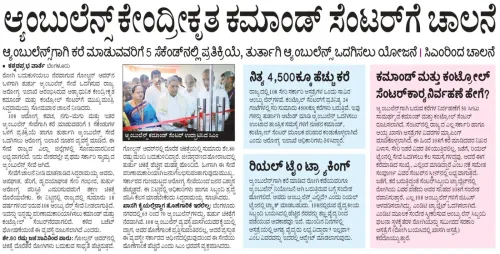
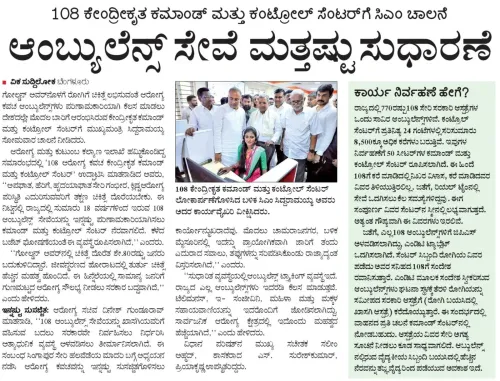
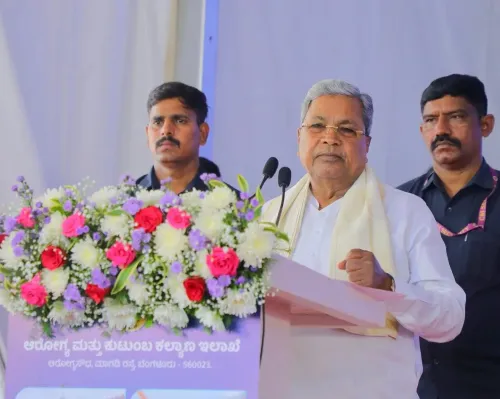
The Chief Minister's Office of Karnataka announced on Monday, 25 May 2026 that the state has launched a centralised Command and Control Centre for the 108 Arogya Kavacha emergency health service — a first of its kind in the country, according to the post.
What Was Announced
Chief Minister Siddaramaiah stated in the post: 'ಇಡೀ ದೇಶದಲ್ಲಿಯೇ ಪ್ರಪ್ರಥಮ ಬಾರಿಗೆ ಕರ್ನಾಟಕದಲ್ಲಿ' ('For the very first time in the entire country, in Karnataka') a centralised command and control centre for the 108 Arogya Kavacha health service has been launched. The announcement also confirmed that advanced-technology ambulance services will now be available across all districts of Karnataka starting the same day.
The Chief Minister expressed his aspiration that the service must reach people effectively: 'ಈ ಸೇವೆ ಪರಿಣಾಮಕಾರಿಯಾಗಿ ಜನರಿಗೆ ತಲುಪಬೇಕು ಎನ್ನುವುದು ನನ್ನ ಆಶಯ' ('It is my wish that this service reaches people effectively').
Context
108 Arogya Kavacha is Karnataka's flagship emergency response service, providing ambulance and pre-hospital care to patients across the state. The service has been operational across districts for over a decade, built in partnership with national emergency-response agencies. The new centralised Command and Control Centre is intended to coordinate these resources more efficiently, particularly during emergencies where rapid treatment is critical.
The post underlines the government's stated goal: 'ತುರ್ತು ಸಂದರ್ಭಗಳಲ್ಲಿ ತ್ವರಿತ ಗತಿಯಲ್ಲಿ ಚಿಕಿತ್ಸೆ ದೊರೆಯಬೇಕು' — 'In emergencies, treatment must be available swiftly.'
Policy Backdrop
Several Indian states have moved in recent years from standalone ambulance fleets toward integrated digital command systems designed to shorten emergency response intervals. Karnataka's step follows this broader national pattern of layering technology onto existing 108 infrastructure. The approach also aligns with wider adoption of integrated health-data platforms under both state and national health missions.
Siddaramaiah, known for championing state-level welfare and health schemes, has positioned this launch as a leap toward 'state-of-the-art' (ಅತ್ಯಾಧುನಿಕ ಮಾದರಿ) health service delivery. The centralised model is designed to enable real-time tracking and dispatch of ambulances, reducing the lag between an emergency call and medical response.
Stakeholders and Impact
The primary beneficiaries are emergency patients across Karnataka's districts, who will now have access to technologically upgraded ambulances coordinated through a single command hub. District health staff and paramedics will also operate within a more structured dispatch framework, potentially improving coordination during mass-casualty or multi-incident scenarios.
For a state as geographically diverse as Karnataka — spanning dense urban centres like Bengaluru and remote rural and hilly regions — a centralised command system could meaningfully reduce response-time disparities between well-served and underserved areas.
What's Next
The key metrics to watch will be average ambulance response times and district-level coverage data once the upgraded fleet becomes fully operational. Any subsequent integration of this system with national health programmes — such as Ayushman Bharat digital health infrastructure — will indicate how deeply the new centre embeds itself into the broader health ecosystem. The government's own stated benchmark is simple: the service must reach people effectively.
Point of View
Moving from a fragmented fleet model to a coordinated dispatch system. For CM Siddaramaiah, the launch is a visible welfare deliverable ahead of what remains a politically competitive landscape in the state. The claim of being a national first — if borne out — positions Karnataka as a benchmark for other states investing in emergency health infrastructure. The real test, however, will be whether response-time data and district-level equity improve measurably in the months ahead.
NationPress
9 Oct 2026
Frequently Asked Questions
What is the 108 Arogya Kavacha service in Karnataka?
108 Arogya Kavacha is Karnataka's emergency response service that provides free ambulance and pre-hospital medical care to patients across the state. It has been operational for over a decade and is now being upgraded with a centralised Command and Control Centre.
What did CM Siddaramaiah launch on 25 May 2026?
Chief Minister Siddaramaiah launched a centralised Command and Control Centre for the 108 Arogya Kavacha service, along with advanced-technology ambulances across all districts of Karnataka, on 25 May 2026 .
Is Karnataka's 108 Command Centre the first in India?
The Karnataka government has claimed it is the first centralised Command and Control Centre of its kind in the country. This claim is based on the official announcement and has not yet been independently corroborated.
How will the new 108 Command Centre help patients in Karnataka?
The centralised centre is designed to coordinate ambulance dispatch in real time, enabling faster emergency response across all districts. The aim is to ensure that patients — especially in remote areas — receive treatment more swiftly than under the previous decentralised model.
Which districts in Karnataka are covered by the new 108 ambulance service?
According to the Chief Minister's Office, the upgraded advanced-technology ambulance service is available across all districts of Karnataka starting from the launch date of 25 May 2026 .