Ramaswamy Calls for Prevention-First Approach to Mental Health
Synopsis
Entrepreneur Vivek Ramaswamy invoked a grieving father's account of losing his son to suicide to argue that the US mental health epidemic demands a prevention-first approach, drawing on a pattern he says he encounters repeatedly while travelling.
Key Takeaways
Vivek Ramaswamy shared a father's account of losing his son to suicide on July 10, 2026 , calling the mental health epidemic 'real.' He argued that prevention, not reactive treatment, is the most effective way to address the crisis.
US suicide rates have risen steadily since the early 2000s, with sharper increases among adolescents during and after the COVID-19 pandemic.
The 988 Suicide and Crisis Lifeline was launched nationally in July 2022 as a federal step toward accessible crisis intervention.
The US Surgeon General issued a youth mental health crisis advisory in December 2021 , underscoring the scale of the problem.
Ramaswamy's comments signal mental health prevention may become a more prominent plank in his public policy advocacy.
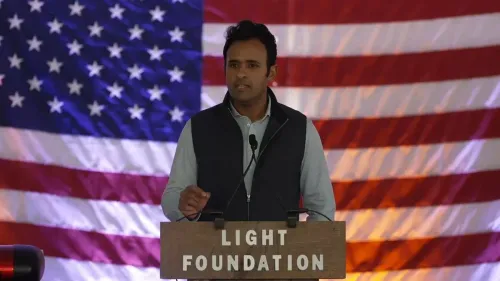
Entrepreneur Vivek Ramaswamy on Thursday, July 10, 2026, shared a deeply personal account relayed to him by a grieving father who lost his son to suicide, using the moment to call for a prevention-first approach to what he described as a growing mental health epidemic.
Context
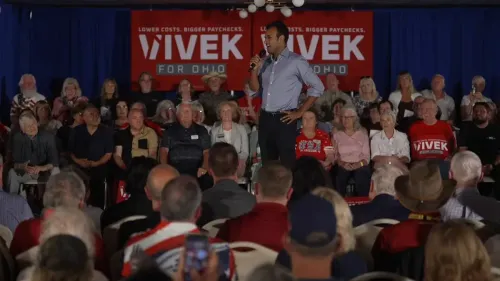
Ramaswamy, the founder and executive chairman of Strive Asset Management and a former co-lead of the Department of Government Efficiency (DOGE) advisory effort, said the story was not an isolated one. 'Sadly it's a story I hear more than once as I travel the state,' he wrote, indicating the account reflects a pattern he has encountered repeatedly while engaging with constituents and communities.
His post framed the crisis not as a clinical or reactive challenge but as one that demands upstream intervention. 'The mental health epidemic is real and the best way to address it starts on the front end: prevention,' he stated.
Policy Backdrop
The United States has grappled with rising suicide rates since the early 2000s, with sharper increases recorded among adolescents and young adults during and after the COVID-19 pandemic. The U.S. Surgeon General issued a formal advisory on the youth mental health crisis in December 2021, highlighting escalating distress and suicide risk among young Americans.
In July 2022, the federal government activated the 988 Suicide and Crisis Lifeline, a three-digit national hotline designed to route mental health crisis calls to local support and counselling services. The lifeline represented a significant structural step toward making crisis intervention more accessible, though advocates have continued to press for deeper investment in school-based and community-level prevention programmes.
Across party lines, public figures have increasingly adopted the language of prevention — emphasising families, schools, and communities as the first line of defence rather than relying solely on clinical or emergency response infrastructure.
Stakeholders and Impact
Families and adolescents sit at the centre of this debate. Parents who have lost children to suicide, like the father Ramaswamy described, have become some of the most visible voices pushing for systemic change at the state and federal level. Their testimonies have shaped legislative conversations around school counsellor ratios, social media regulation, and early intervention funding.
Young people, particularly those navigating academic pressure, social isolation, and digital environments, are disproportionately affected by the crisis. Mental health advocates argue that prevention efforts must reach children before acute symptoms emerge — through education, community support, and accessible resources.
What's Next
Attention will now turn to whether Ramaswamy translates his stated concern into concrete policy advocacy. Observers will watch for state budget proposals or federal reauthorization bills that direct new funding toward school-based prevention programmes and expanded crisis-line capacity. The 988 Lifeline itself faces ongoing questions about staffing and funding sustainability, and any push to bolster it would require legislative action. Ramaswamy's willingness to centre a personal, emotionally resonant story in his public communication signals that mental health prevention may become a more prominent theme in his policy platform going forward.
Point of View
Where prevention-first framing has gained traction as a way to sidestep more contentious debates about healthcare spending. For Ramaswamy, whose public brand has centred on economic and governance reform, this foray into social-health terrain suggests a deliberate broadening of his political identity. The timing, amid ongoing debates over 988 Lifeline funding and school mental health mandates, means his voice enters a live legislative conversation with real resource implications.
NationPress
8 Oct 2026
Frequently Asked Questions
What did Vivek Ramaswamy say about mental health?
Ramaswamy said the mental health epidemic is real and argued that prevention is the most effective way to address it, sharing a father's account of losing his son to suicide.
What is the 988 Suicide and Crisis Lifeline?
The 988 Suicide and Crisis Lifeline is a national three-digit hotline in the United States, launched in July 2022, that connects people in mental health crisis or at risk of suicide to local counselling and support services.
Why is youth mental health a growing concern in the United States?
US suicide rates have climbed since the early 2000s, with sharper increases among adolescents and young adults during and after the COVID-19 pandemic. The US Surgeon General issued a formal advisory on the youth mental health crisis in December 2021.
What does prevention-first mean in mental health policy?
A prevention-first approach focuses on addressing mental health risks before a crisis occurs — through school-based programmes, family support, community resources, and early education — rather than relying primarily on emergency or clinical intervention after a crisis has developed.
Who is Vivek Ramaswamy?
Vivek Ramaswamy is the founder and executive chairman of Strive Asset Management, a former co-lead of the DOGE advisory effort under the Trump administration, and a candidate in the 2024 US Republican presidential primary.