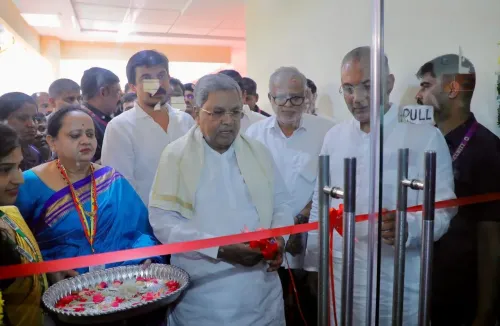
Karnataka CMO inaugurates 108 Arogya Kavach Command Centre
Synopsis
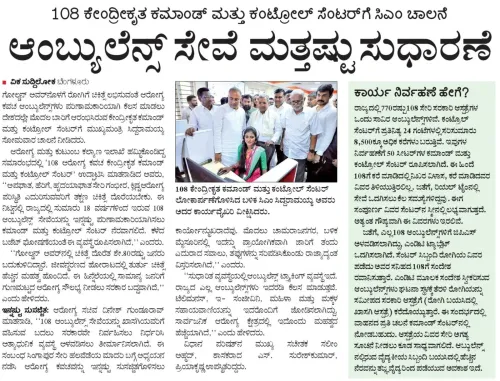
Karnataka's Chief Minister's Office shared press reports on 26 May 2026 covering the inauguration of the 108 Arogya Kavach Centralised Command and Control Centre, a new technology-enabled hub under the Health and Family Welfare Department to strengthen the state's emergency ambulance response network.
Key Takeaways
The Chief Minister's Office of Karnataka shared media coverage of the inauguration of the 108 Arogya Kavach Centralised Command and Control Centre on 26 May 2026 .
The centre operates under Karnataka's Health and Family Welfare Department and serves as the coordination hub for the state's 108 emergency ambulance helpline .
Karnataka launched its 108 ambulance service in 2009 under a public-private partnership aligned with the National Rural Health Mission .
The command centre enables GPS-based ambulance tracking , real-time dispatch management, and integrated communications across all districts.
The upgrade fits a broader national pattern of states digitising pre-hospital emergency care under the National Health Mission framework.
Future integration with the Ayushman Bharat Digital Mission and publication of response-time metrics are key developments to watch.
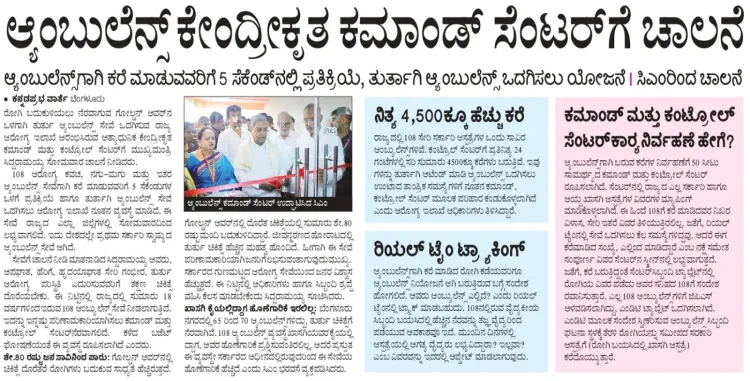
The Chief Minister's Office of Karnataka shared press reports on Tuesday, 26 May 2026 covering the inauguration of the 108 Arogya Kavach Centralised Command and Control Centre, a new hub under the state's Health and Family Welfare Department aimed at strengthening emergency medical response across Karnataka.
Context
The post, shared from the official CMO Karnataka account, circulated media coverage of the inauguration ceremony for the 108 Arogya Kavach Centralised Command and Control Centre — referred to in Kannada as '108 Arogya Kavach Kendrikruta Command mattu Control Kendra'. The centre is designed to serve as the nerve centre for the state's emergency ambulance dispatch and pre-hospital care operations.
Karnataka's 108 ambulance helpline handles emergency medical calls around the clock, coordinating ambulance dispatch for trauma, cardiac, obstetric, and other life-threatening situations across all districts of the state.
Policy Backdrop
Karnataka first launched its 108 emergency ambulance service in 2009 under a public-private partnership model aligned with the National Rural Health Mission. The service was designed to cut emergency response times, particularly in rural and semi-urban areas where access to timely medical care has historically been limited.
The establishment of a dedicated centralised command and control centre follows a broader national pattern of states upgrading their 108 infrastructure with technology-enabled coordination tools — including GPS-based ambulance tracking, real-time dispatch management, and integrated communications — under the National Health Mission framework.
Such command centres allow health administrators to monitor fleet movement, measure response times, and identify coverage gaps, moving Karnataka's emergency services from a reactive to a proactive operational model.
Stakeholders and Impact
The most direct beneficiaries of the upgraded centre are emergency patients across Karnataka, for whom faster and better-coordinated ambulance response can be the difference between life and death. Ambulance operators and paramedic staff will also work within a more structured dispatch and monitoring environment.
The Health and Family Welfare Department gains a single-window visibility platform over the entire emergency fleet, enabling data-driven decision-making on resource allocation. Urban centres such as Bengaluru as well as remote districts stand to benefit from more consistent service levels.
The move also signals Karnataka's intent to align its emergency health infrastructure with national digital health initiatives, including the Ayushman Bharat Digital Mission, which seeks to integrate health data systems across states.
What's Next
Health policy observers will watch for the rollout of additional features at the new centre, particularly integration with the Ayushman Bharat Digital Mission for unified patient data access during emergencies. Publication of quarterly performance metrics on ambulance response times would allow independent assessment of whether the new command infrastructure delivers measurable improvements.
Karnataka's model, if it demonstrates efficiency gains, could serve as a reference point for other states looking to modernise their own 108 command infrastructure under the National Health Mission umbrella.
Point of View
The optics of modernising emergency care carry clear political value, particularly ahead of any electoral cycle, as healthcare access remains a top voter concern. The move also positions Karnataka within a competitive inter-state dynamic where digitised health delivery is increasingly a governance benchmark. Whether the centre translates into measurable reductions in emergency response times will ultimately determine its policy legacy.
NationPress
10 Oct 2026
Frequently Asked Questions
What is the 108 Arogya Kavach Centralised Command and Control Centre in Karnataka?
It is a new technology-enabled hub inaugurated on 26 May 2026 under Karnataka's Health and Family Welfare Department to coordinate and monitor the state's 108 emergency ambulance service, enabling GPS tracking, real-time dispatch, and integrated communications across all districts.
When did Karnataka launch its 108 ambulance service?
Karnataka launched its 108 emergency ambulance service in 2009 under a public-private partnership model supported by the National Rural Health Mission to improve emergency response times across the state.
Who benefits from the 108 Arogya Kavach Command Centre?
Emergency patients across Karnataka are the primary beneficiaries, as faster and better-coordinated ambulance dispatch can significantly improve survival outcomes. Ambulance operators, paramedic staff, and health administrators also benefit from improved fleet visibility and data-driven resource allocation.
How does the Karnataka 108 command centre fit into national health policy?
It aligns with the National Health Mission's push for states to digitise pre-hospital emergency care, and may eventually integrate with the Ayushman Bharat Digital Mission for unified patient data access during emergencies.
What should we watch for after the inauguration of Karnataka's 108 command centre?
Key developments include the potential integration with the Ayushman Bharat Digital Mission and the publication of quarterly performance metrics on ambulance response times, which will indicate whether the new infrastructure delivers real-world improvements.