CM Siddaramaiah Launches 108 Arogya Kavach Command Centre in Karnataka
Synopsis
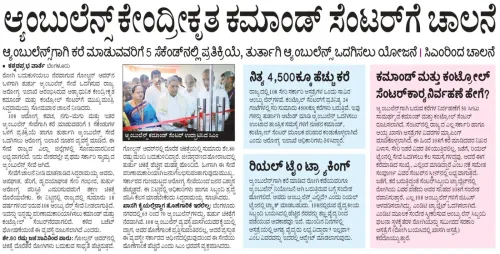
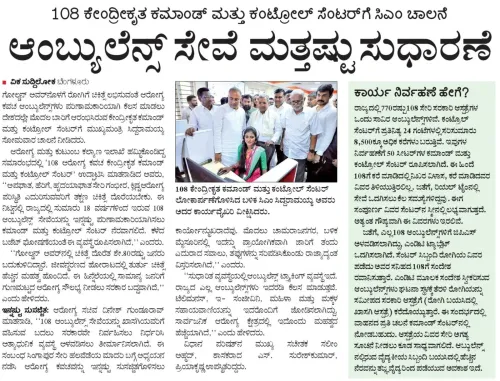
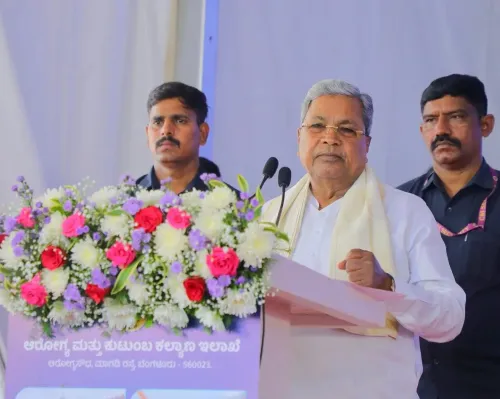
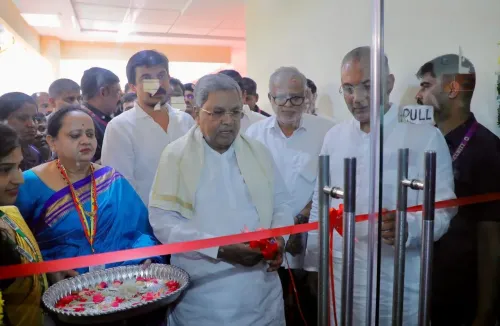
Karnataka Chief Minister Siddaramaiah on 25 May 2026 launched the 108 Arogya Kavach centralised command and control centre, claiming a national first. The facility aims to coordinate state-of-the-art ambulance services across all Karnataka districts for faster emergency medical response.
Key Takeaways
Karnataka CM Siddaramaiah launched the 108 Arogya Kavach centralised command and control centre on 25 May 2026 .
The government claims this is the first centralised emergency health command centre of its kind in India.
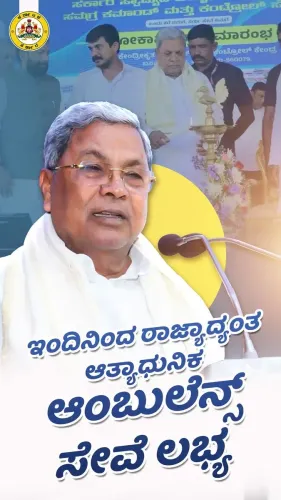
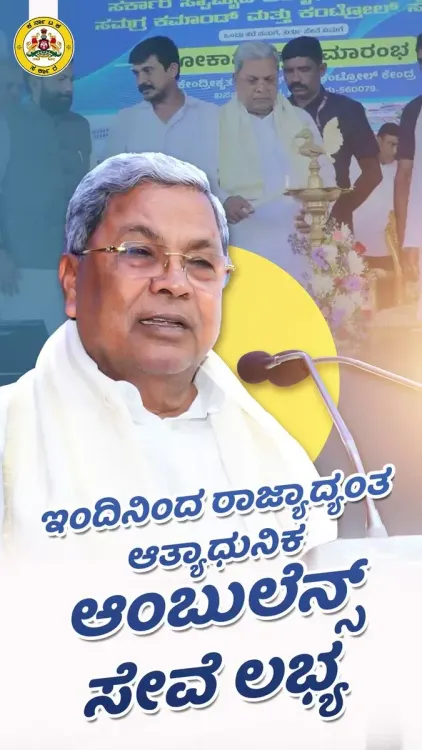
Advanced ambulance services are now to be available in all districts of Karnataka from the date of launch.
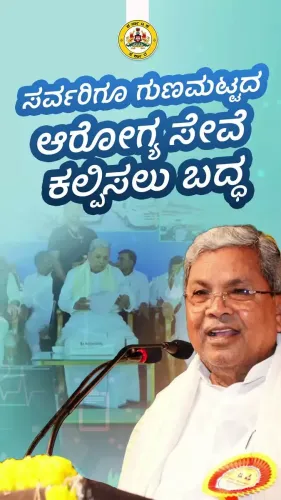
The centre is designed to ensure rapid treatment during emergencies through modern, technology-enabled coordination.
The initiative builds on the 108 ambulance model first introduced in Andhra Pradesh in 2005 and expanded nationally under the National Health Mission .
District-level rollout metrics and future budget allocations will be key indicators of the programme's effectiveness.
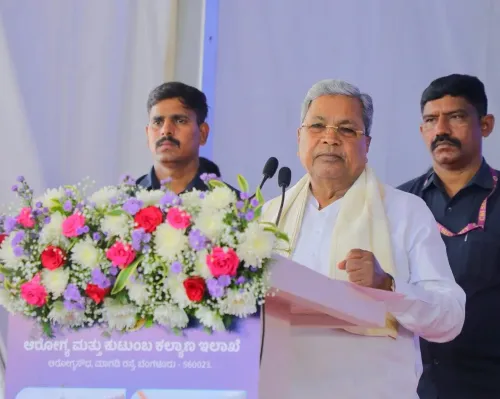
Karnataka Chief Minister Siddaramaiah on Monday, 25 May 2026 announced the launch of the 108 Arogya Kavach centralised command and control centre for emergency health services, describing it as the first such facility of its kind in the country. The Chief Minister said the centre is designed to ensure rapid medical treatment during emergencies and that state-of-the-art ambulance services will now be available across all districts of Karnataka from the same day.
Context
Writing in Kannada on X, Siddaramaiah stated: 'ಇಡೀ ದೇಶದಲ್ಲಿಯೇ ಪ್ರಪ್ರಥಮ ಬಾರಿಗೆ' ('for the very first time in the entire country'), Karnataka has launched the 108 Arogya Kavach centralised command and control centre for health services. He emphasised that patients must receive swift treatment in emergencies and expressed his hope that the service reaches people effectively across the state.
The Chief Minister added that from this day forward, technologically advanced ambulance services will be accessible in every district of the state. He described the centre as 'extremely helpful' in ensuring modern, high-quality emergency health services are delivered to citizens.
Policy Backdrop
The 108 emergency ambulance model was first piloted in Andhra Pradesh in 2005 and subsequently adopted by multiple Indian states under the National Health Mission. Over two decades, the model evolved from basic ambulance dispatch into technology-enabled networks with real-time monitoring and centralised oversight.
Karnataka had been operating district-level 108 services for several years. The new centralised command and control facility represents a structural upgrade — consolidating oversight of ambulance dispatch, patient tracking, and emergency coordination under a single hub rather than fragmented district units. This follows a broader national pattern of states upgrading emergency medical infrastructure to reduce response times and improve accountability.
Stakeholders and Impact
The primary beneficiaries are emergency patients across Karnataka's 31 districts, who will now have access to ambulances equipped with advanced technology and routed through a unified command system. Faster dispatch and better coordination are expected to reduce the critical gap between a medical emergency and the arrival of care — a gap that has historically cost lives in both urban and rural settings.
Ambulance service operators, hospital emergency departments, and district health officers are all stakeholders in the new system's success. The centralised model also creates a single point for performance monitoring, which could improve accountability and allow the state government to track response-time metrics across regions in real time.
What's Next
The effectiveness of the rollout will be measured by district-level ambulance availability data and average emergency response times in the weeks and months ahead. State health officials and the legislature are likely to scrutinise early performance metrics, and subsequent Karnataka state budget allocations may reflect the government's commitment to sustaining and expanding the infrastructure.
If the centralised command model demonstrates measurable improvements in emergency response, it could serve as a template for other states looking to modernise their own 108-network operations — continuing the incremental, state-driven evolution of emergency medical services that began over two decades ago.
Point of View
District-by-district emergency response model that most Indian states still operate. For the Congress government in Bengaluru, this is both a governance milestone and a political statement — demonstrating administrative capacity at a time when state-level welfare delivery is a key electoral differentiator. The claim of a national first, if it holds up to scrutiny, could strengthen Siddaramaiah's position as a model for health-sector governance within the Congress ecosystem. More broadly, the move fits a decade-long arc in which Indian states have used technology-enabled infrastructure upgrades to make legacy schemes like 108 more visible and accountable.
NationPress
22 Oct 2026
Frequently Asked Questions
What is the 108 Arogya Kavach centralised command centre in Karnataka?
It is a unified command and control hub launched by Karnataka CM Siddaramaiah on 25 May 2026 to coordinate the state's 108 emergency ambulance services across all districts using advanced technology, aimed at reducing emergency response times.
Is Karnataka's 108 command centre really the first in India?
CM Siddaramaiah has claimed it is the first centralised 108 health command and control centre in the country. This claim has not been independently verified, and the government is expected to provide supporting data as the rollout progresses.
What is the 108 ambulance service in India?
The 108 emergency ambulance service is a toll-free medical emergency response network first launched in Andhra Pradesh in 2005. It was subsequently adopted by most Indian states under the National Health Mission to provide free ambulance services to citizens.
How does the new centre benefit Karnataka residents?
Residents across all of Karnataka's districts can now access technologically advanced ambulances coordinated through a single command hub, which is designed to dispatch help faster and track emergency cases more efficiently than the earlier district-level system.
What will be the next steps after the launch of the 108 command centre?
Key metrics to watch include district-wise ambulance availability, average response times, and any future Karnataka state budget allocations for the programme. Performance audits of the command centre are also likely as the government assesses the rollout.