CM Sawant Hails PM Modi's Australia Visit, Cites Strategic Gains
Synopsis
Goa Chief Minister Pramod Sawant on 10 July 2026 welcomed PM Narendra Modi's visit to Australia, saying it advances the Comprehensive Strategic Partnership across defence, energy, civil nuclear, trade, and people-to-people ties, building on the 2020 bilateral framework and the 2022 ECTA.
Key Takeaways
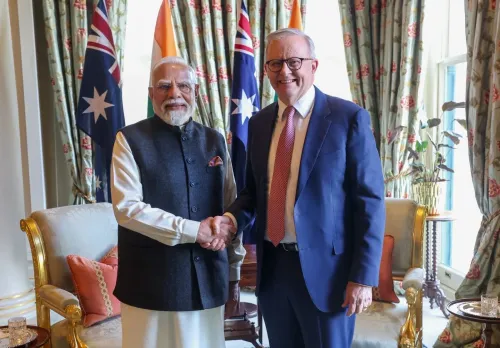
Goa CM Pramod Sawant publicly endorsed PM Modi 's visit to Australia on 10 July 2026 as a 'historic' diplomatic step.
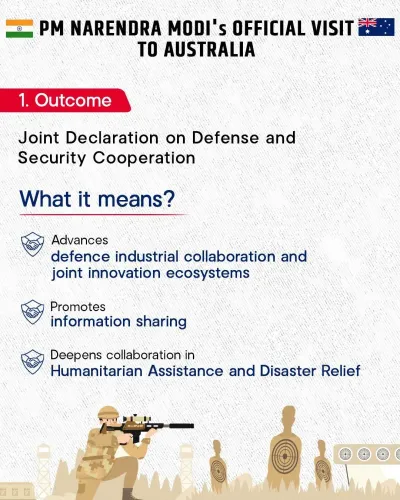
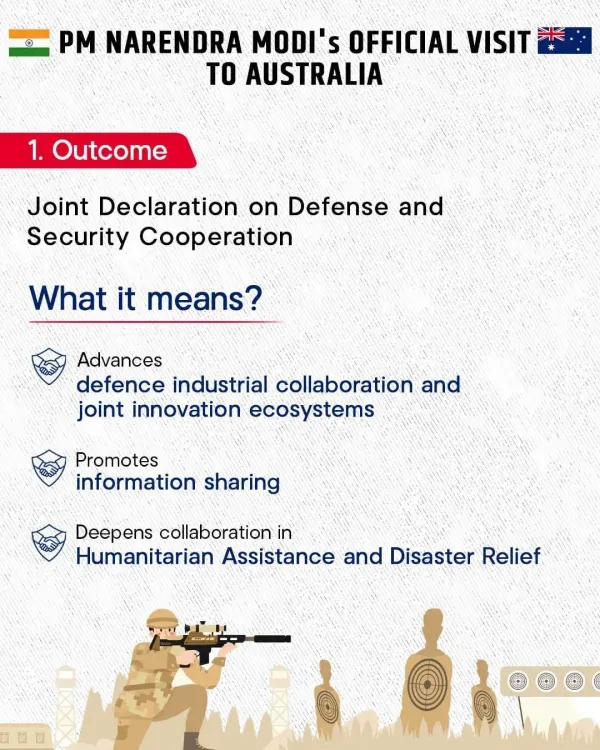
The visit is expected to deepen cooperation in defence and maritime security , energy security , civil nuclear collaboration , and innovation .
The India-Australia Comprehensive Strategic Partnership was first elevated in June 2020 and is the overarching framework for bilateral ties.
The Economic Cooperation and Trade Agreement (ECTA) , signed in April 2022 , provides the trade and investment foundation underpinning the relationship.
Both nations are Quad members alongside the US and Japan , giving the bilateral relationship an Indo-Pacific strategic dimension.
The Indian diaspora in Australia was cited by Sawant as a key bridge reinforcing people-to-people ties between the two countries.
Goa Chief Minister Pramod Sawant on Friday, 10 July 2026, welcomed Prime Minister Narendra Modi's visit to Australia, calling it a 'historic' step that advances the Comprehensive Strategic Partnership between the two nations across defence, energy, trade, and people-to-people ties.
Context
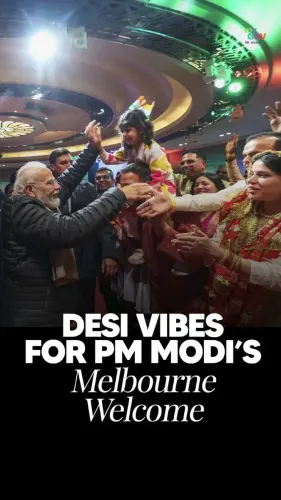
Sawant posted on X that the visit 'marks another significant step in strengthening the Comprehensive Strategic Partnership between the two nations.' He highlighted expected deepening of cooperation in defence and maritime security, energy security, civil nuclear collaboration, innovation, and humanitarian assistance. The Goa Chief Minister also noted the 'warmth and affection shown by the Indian diaspora and the people of Australia' as a reflection of the enduring friendship between the two countries.
Policy Backdrop
The India-Australia Comprehensive Strategic Partnership was formally elevated in June 2020 during a virtual leaders' summit, establishing a framework for deeper engagement across security, trade, and technology. The two countries subsequently signed the Economic Cooperation and Trade Agreement (ECTA) in April 2022, liberalising market access in goods and services and laying the groundwork for expanded commercial ties. India and Australia are also fellow members of the Quad — alongside the United States and Japan — a grouping that has increasingly shaped Indo-Pacific security architecture.
Defence and maritime cooperation have grown steadily through joint exercises and shared concerns over regional stability. Civil nuclear collaboration and clean energy have emerged as newer pillars of the bilateral agenda, reflecting both countries' long-term energy transition goals.
Stakeholders and Impact
The Indian diaspora in Australia — one of the fastest-growing migrant communities in that country — has played a visible role in public diplomacy during high-level visits, and Sawant's post specifically acknowledged their reception of PM Modi. For Goa, which has a significant population connected to the Gulf and international labour markets, stronger India-Australia people-to-people ties could translate into expanded migration pathways and educational opportunities. Defence and energy sector stakeholders on both sides stand to benefit from any new understandings formalised during the visit.
Trade and investment flows between India and Australia have grown since ECTA came into force, and further liberalisation or sector-specific agreements emerging from this visit would build on that momentum.
What's Next
Attention will now turn to the implementation of any defence or civil nuclear understandings reached during the visit, as well as the next scheduled review of bilateral trade under the ECTA framework. Analysts will watch whether the two sides formalise new agreements on critical minerals — an area of strategic convergence given Australia's resource wealth and India's manufacturing ambitions. The visit's outcomes are also expected to feed into the broader Quad agenda as the grouping continues to deepen practical cooperation in the Indo-Pacific.
Point of View
Civil nuclear, and energy pillars signals that the party is keen to frame this visit as substantive rather than ceremonial, particularly given the Quad's growing salience in India's strategic calculus. The reference to the Indian diaspora is also deliberate: diaspora diplomacy has been a consistent Modi-era tool for projecting soft power and consolidating domestic political narratives around national pride. Whether the visit produces binding agreements or principally reaffirms existing frameworks will determine how durable this diplomatic momentum proves to be.
NationPress
11 Jul 2026
Frequently Asked Questions
What did Goa CM Pramod Sawant say about PM Modi's Australia visit?
Sawant called the visit 'historic' and said it would deepen the Comprehensive Strategic Partnership in defence, maritime security, energy, civil nuclear cooperation, innovation, and humanitarian assistance, while also boosting trade and people-to-people ties.
What is the India-Australia Comprehensive Strategic Partnership?
It is the elevated bilateral framework between India and Australia, first announced during a virtual leaders' summit in June 2020, covering defence, trade, energy, technology, and people-to-people cooperation.
What is the India-Australia ECTA?
The Economic Cooperation and Trade Agreement, signed in April 2022, liberalises market access in goods and services between India and Australia and forms the commercial backbone of the bilateral relationship.
Are India and Australia members of the Quad?
Yes. India and Australia are both members of the Quad alongside the United States and Japan, a grouping focused on Indo-Pacific security, technology, and supply-chain cooperation.
Why is the Indian diaspora important to India-Australia relations?
The Indian diaspora in Australia is one of the fastest-growing migrant communities there and has been a prominent feature of public diplomacy during high-level visits, strengthening people-to-people ties and cultural linkages between the two nations.