PM Modi Meets Australia's Albanese in Melbourne, Eyes CECA Push
Synopsis
Prime Minister Narendra Modi met Australian PM Anthony Albanese in Melbourne on 9 July 2026, agreeing to accelerate work on a Comprehensive Economic Cooperation Agreement. The talks build on the 2022 Comprehensive Strategic Partnership and the ECTA, deepening India-Australia ties across trade, defence, and technology.
Key Takeaways
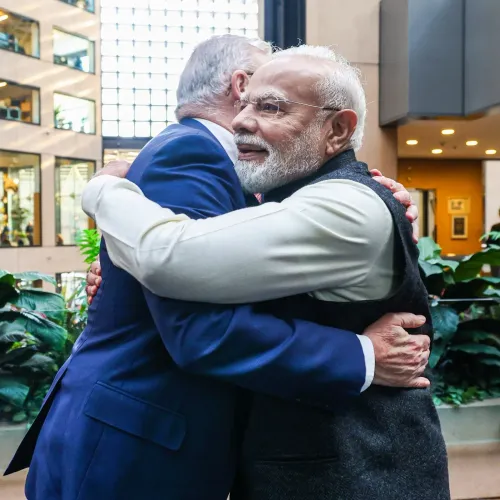
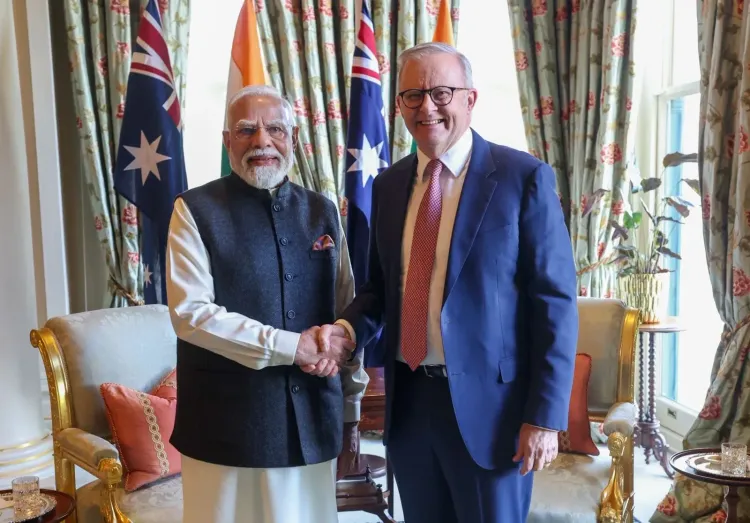
PM Modi and Australian PM Albanese held bilateral talks in Melbourne on 9 July 2026 .
Both leaders agreed to accelerate work on a Comprehensive Economic Cooperation Agreement (CECA) .
The India-Australia Comprehensive Strategic Partnership , established in 2022 , has continuously expanded bilateral cooperation.
The existing Economic Cooperation and Trade Agreement (ECTA) , in force since December 2022 , forms the foundation for a deeper CECA.
Key stakeholders include Indian exporters, Australian mining and education sectors, and defence industries in both countries.
The engagement also feeds into broader Quad and Indo-Pacific frameworks linking India , Australia , the US , and Japan .
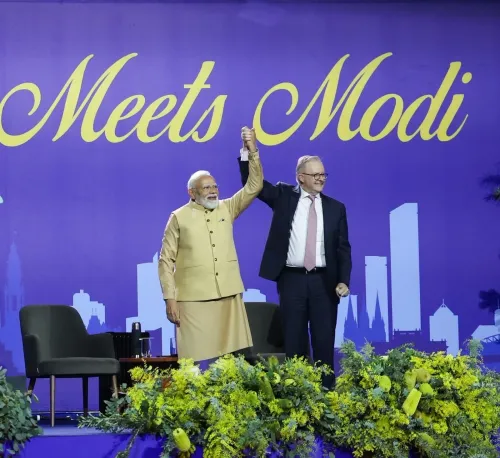
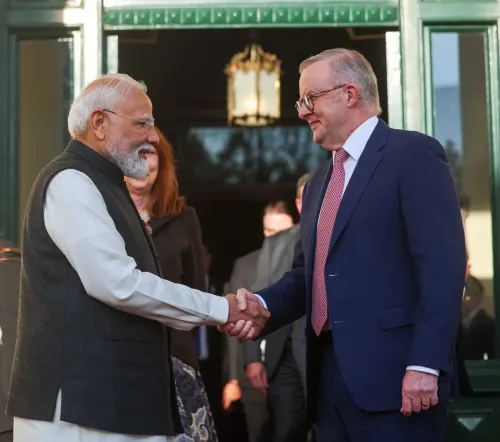
Prime Minister Narendra Modi held wide-ranging discussions with Australian Prime Minister Anthony Albanese in Melbourne on Thursday, 9 July 2026, reaffirming the depth of ties between the two nations under the India-Australia Comprehensive Strategic Partnership and signalling a push to accelerate a landmark economic agreement.
Context
In his post on X, PM Modi noted that the India-Australia Comprehensive Strategic Partnership of 2022 'has continuously expanded the scope of our cooperation' and that both sides 'have now decided to accelerate work on the Comprehensive Economic' agreement — a reference widely understood to point to a full-scale Comprehensive Economic Cooperation Agreement (CECA) that would build on the existing trade framework. The two leaders met in Melbourne, marking a significant bilateral engagement on Australian soil.
The meeting follows a pattern of intensifying high-level engagement between New Delhi and Canberra that has gathered pace since the two countries elevated their relationship to a Comprehensive Strategic Partnership during a virtual summit in June 2020.
Policy Backdrop
The foundation for the current push was laid by the India-Australia Economic Cooperation and Trade Agreement (ECTA), signed in April 2022 and in force since December 2022. The ECTA liberalised tariffs on a wide range of goods and services, giving Indian exporters preferential access to the Australian market and vice versa.
A follow-on CECA would go further — extending tariff reductions, deepening regulatory cooperation, and potentially covering investment, intellectual property, and government procurement. Annual leaders' summits and 2+2 ministerial dialogues between the two countries have been held regularly since 2020 to review implementation of the CSP's commitments across defence, trade, education, and technology.
India's engagement with Australia also operates through the Quad — the four-nation grouping with the United States and Japan — as well as bilateral defence exercises such as Malabar and AUSINDEX, underscoring how economic and security threads are increasingly intertwined in the relationship.
Stakeholders and Impact
Indian exporters — particularly in textiles, pharmaceuticals, and engineering goods — stand to gain from deeper tariff concessions under a CECA, while Australian businesses in mining, agri-commodities, and education have long sought greater access to India's vast consumer market. The education sector is a particular area of interest, with Australian universities keen to expand their footprint in India.
Defence and critical-minerals industries in both countries are also watching closely. Australia holds some of the world's largest reserves of lithium and rare earths, materials central to India's clean-energy and electronics manufacturing ambitions. A broader economic agreement could create frameworks for supply-chain cooperation in these strategic sectors.
What's Next
The signal from Melbourne is that CECA negotiations will be given renewed urgency, though specific timelines and deliverables were not detailed in PM Modi's post. Observers will watch for fresh negotiating rounds in the coming months, as well as any announcements at the next Quad leaders' summit or bilateral 2+2 ministerial dialogue.
With both governments having invested political capital in the partnership, the Melbourne meeting sets the stage for what could be a landmark economic agreement between the world's largest democracy and one of the Indo-Pacific's most stable middle powers.
Point of View
PM Modi is reinforcing India's Indo-Pacific pivot — using bilateral economic agreements to complement its security partnerships through the Quad. For Canberra, deepening trade ties with the world's most populous nation is both an economic opportunity and a strategic hedge. The pace of CECA talks will be the real test of whether this political momentum translates into durable institutional outcomes.
NationPress
7 Oct 2026
Frequently Asked Questions
What did PM Modi and Anthony Albanese discuss in Melbourne?
The two leaders held wide-ranging discussions covering the India-Australia Comprehensive Strategic Partnership and agreed to accelerate work on a Comprehensive Economic Cooperation Agreement (CECA) , building on the existing trade framework established by the ECTA in 2022.
What is the India-Australia Comprehensive Strategic Partnership?
The India-Australia Comprehensive Strategic Partnership was established during a virtual summit in June 2020 and referenced in 2022 documents. It governs cooperation across defence, trade, education, and technology, and has been reviewed through annual leaders' meetings and 2+2 ministerial dialogues.
What is the difference between ECTA and CECA for India and Australia?
The ECTA (Economic Cooperation and Trade Agreement) , signed in April 2022 and in force since December 2022 , liberalised tariffs on goods and services. A CECA would go further, potentially covering investment, intellectual property, government procurement, and deeper regulatory cooperation.
When did PM Modi visit Australia in 2026?
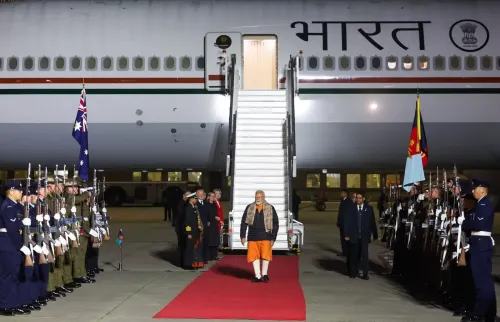
PM Modi was in Melbourne, Australia on 9 July 2026 , where he met Prime Minister Anthony Albanese for bilateral discussions.
How does the India-Australia relationship connect to the Quad?
Both India and Australia are members of the Quad , the four-nation grouping that also includes the United States and Japan . The bilateral partnership — including defence exercises like Malabar and AUSINDEX — reinforces the broader Indo-Pacific security and economic framework that the Quad represents.