CM Bhupendra Patel Launches Viksit Gujarat Data Center Policy
Synopsis
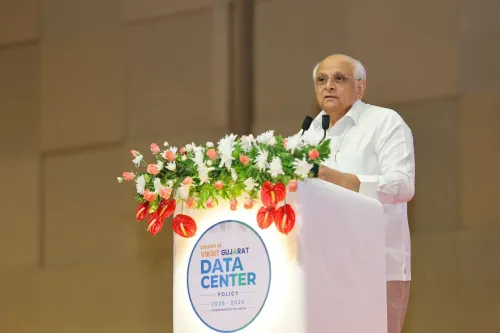
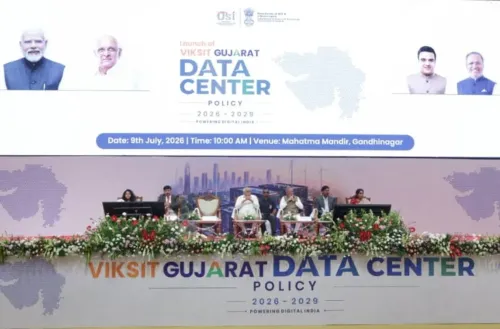
Gujarat Chief Minister Bhupendra Patel launched the Viksit Gujarat Data Center Policy at Mahatma Mandir, Gandhinagar on 9 July 2026, positioning the state as a competitive destination for digital infrastructure investment amid rising national demand for cloud and data services.
Key Takeaways
Gujarat CM Bhupendra Patel launched the Viksit Gujarat Data Center Policy on 9 July 2026 at Mahatma Mandir, Gandhinagar .
The policy is aligned with Prime Minister Narendra Modi 's Viksit Bharat @2047 national development vision.
Gujarat enters a competitive field alongside Maharashtra and Tamil Nadu , which have already introduced data center-specific policies.
The policy targets IT companies, cloud operators, colocation providers , and technology investors seeking a regulatory framework in the state.
The launch builds on Gujarat's existing IT and ITeS policy history and the national Digital India programme of 2015 .
Specific incentive structures, investment targets, and timelines are subject to post-launch implementation guidelines.
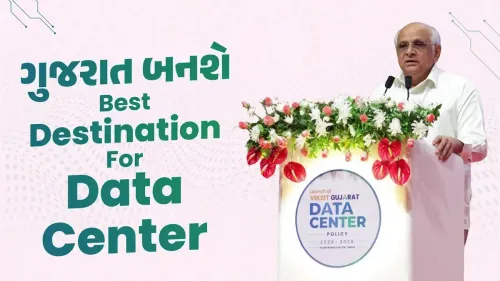
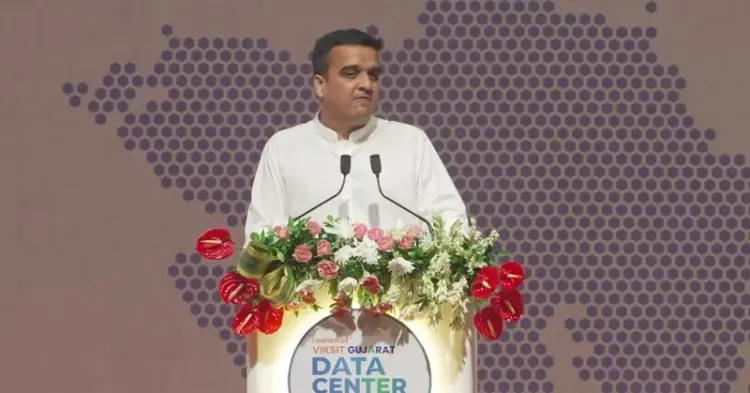
Gujarat Chief Minister Bhupendra Patel on Thursday, 9 July 2026, presided over the launch of the Viksit Gujarat Data Center Policy at Mahatma Mandir in Gandhinagar, marking a significant step in the state's push to build world-class digital infrastructure. The live event, broadcast publicly, signals Gujarat's intent to compete aggressively for data center investments at a national level.
Context
The Chief Minister announced the event in Gujarati on social media, describing it as 'Viksit Gujarat Data Center Policy Launching Karyakram' — the Viksit Gujarat Data Center Policy Launch Programme. Mahatma Mandir, a premier convention and exhibition centre in Gandhinagar, has historically served as the venue for the state's most consequential policy announcements and investment summits, lending the launch institutional weight.
The policy is framed under the 'Viksit Gujarat' banner, which mirrors Prime Minister Narendra Modi's overarching Viksit Bharat @2047 vision — a national roadmap for developed-nation status by India's centenary of independence. Gujarat's adoption of the 'Viksit' prefix signals deliberate alignment between state and central government development narratives.
Policy Backdrop
Gujarat has steadily built its technology credentials over the past decade through successive IT and ITeS policies, positioning itself as a destination for electronics manufacturing and software services. The new data center policy builds on that foundation and on the momentum of the national Digital India programme launched in 2015, which promoted cloud infrastructure and data center development across the country.
Data centers have emerged as critical infrastructure in India's digital economy, driven by surging demand from cloud computing, artificial intelligence workloads, and regulatory requirements around data localisation. States including Maharashtra and Tamil Nadu have already unveiled dedicated data center policies, making Gujarat's entry into this space a competitive strategic move rather than a routine administrative exercise.
Stakeholders and Impact
IT companies, hyperscale cloud operators, colocation providers, and technology investors are the primary audience for the new policy. A dedicated state framework is expected to offer regulatory clarity, streamlined approvals, and potentially fiscal incentives — though the specific contours of the incentive structure were not confirmed at the time of the launch event.
Beyond corporate stakeholders, the policy carries implications for employment in the state's technology sector and for Gujarat's broader ambition to attract high-value investment through platforms such as the Vibrant Gujarat summit. Data center infrastructure also supports ancillary industries including power, cooling technology, and cybersecurity services.
The policy also feeds into India's larger objectives around data localisation, semiconductor ecosystem development, and technology self-reliance — priorities that have gained urgency as global supply chains have been restructured in recent years.
What's Next
Attention will now turn to the implementation guidelines, land allocation for dedicated data center parks, and any investment commitments or memoranda of understanding announced in the aftermath of the launch. Regulatory follow-through — including single-window clearance mechanisms and power infrastructure commitments — will determine whether the policy translates into on-ground investment.
With Gujarat now formally entering the data center policy landscape, the state's ability to attract hyperscale and enterprise operators will be closely watched by technology investors and rival state governments alike, setting a benchmark for how India's western industrial corridor positions itself in the global digital infrastructure race.
Point of View
Chief Minister Patel is deliberately linking state ambition to the Prime Minister's national narrative, a pattern that has consistently helped Gujarat secure central government goodwill and investor confidence. The real test will be the incentive architecture and land-allocation speed that follow the launch. If Gujarat can demonstrate faster clearances and more competitive fiscal terms than rival states, this policy could meaningfully shift the geography of India's data center buildout westward.
NationPress
8 Oct 2026
Frequently Asked Questions
What is the Viksit Gujarat Data Center Policy?
The Viksit Gujarat Data Center Policy is a state government framework launched on 9 July 2026 to promote data center infrastructure in Gujarat, offering regulatory clarity and potential incentives to attract IT companies, cloud operators, and technology investors to the state.
Where was the Viksit Gujarat Data Center Policy launched?
The policy was launched at Mahatma Mandir , the convention and exhibition centre in Gandhinagar , Gujarat's capital city.
Who launched the Gujarat Data Center Policy?
Gujarat Chief Minister Bhupendra Patel presided over the launch event on 9 July 2026 .
How does Gujarat's data center policy compare with other Indian states?
Gujarat joins Maharashtra and Tamil Nadu , which had already introduced dedicated data center policies. Gujarat's entry intensifies state-level competition to attract hyperscale cloud and enterprise data center investments.
How does the Gujarat Data Center Policy connect to national goals?
The policy is framed under the 'Viksit Gujarat' banner, directly aligned with Prime Minister Narendra Modi 's Viksit Bharat @2047 vision, and supports national priorities including data localisation, cloud infrastructure growth, and technology self-reliance.