India defends labour record at USTR hearing, opposes Section 301 tariffs
Synopsis
India sent a high-powered delegation — spanning government ministries and top industry bodies — to Washington to argue that its constitutional bans, labour codes, and buyer-driven compliance ecosystems already do what the US wants Section 301 tariffs to force. The core message: punishing India with a 12.5% tariff won't fix a problem that India says doesn't exist in the way Washington claims.
Key Takeaways
India defended its labour record at a USTR public hearing in Washington on 9 July , opposing a proposed Section 301 tariff action.
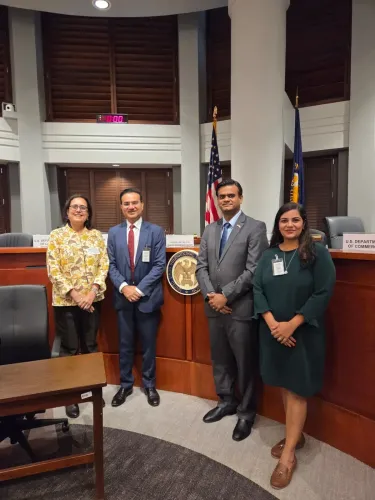
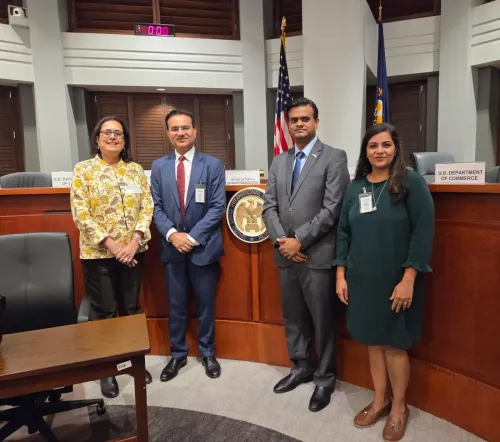
The delegation included the Ministry of Commerce and Industry , APEDA , CII , and FICCI .
Article 23 of India's Constitution expressly prohibits forced and bonded labour; protections are further backed by the Bonded Labour System (Abolition) Act and ILO core conventions.
SEBI mandates Business Responsibility and Sustainability Reports (BRSR) from India's top 1,000 listed companies , covering forced labour and supply-chain assessments.
India argued the proposed 12.5 per cent tariff would not enhance labour protections and urged bilateral dialogue instead.
APEDA noted rice exports to the US are restricted to mills registered with the Ministry of Agriculture and Farmers Welfare , with exporters meeting standards required by retailers including Walmart .
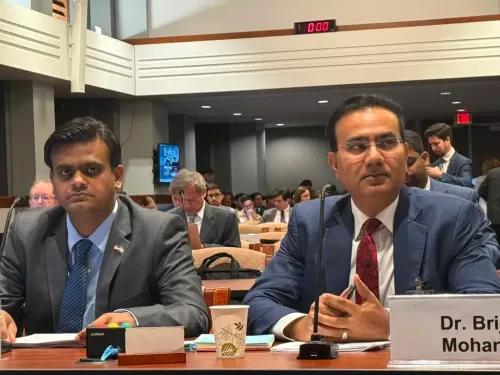
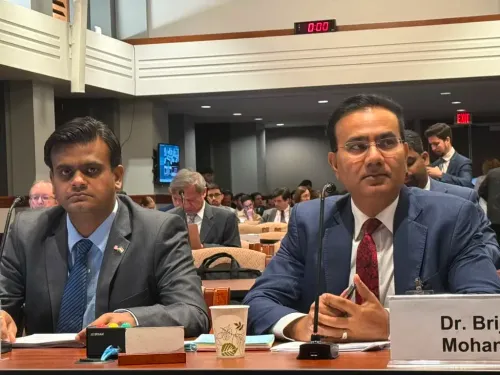
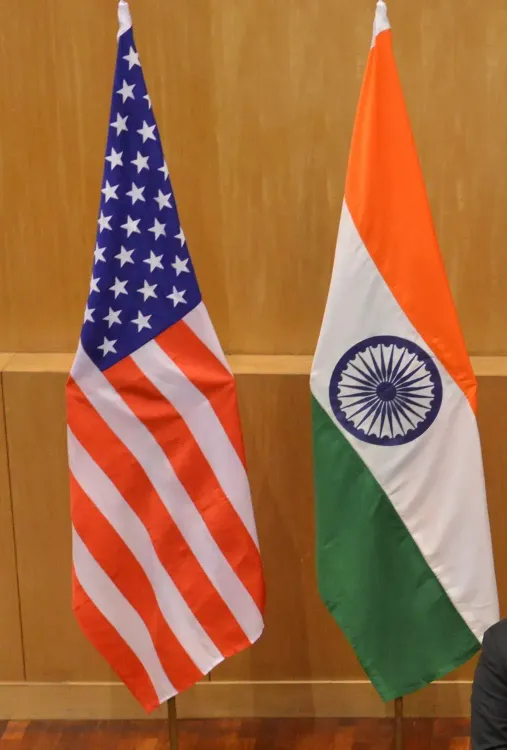
India mounted a comprehensive defence of its labour protections at a US Trade Representative (USTR) public hearing in Washington on Wednesday, 9 July, arguing that the country's constitutional provisions, legislation, and corporate compliance systems already fulfil the objectives behind Washington's proposed Section 301 tariff action targeting forced labour concerns.
Who Appeared and What They Said
Representatives from the Ministry of Commerce and Industry, the Agricultural and Processed Food Products Export Development Authority (APEDA), the Confederation of Indian Industry (CII), and the Federation of Indian Chambers of Commerce and Industry (FICCI) appeared before the USTR panel. The delegation presented a unified argument: India's framework is already aligned with the very standards Washington seeks to enforce through tariffs.
The Indian side pointed to Article 23 of the Constitution, which expressly prohibits forced and bonded labour as a fundamental right enforceable through the courts. This, they said, is reinforced by the Bonded Labour System (Abolition) Act, modern labour codes, criminal penalties under the Bharatiya Nyaya Sanhita, and India's ratification of core International Labour Organization (ILO) conventions on forced labour.
Corporate Governance and Compliance Systems
CII highlighted that the Securities and Exchange Board of India (SEBI) mandates the country's top 1,000 listed companies to file Business Responsibility and Sustainability Reports (BRSR), covering human rights, grievance mechanisms, forced labour complaints, supply-chain assessments, and corrective actions. During questioning, CII also cited the BRSR Lite framework introduced for small and medium enterprises, noting that Indian companies have voluntarily adopted codes of conduct and ESG frameworks that mirror international standards.
FICCI told the hearing that most Indian exporters supplying the US market already operate within compliance ecosystems established by American buyers and multinational corporations — encompassing supplier audits, ethical sourcing standards, worker grievance mechanisms, traceability systems, and continuous monitoring. In many cases, compliance is driven as much by buyer requirements as by domestic regulation,
FICCI stated in its written testimony.
Sector-Specific Evidence Presented
Industry bodies offered sector-level examples to reinforce their case. According to CII, aluminium companies conduct formal human rights due diligence; textile exporters are regularly audited by US buyers and international certification bodies; foundry and forging industries comply with stringent labour legislation; and agricultural machinery manufacturers compete on engineering capability rather than labour cost advantages.
APEDA argued that Indian agricultural exports to the US carry additional safeguards — rice exports, for instance, are permitted only from mills registered with the Ministry of Agriculture and Farmers Welfare, and exporters must meet labour standards required by major US retailers including Walmart.
India's Position on the Proposed 12.5% Tariff
Throughout the hearing, Indian representatives maintained that the proposed 12.5 per cent tariff would not strengthen labour protections, because those protections are already embedded in India's legal and commercial systems. Instead, they urged the USTR to pursue dialogue, technical engagement, and bilateral mechanisms, arguing that evidence-based collaboration would more effectively eliminate forced labour from global supply chains than economy-wide tariff measures.
This comes amid broader US scrutiny of supply-chain labour practices across multiple trading partners, with the Section 301 action representing one of Washington's more assertive trade-policy tools. Whether the USTR accepts India's arguments or proceeds with the tariff proposal will have significant implications for bilateral trade flows.
Point of View
But they sidestep a harder question: whether on-paper frameworks translate into on-ground outcomes across India's vast informal supply base. The US has used Section 301 aggressively in recent years, and India's best defence is not just legal citation but verifiable data on enforcement and worker outcomes — something Wednesday's testimony leaned on only selectively.
NationPress
8 Oct 2026
Frequently Asked Questions
What is the US Section 301 tariff action against India about?
The proposed Section 301 action by the US Trade Representative targets concerns about forced labour practices in Indian supply chains, and could impose a tariff of 12.5 per cent on Indian exports. India appeared at a USTR public hearing on 9 July to contest the basis of the proposed measure.
What arguments did India make at the USTR hearing?
India argued that its constitutional ban on forced labour under Article 23, the Bonded Labour System (Abolition) Act, modern labour codes, criminal penalties under the Bharatiya Nyaya Sanhita, and ILO convention ratifications already meet the objectives Washington is pursuing through tariffs. Industry bodies added that buyer-driven compliance ecosystems further reinforce these protections.
What is the BRSR framework and why did India cite it?
The Business Responsibility and Sustainability Report (BRSR) is a SEBI-mandated disclosure framework requiring India's top 1,000 listed companies to report on human rights, forced labour, grievance mechanisms, and supply-chain assessments. India cited it as evidence that corporate governance already addresses the concerns underpinning the US tariff proposal.
How do Indian agricultural exports factor into the labour dispute?
APEDA told the USTR that Indian rice exports to the US are permitted only from mills registered with the Ministry of Agriculture and Farmers Welfare, and that exporters must meet labour standards set by major US retailers including Walmart, providing an additional compliance layer beyond domestic law.
What does India want the US to do instead of imposing tariffs?
India urged the USTR to pursue dialogue, technical engagement, and bilateral mechanisms rather than economy-wide tariff measures, arguing that evidence-based collaboration would more effectively eliminate forced labour from global supply chains.