PM Modi Hails 'Unparalleled Outcomes' in Bilateral Talks
Synopsis
Prime Minister Narendra Modi on 9 July 2026 declared 'unparalleled outcomes' from bilateral talks covering renewable energy, nuclear energy, critical minerals, climate action, technology and education, alongside a new defence and security cooperation declaration.
Key Takeaways
PM Modi described the bilateral talks as delivering 'unparalleled outcomes' across six major sectors : renewable energy, climate action, nuclear energy, critical minerals, technology and education.
A separate defence and security cooperation declaration was issued as a distinct and highlighted outcome of the talks.
The sectors covered align with India's established policy priorities including the International Solar Alliance , the India-US Civil Nuclear Agreement framework, and critical minerals supply-chain diversification.
Stakeholders include defence manufacturers, renewable energy firms, nuclear sector companies and academic institutions.
Implementation details — including any MoUs or investment roadmaps — are expected to be formalised and may feature in India's monsoon parliamentary session .
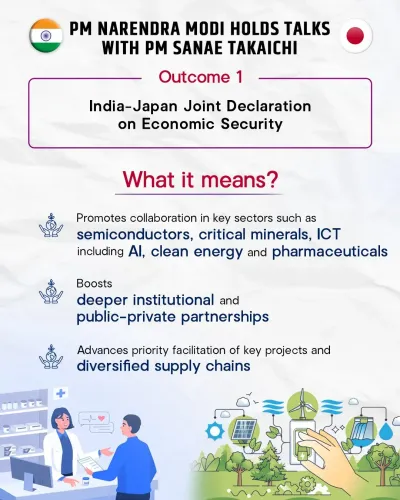
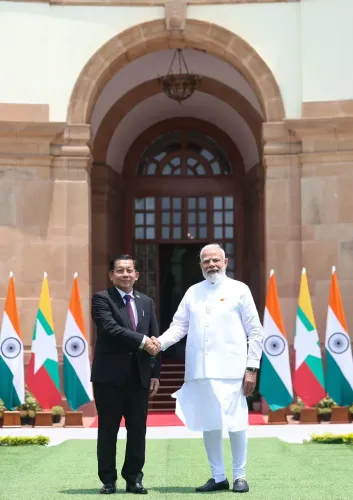
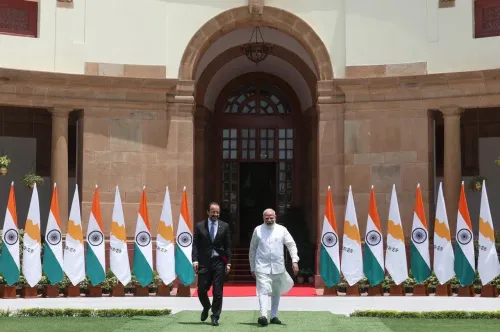
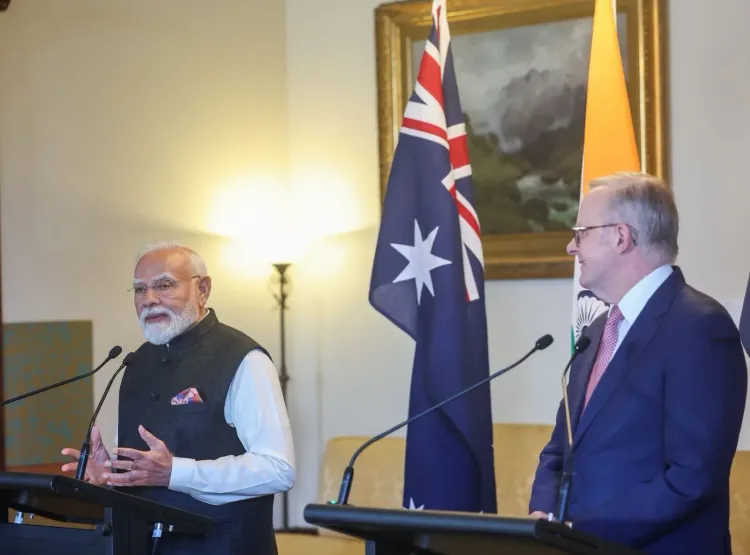
The post was accompanied by four images and a truncated link, indicating an extended official statement or joint document.
Prime Minister Narendra Modi on Thursday, 9 July 2026 declared that bilateral talks had produced 'unparalleled outcomes' spanning renewable energy, climate action, nuclear energy, critical minerals, technology and education, while also announcing the issuance of a landmark declaration to strengthen defence and security cooperation.
Context
In his post on X, PM Modi described the day's engagements as yielding results across a sweeping range of strategic sectors. He specifically highlighted the issuance of 'an important declaration to strengthen defence and security cooperation' as a separate and significant outcome alongside the economic and technology agreements. The post, which accompanied four images, was truncated, suggesting an accompanying statement or document was linked.
India has in recent years consistently paired economic cooperation with defence declarations in high-level bilateral summits, reflecting New Delhi's approach of securing both supply-chain resilience and strategic depth in a single diplomatic engagement.
Policy Backdrop
The breadth of sectors cited — renewable energy, nuclear energy, critical minerals and technology — mirrors the architecture of several frameworks India has built over the past decade. The India-US Civil Nuclear Agreement of 2008 opened the door to civil nuclear commerce and technology transfers, while the International Solar Alliance, launched by India in 2015, has sought to scale renewable energy deployment globally.
On critical minerals, India has actively sought partnerships to diversify supply chains away from single-source dependence, a priority that has featured in multiple bilateral frameworks including 2+2 dialogues and the Quad. India's Nationally Determined Contributions under the UNFCCC, committed in 2015, also underpin the climate action dimension of such talks.
The inclusion of education alongside defence and energy signals a comprehensive partnership model that India has increasingly favoured — one that links people-to-people ties and institutional collaboration with harder strategic interests.
Stakeholders and Impact
The sectors named have direct bearing on a wide range of industries and institutions. Renewable energy firms and nuclear sector companies stand to benefit from any investment frameworks or technology-transfer arrangements that emerge from the talks. Defence manufacturers on both sides will watch the security declaration closely for co-production or procurement signals.
Academic institutions are also identified as stakeholders, consistent with India's pattern of embedding student and research exchange components in strategic partnerships. For India's broader economy, progress on critical minerals is particularly consequential as domestic manufacturing and electric-vehicle supply chains scale up.
What's Next
Concrete implementation will depend on whether the talks produce formal Memoranda of Understanding or investment roadmaps in the days following the summit. Any such agreements would likely be tabled or discussed during India's monsoon parliamentary session, where budgetary implications of new energy and defence commitments could come under legislative scrutiny.
The defence and security declaration, described by PM Modi as 'important', will be closely parsed by strategic analysts for specifics on joint exercises, technology sharing, or supply-chain commitments — details that typically emerge in the official joint statement released after such summits.
Point of View
Not transactional, partnerships. Pairing a defence declaration with clean-energy and critical-minerals outcomes is consistent with New Delhi's multi-alignment doctrine: locking in strategic depth without formal alliance commitments. The emphasis on 'unparalleled outcomes' ahead of any published joint statement is also characteristic of Modi's diplomacy-as-narrative approach, framing the summit's success domestically before the fine print is public. Analysts will scrutinise whether the defence declaration contains binding co-production clauses or remains aspirational — that distinction will determine the summit's lasting strategic weight.
NationPress
9 Jul 2026
Frequently Asked Questions
What did PM Modi say about the bilateral talks on 9 July 2026?
PM Modi said the talks produced 'unparalleled outcomes' in renewable energy, climate action, nuclear energy, critical minerals, technology and education, and that an important declaration was issued to strengthen defence and security cooperation.
Which sectors were covered in PM Modi's bilateral talks?
The talks covered renewable energy, climate action, nuclear energy, critical minerals, technology and education, along with a defence and security cooperation declaration.
What is India's policy on critical minerals partnerships?
India has actively sought bilateral partnerships to diversify critical minerals supply chains, reducing dependence on single sources — a priority reflected in frameworks such as the Quad and various 2+2 dialogues.
What is the significance of the defence declaration mentioned by PM Modi?
PM Modi described it as 'an important declaration to strengthen defence and security cooperation,' which analysts will examine for details on co-production, technology sharing or procurement commitments once the full text is released.
What happens after a bilateral summit declaration in India?
Following a summit declaration, implementation typically involves signing Memoranda of Understanding and investment roadmaps, with budgetary or legislative implications discussed in the relevant parliamentary session — in this case, India's monsoon session.