CM Bhupendra Patel Launches Viksit Gujarat Data Center Policy 2026-2029

Synopsis
Gujarat Chief Minister Bhupendra Patel on 9 July 2026 launched the Viksit Gujarat Data Center Policy (2026-2029), offering capital subsidies, power tariff relief, stamp duty exemptions, and SGST concessions to draw global and domestic investors and create high-value jobs for the state's youth.
Key Takeaways
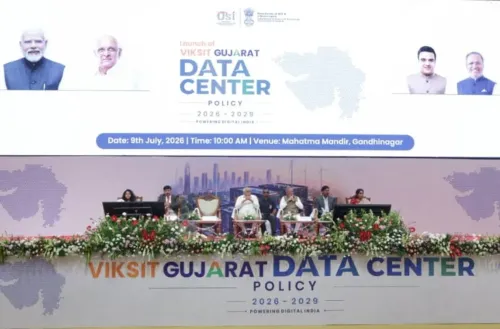
Gujarat CM Bhupendra Patel announced the Viksit Gujarat Data Center Policy (2026–2029) on 9 July 2026 .
The policy offers capital subsidies , interest subsidies , and power tariff relief to data centre investors.
Fiscal concessions include stamp duty and registration fee exemptions , electricity duty reimbursements , and SGST concessions .
The policy targets both global and domestic investors and aims to generate high-value employment for Gujarat's youth .
The initiative builds on Gujarat's IT Policy 2016–2021 and aligns with MeitY's National Data Centre Policy (2020) .
Gujarat competes with Maharashtra and Tamil Nadu , which have offered similar incentives since 2021.
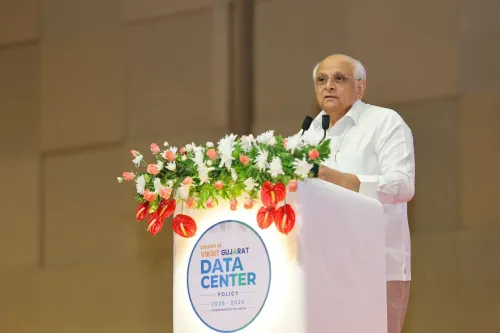
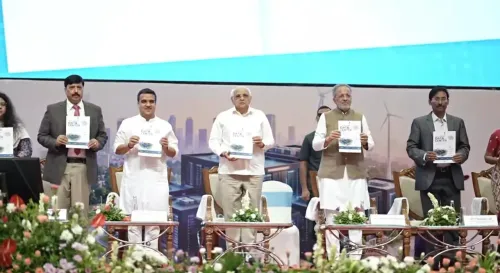
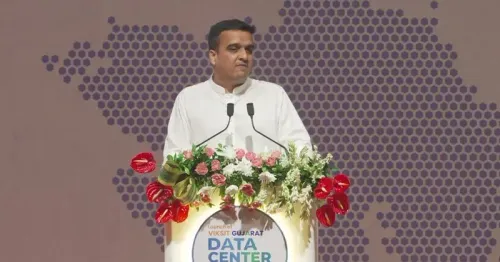
Gujarat Chief Minister Bhupendra Patel on Thursday, 9 July 2026 unveiled the Viksit Gujarat Data Center Policy (2026–2029), a comprehensive incentive framework designed to attract global and domestic investment into the state's digital infrastructure sector and position Gujarat as a leading international data hub.
Context
Announcing the policy on X, CM Patel said the framework is 'meticulously designed to leverage our state's strong industrial base' and introduces 'an array of competitive advantages without burdensome complexities.' He expressed confidence that the policy would bring 'landmark global investments,' generate 'high-value employment opportunities' for Gujarat's youth, and help the state 'emerge as a leading global digital hub.'
The announcement comes as India's data centre sector faces rapidly rising demand driven by cloud adoption, artificial intelligence workloads, and domestic data localisation requirements. Gujarat, with its established ports, power infrastructure, and manufacturing corridors, has long been considered a natural candidate for large-scale digital infrastructure investment.
Policy Backdrop
The Viksit Gujarat Data Center Policy (2026–2029) builds on the state's earlier IT Policy 2016–2021, which first introduced incentives for IT parks and data hosting infrastructure. At the national level, the Ministry of Electronics and Information Technology (MeitY) had released a draft National Data Centre Policy in 2020 to promote hyperscale facilities and data localisation, signalling federal intent to grow India's data centre footprint.
The new state policy offers a layered set of financial concessions. Key benefits include capital subsidies, interest subsidies, and power tariff relief. Fiscal supports are embedded through exemptions on stamp duty and registration fees, electricity duty reimbursements, and state GST (SGST) concessions. Together, these instruments are intended to reduce the upfront and operational cost burden for investors establishing data centre facilities in the state.
Stakeholders and Impact
The policy is explicitly aimed at two constituencies: global and domestic investors seeking cost-competitive locations for hyperscale and enterprise data centres, and Gujarat's youth, for whom the CM has projected the creation of high-value technology employment. Data centre projects typically generate skilled roles in facility management, network operations, cybersecurity, and allied IT services.
Gujarat enters a competitive field. States including Maharashtra and Tamil Nadu have offered comparable power and land subsidies since 2021, intensifying a bidding dynamic among Indian states for marquee hyperscale projects. Gujarat's fiscal concession package mirrors the broader use of industrial policy tools to attract foreign direct investment in digital infrastructure, a segment where India is still expanding its global share.
What's Next
Observers will watch for the release of implementing government orders that specify the exact subsidy quantum and eligibility criteria for each benefit category. Investment memoranda of understanding signed at upcoming editions of the Vibrant Gujarat Global Summit — the state's flagship investor conclave — will serve as an early measure of the policy's traction with global players.
Any complementary support from the central government, such as a production-linked incentive scheme for data centres, could amplify the state-level framework and further accelerate project announcements. For now, the policy signals that Gujarat is making a structured, incentive-backed bid to capture a meaningful share of India's fast-growing digital infrastructure market.
Point of View
With Gujarat deploying a familiar but comprehensive fiscal toolkit — subsidies, duty exemptions, and tariff relief — to differentiate itself. For CM Bhupendra Patel, the policy serves a dual political-economic purpose: reinforcing Gujarat's identity as a preferred investment destination while tying digital growth to youth employment, a messaging priority for the BJP. The timing, ahead of a likely Vibrant Gujarat summit cycle, suggests the policy is designed as a deal-flow catalyst rather than a standalone announcement. Whether it shifts the competitive balance against Maharashtra and Tamil Nadu will depend on the actual subsidy quantum revealed in implementing orders and the speed of single-window clearances on the ground.
NationPress
9 Jul 2026
Frequently Asked Questions
What is the Viksit Gujarat Data Center Policy 2026-2029?
The Viksit Gujarat Data Center Policy (2026-2029) is a state government incentive framework announced by Chief Minister Bhupendra Patel on 9 July 2026 to attract global and domestic investment in data centre infrastructure. It offers capital subsidies, interest subsidies, power tariff relief, stamp duty exemptions, electricity duty reimbursements, and SGST concessions.
What financial benefits does the Gujarat Data Center Policy offer?
The policy provides capital and interest subsidies, power tariff relief, exemptions on stamp duty and registration fees, electricity duty reimbursements, and state GST concessions to eligible data centre investors.
Who will benefit from the Viksit Gujarat Data Center Policy?
The policy is aimed at global and domestic investors looking to set up data centre facilities in Gujarat, as well as the state's youth, who are expected to gain high-value employment opportunities in the digital infrastructure sector.
How does Gujarat's data centre policy compare with other Indian states?
States such as Maharashtra and Tamil Nadu have offered comparable power and land subsidies since 2021. Gujarat's new policy competes directly with these offerings through a layered fiscal concession package designed to lower both upfront and operational costs for investors.
What happens next after the Gujarat Data Center Policy announcement?
Implementing government orders specifying the exact subsidy amounts and eligibility criteria are awaited. Investment MoUs at upcoming Vibrant Gujarat Global Summit editions and any complementary central government support will be key indicators of the policy's impact.